



Silver Topped Glass Pitcher
A silver topped glass pitcher combines heavy crystal with precious metal mounts, serving wine and water with considerable style.

Silver Topped Glass Pitcher
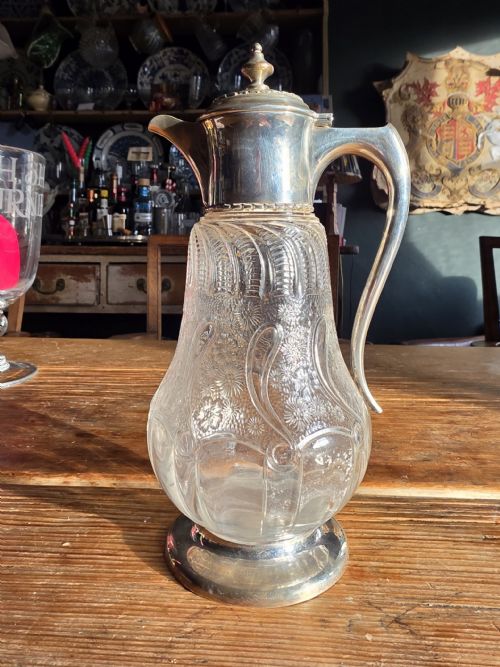
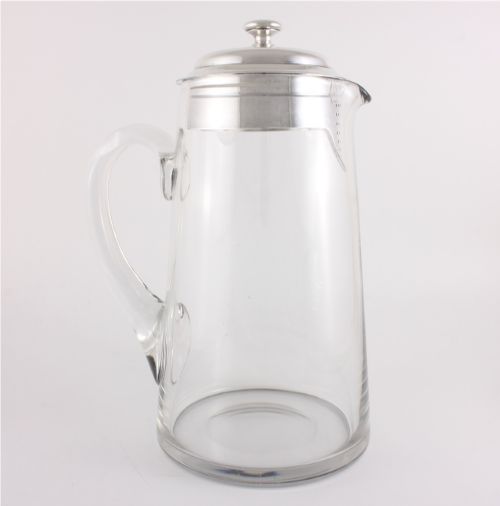
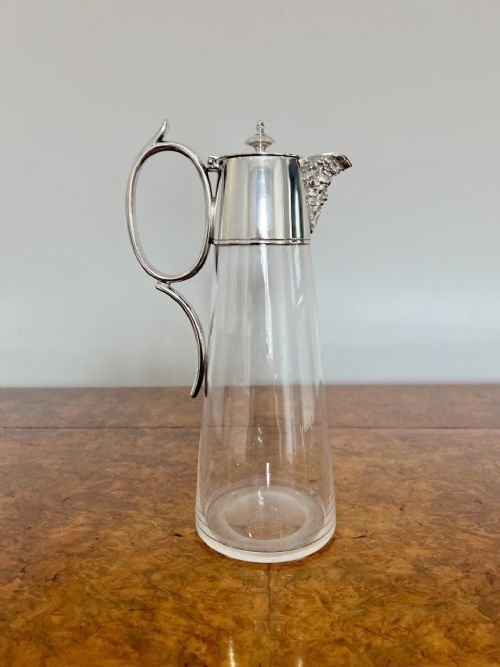
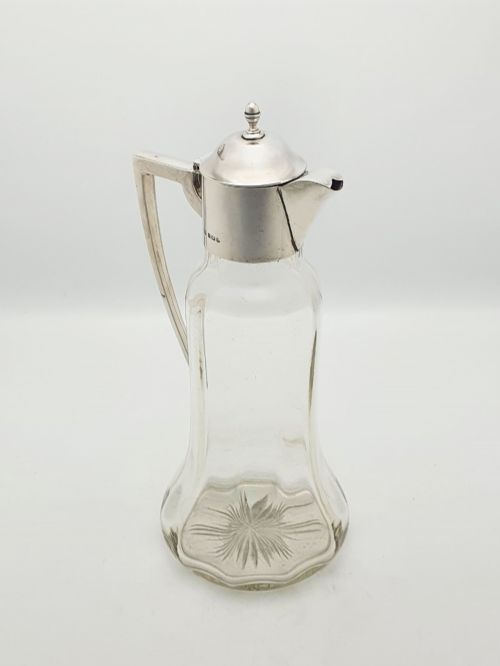
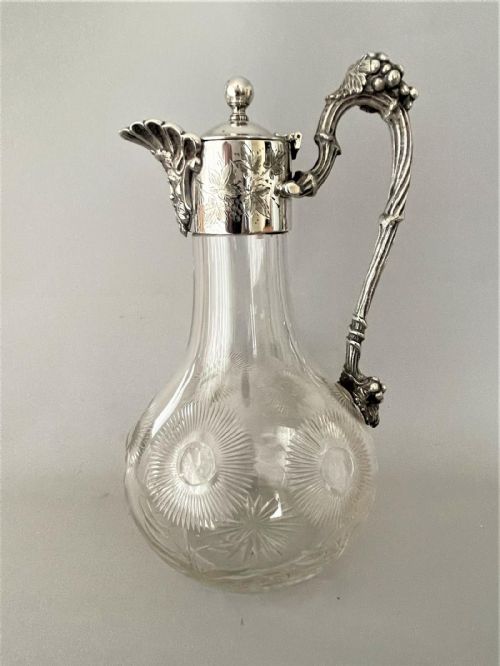
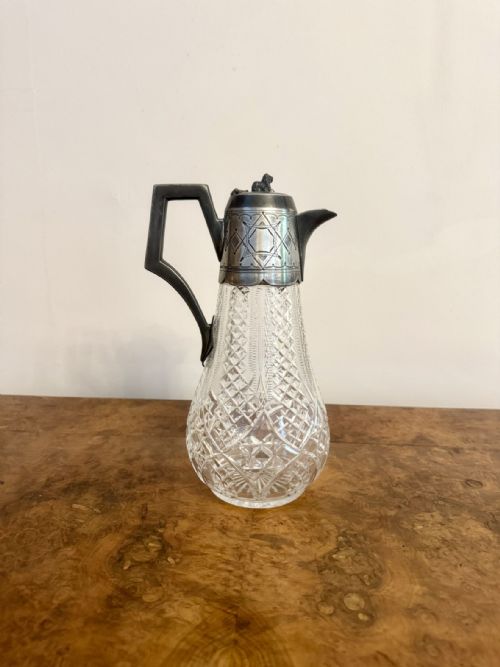
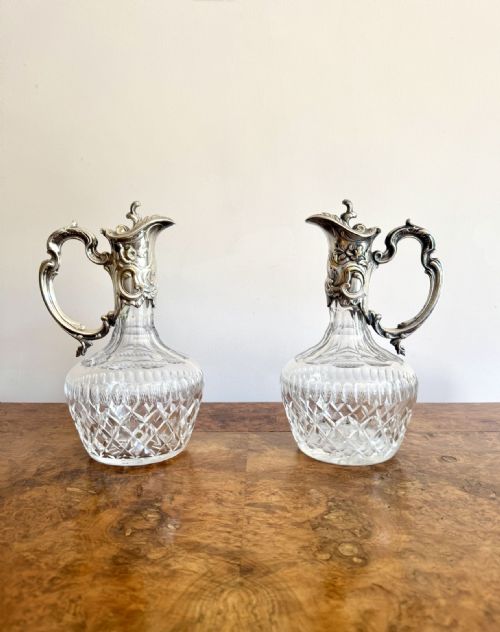
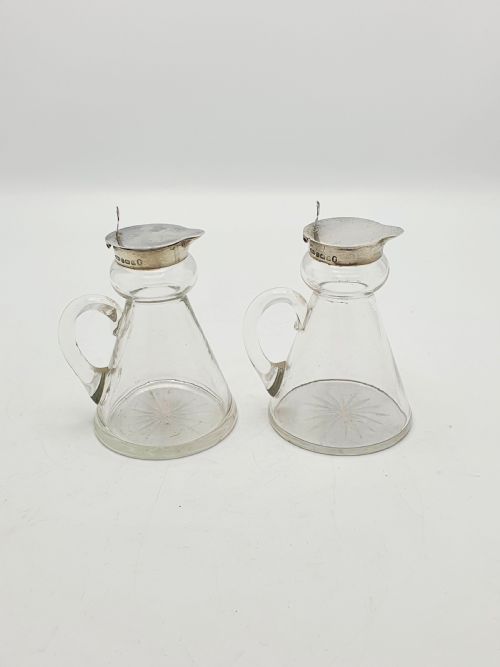
A silver topped glass pitcher appears primarily in forms such as claret jugs, water ewers, and whisky noggins designed for formal dining and entertaining. These vessels combine clear glass or crystal bodies with hinged metal lids, collars, and handles.
The pieces on this page span several decades, with Victorian and Edwardian examples appearing frequently alongside later twentieth-century iterations. Collectors encounter everything from tall, engraved wine jugs to compact spirit noggins.
Styles range from ornate Victorian floral engravings to restrained Arts and Crafts designs and later mid-century silhouettes. The underlying form remains remarkably consistent: a generous glass reservoir crowned by functional metalwork.
Materials and construction
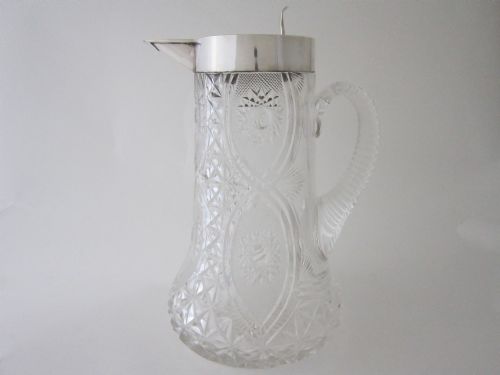
The glass bodies are typically heavy cut crystal or etched glass, shaped by blowing into moulds or cutting deep geometric patterns by hand to catch the light. This heavy glass provides the stability needed to balance the weight of the metal mountings.
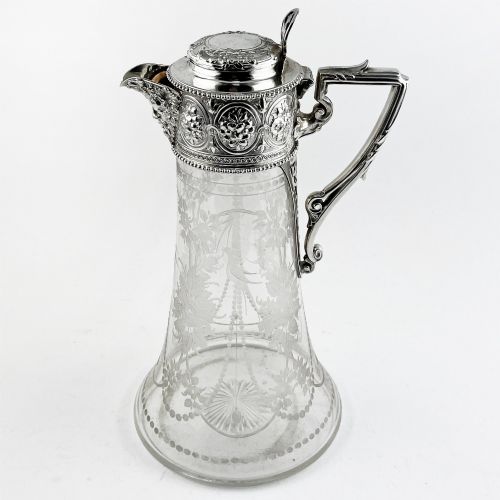
Mounts are fashioned from either sterling silver or silver plate, secured firmly to the glass neck with collars and hinged covers. Artisans often incorporated pouring spouts and thumbpieces directly into the cast or stamped metal lid assembly.
Listings include Victorian, Edwardian, and mid-century periods, utilising cut crystal, sterling silver, and silver plate.
Judging execution and finish
Quality rests heavily on the depth and clarity of the glass cutting, where sharper facets and higher lead content create greater brilliance. The weight and thickness of the vessel dictate its substance on the table.
Metalwork quality shows in the crispness of cast details, such as Bacchus masks or floral repoussé work, and the smooth action of the hinged lid. Maker marks and hallmarks on the silver further distinguish standard production from premier workshops.
Asprey and Co. Ltd·Christofle·Tiffany
The Silver Topped Glass Pitcher Glossary
- Claret jug
- A specialised vessel designed for serving red wine at the dining table, typically featuring a glass body and a metal handle, collar, and hinged lid.
- Whisky noggin
- A small drinking vessel or pitcher, often holding a single measure of spirits, fitted with a silver mount and sometimes a matching label.
- Cut crystal
- Glass containing lead oxide that increases its weight, clarity, and refractive index, allowing for deep, sharp decorative facets.
- Silver plate
- A layer of silver fused or electroplated onto a base metal core, such as copper or nickel brass, providing the appearance of solid silver.
- Mount
- The fitted metal collar, handle, and hinged lid attached to the neck of a glass pitcher.
Silver Topped Glass Pitcher: Frequently Asked Questions
How were these pitchers used historically?
These vessels served wine, water, and spirits at the dining table, with claret jugs holding claret for formal meals and noggins containing whisky.
The hinged lid kept contents covered between pours while allowing the host to dispense drinks easily with one hand.
How do I clean a silver topped glass pitcher?
Wash the glass body gently in warm soapy water using a bottle brush, avoiding harsh abrasives that might scratch the surface.
Polish the silver mounts with a soft cloth and a dedicated silver cleaner, taking care not to let polish residue cake in crevices.
How can I tell Victorian pieces from Edwardian ones?
Victorian examples often feature heavier, ornate floral engravings, deep cut crystal, and elaborate cast mounts reflecting nineteenth-century taste.
Edwardian pieces tend toward cleaner lines, lighter cutting patterns, and sometimes restrained Arts and Crafts influences.
Are these pitchers safe to use for serving drinks?
Most antique pitchers remain fully functional for serving water, wine, or cocktails at modern gatherings.
Inspect the mount where it joins the glass to ensure the collar remains secure before filling the vessel.