


Diamond Cut Glass Jug
A diamond cut glass jug brings tactile weight and crisp refraction to the table, uniting heavy lead crystal with sharp geometric facets.
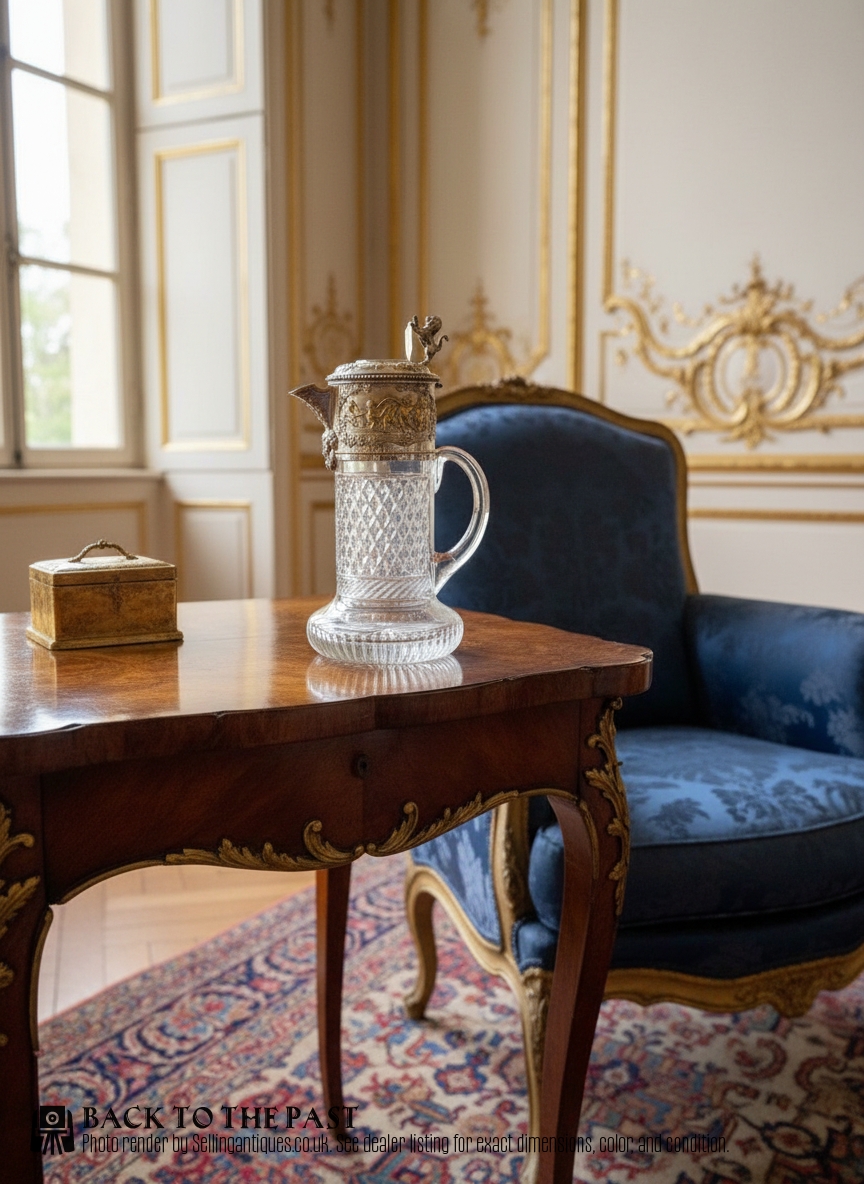
Diamond Cut Glass Jug
When you search for a diamond cut glass jug, you encounter heavy serving vessels designed for wine and water, most frequently met here as Victorian and Edwardian claret jugs and water pitchers. The selection spans robust nineteenth-century pieces alongside refined Edwardian forms, moving from Georgian Regency shapes up to the turn of the twentieth century.
Claret jugs dominate the evidence, often fitted with silver-plate or sterling silver mounts, alongside substantial ewers and general table pitchers. These items vary across distinct eras including 1860, 1880, and 1900, showing how utility and formal dining combined in domestic settings.
The dominant version on this page is the Victorian or Edwardian silver-mounted claret jug, marrying deep glass cutting with metal hinged lids and handles. Alongside these, you find Regency and Georgian influenced vessels that showcase earlier British and Irish glassmaking traditions.
How they were made
Makers shaped these vessels from heavy lead crystal and standard glass, applying wheel-cutting techniques to carve deep geometric patterns across the exterior surface. This intensive process creates the signature diamond facets that catch and scatter light from every angle.
Many examples incorporate metalwork components, specifically silver plate and sterling silver mounts, secured around the neck and rim with hinged lids and integral handles. Smith work and silversmithing met glass blowing in specialised workshops, where makers such as Hukin & Heath produced complete fitted mounts for the glass bodies.
Diamond Cut Glass Jug Retail Price Guide 2026
Typical asking prices for diamond cut glass jug among the pieces listed under this phrase on Sellingantiques today, from the lower quarter to the upper quarter. They describe what is for sale here now, not the wider market.
Some Victorian dining companions would listen closely to the resonant ring of lead crystal to judge the purity of the punch.
What varies in quality
Quality rests upon the crispness of the wheel-cut facets and the depth of the metal mounting. Superior examples display sharp, cleanly defined diamond cuts that feel distinctly tactile to the touch, contrasting with softer, shallower incisions found on ordinary production.
The weight of the lead crystal and the substantial gauge of the silver plate or sterling silver mounts distinguish the finest items. Better pieces maintain precise alignment between the metal collar, handle, and pouring spout, ensuring the vessel balances correctly in the hand.
Hukin & Heath
The Diamond Cut Glass Jug Glossary
- Claret Jug
- A specialised pouring vessel designed specifically for serving red wine at the dining table. These pieces usually feature a hinged metal lid and handle.
- Lead Crystal
- A heavy form of glass containing lead oxide, which increases the material's refractive index and weight. This composition allows for deeper and sharper wheel cutting.
- Silver Plate
- A layer of silver fused to a base metal, frequently used for the mounts, collars, and handles of Victorian and Edwardian jugs. It provided the appearance of solid silver at a lower cost.
- Sterling Silver
- A standard alloy of silver containing ninety-two point five percent silver by mass, used for high-end maker mounts on late Victorian serving vessels.
- Regency
- A stylistic period spanning the early nineteenth century, characterised by classical restraint and clean proportions in both furniture and glassware.
Diamond Cut Glass Jug: Frequently Asked Questions
Were these jugs used only for wine?
While the claret jugs served red wine during formal Victorian and Edwardian dinners, many variations functioned as water pitchers and general ewers. The presence of a silver-plated lid typically points towards wine service, keeping contents covered at the table.
Water jugs often lacked the elaborate hinged mounts, relying purely on the glass lip and handle for everyday use.
How do I date a cut glass jug?
Dating relies on combining the style of the glass cutting with the hallmarks or manufacturing marks on the metal mounts. Victorian and Edwardian pieces often display specific handle designs and silver date letters that narrow down the year of production.
Earlier Georgian and Regency examples exhibit heavier proportions and distinct pontil marks on the base where the blowing iron was detached.
What is the difference between glass and lead crystal?
Lead crystal contains added metallic oxides that give the material greater weight, brilliance, and softness for deep wheel cutting. Standard glass is lighter and resists the sharp, crisp facet work seen on high-end nineteenth-century examples.
When gently tapped, lead crystal produces a distinct resonant ring compared to the duller tone of ordinary glass.