




Silver Capped Scent Bottle
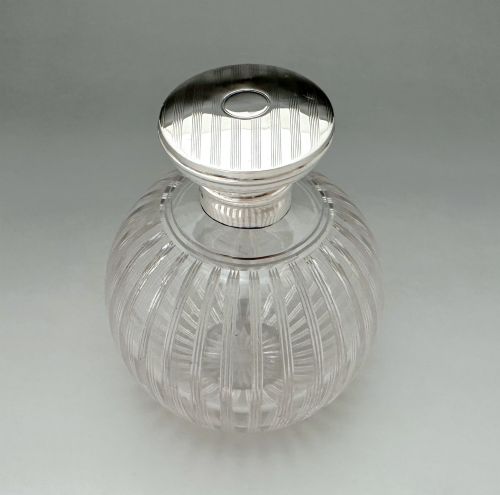
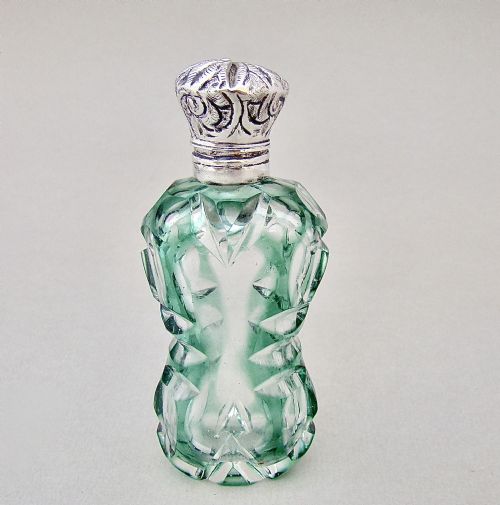
A silver capped scent bottle brings pocket-sized luxury from the vanity table, combining heavy cut glass with bright sterling mounts.
Silver Capped Scent Bottle
When you search for a silver capped scent bottle, you encounter pieces spanning the Victorian and Edwardian eras, with many examples originating from the late nineteenth century. These items function as portable dressing table accessories designed to carry perfume safely within a handbag or travel case.
The most common examples on this page pair clear cut glass or coloured glass bodies with stamped sterling silver caps. Forms range from straightforward cylindrical vanity bottles to novelty shapes like owls and miniature champagne flasks.
How they were made
Glass bodies are formed through blowing and cutting techniques, producing heavy vessels in clear crystal, cranberry, green, blue, and amethyst hues. Overlay glass methods involve casing a coloured layer over white or clear glass before cutting through the top layer to expose the contrasting colour beneath.
Silver caps and mounts are shaped using stamping or solid casting methods, frequently decorated with repoussé floral patterns or chased detailing. These mounts are secured directly to the glass necks, sometimes incorporating inner glass stoppers beneath the screw or hinged outer lid.
An owl appears among the glass flasks, watching the vanity table with silver eyes.
What varies in quality
Quality rests in the depth and crispness of the glass cutting, alongside the thickness of the sterling silver used for the cap. Heavy, clear crystal and thick overlay glass command attention, while worn or thin silver mounts indicate heavier use.
Unusual forms, such as animal figures or cased French items, represent more ambitious manufacturing standards than standard cylindrical dressing table bottles. The presence of undamaged inner stoppers and clear hallmarks adds to the integrity of the piece.
The Silver Capped Scent Bottle Glossary
- Sterling silver
- A silver alloy containing 92.5 percent pure silver by mass, standard for British silver caps and mounts.
- Overlay glass
- A glassmaking technique where one layer of coloured glass is fused over a base layer of a different colour and partially cut away.
- Repoussé
- A metalworking technique where the silver is hammered into relief from the reverse side to create decorative patterns on the cap.
- Cranberry glass
- A rich red-pink glass coloured with gold chloride, popular in Victorian dressing table wares.
Silver Capped Scent Bottle: Frequently Asked Questions
How do I clean a silver capped scent bottle?
Clean the glass body using warm soapy water while taking care to keep moisture away from any paper labels or delicate interior linings. Polish the sterling silver cap gently with a soft cloth, avoiding abrasive cleaners that might damage the hallmarks or chased decoration.
Ensure the bottle dries thoroughly before replacing the cap to prevent moisture from tarnishing the metal interior or sticking to the glass neck.
Were these bottles meant for travel?
Many examples served as essential dressing table accessories, yet smaller sizes and secure screw caps allowed owners to carry perfume during travel. Leather cases and robust glass walls helped protect the bottles inside luggage.
Novelty shapes and delicate overlay glass pieces tended to remain stationary on vanity trays rather than journeying in pockets.
How can I date a silver capped scent bottle?
Dating relies primarily on the hallmarks stamped onto the silver cap, which indicate the assay office, year letter, and standard of silver. Stylistic indicators such as Victorian aesthetic movement engraving or Edwardian proportions offer additional chronological clues.
The manufacturing techniques of the glass body, including pontil marks and cutting styles, also help narrow down the period of production.
What is the difference between a scent bottle and a vanity jar?
Scent bottles feature narrow necks designed to dispense liquid perfume sparingly, often paired with an internal glass stopper and a tight cap. Vanity jars possess wider openings intended for creams, powders, or trinkets rather than liquid contents.
Both categories frequently share identical silver mount designs and glass colours within the same dressing table set.