
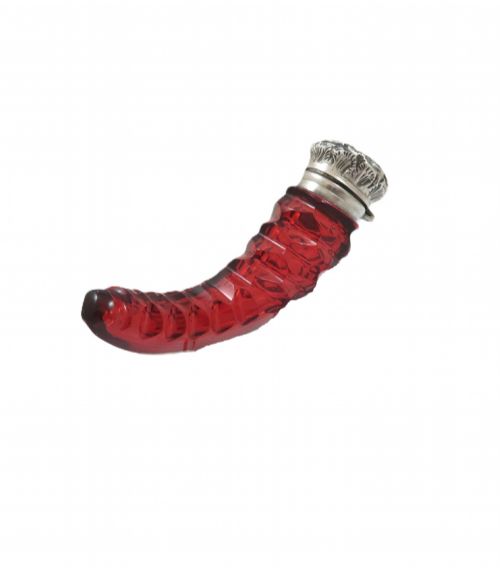
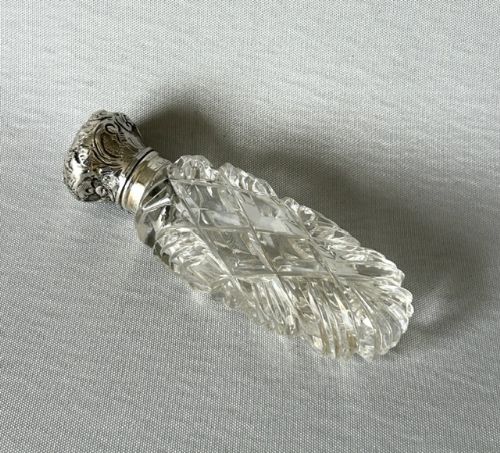
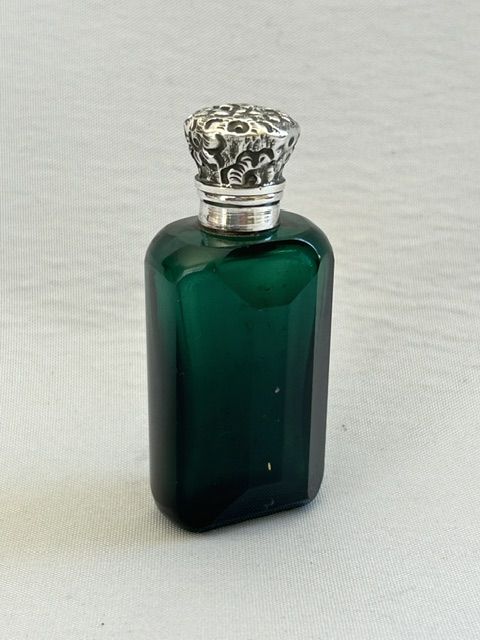
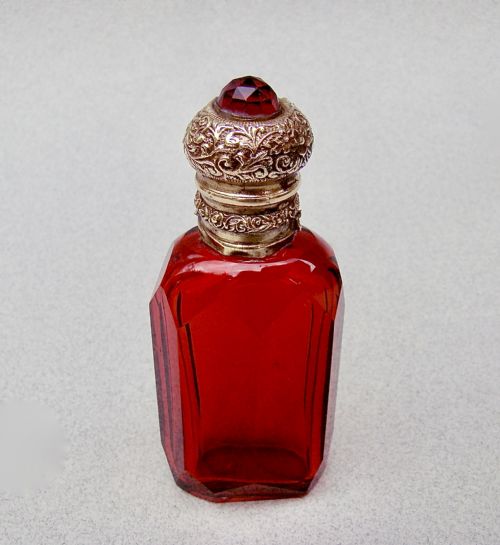
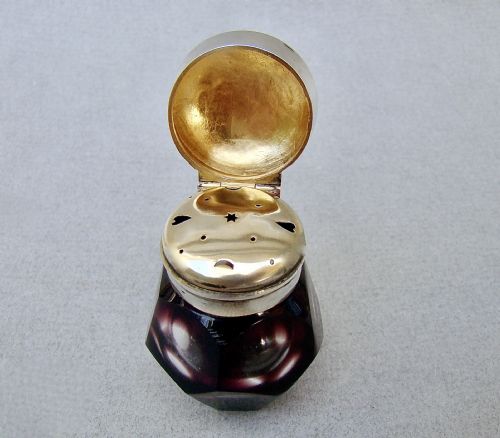


Victorian Glass Scent Flask
A victorian glass scent flask is a pocket container for perfume, combining coloured or cut glass with silver mounts for daily use.
Victorian Glass Scent Flask
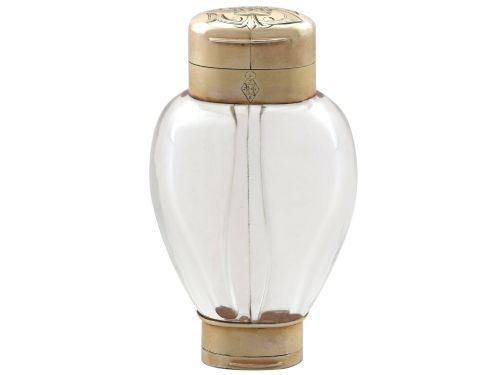
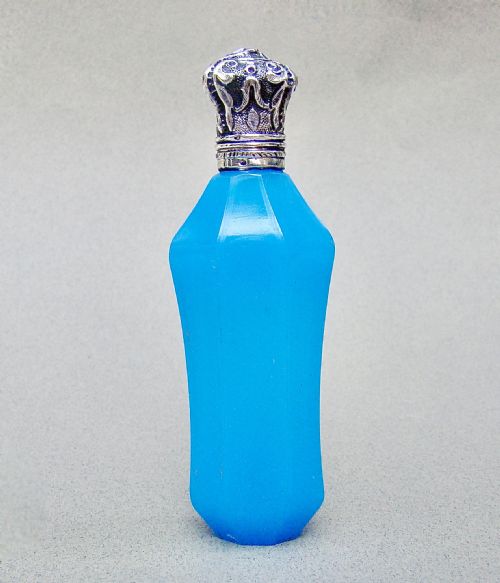
A victorian glass scent flask is a small personal container designed to hold perfume, often fitted with a hinged cap to preserve volatile fragrances. These vessels appear frequently in nineteenth-century contexts, combining utility with decorative miniature craftsmanship.
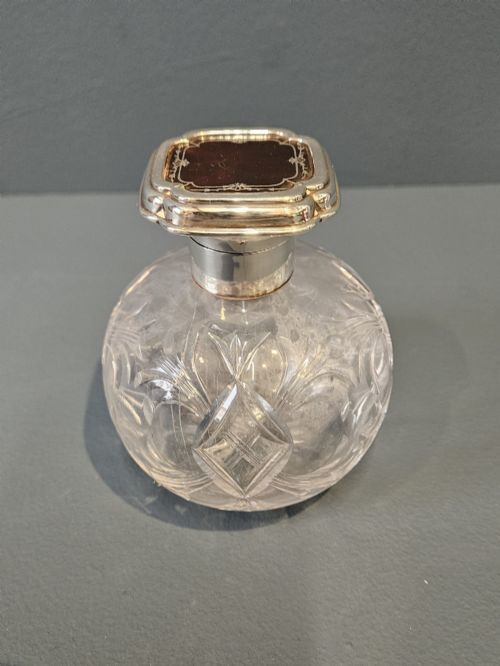
The pieces on this page span the Victorian and Edwardian periods, alongside nineteenth-century French and Venetian works. Buyers most commonly encounter cut glass and coloured glass bodies paired with sterling silver or ormolu mounts.
How They Were Made
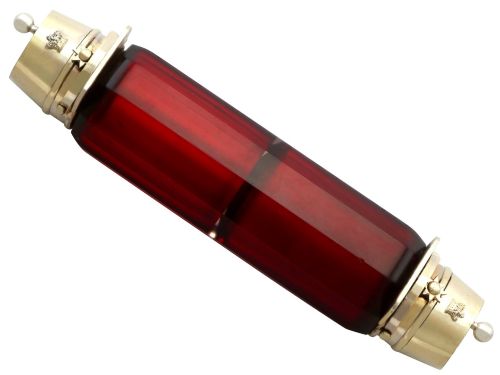
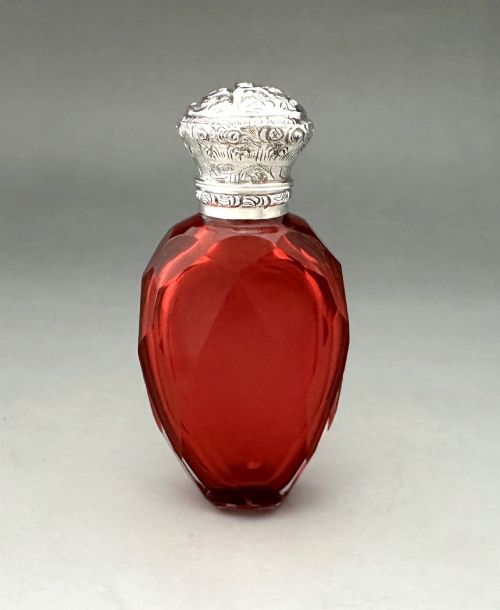
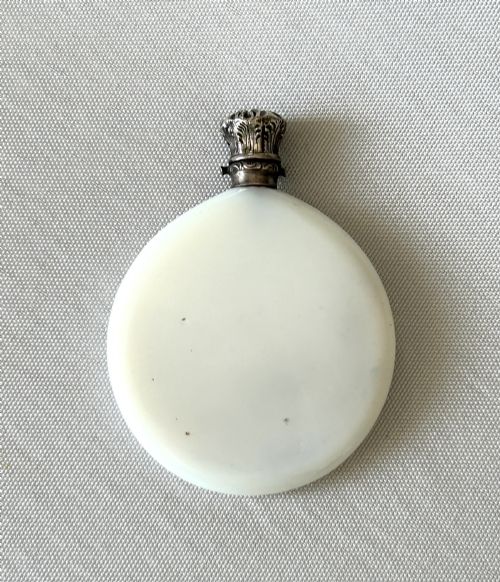
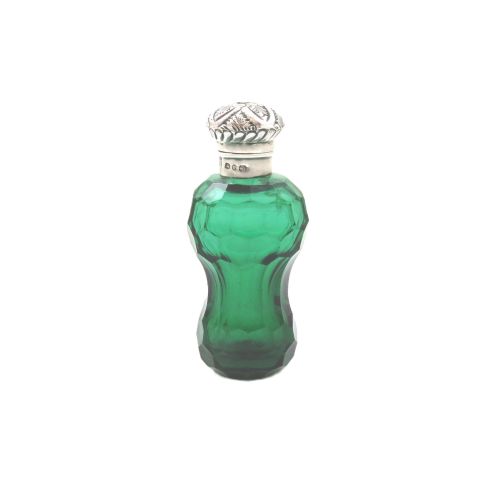
Makers shaped glass through blowing, moulding and overlay techniques, producing surfaces in cranberry, opaline, ruby, amethyst and green hues. Coloured mineral oxides added to the molten batch yielded deep tones, while overlay methods layered contrasting glass colours before wheel-cutting.
Metalwork involved sterling silver or ormolu mounts shaped to the neck and cap, frequently secured with hinged closures and internal cork stoppers. Silversmiths embossed, engraved or chased floral and geometric patterns directly onto the metal caps and collars.
Victorian Glass Scent Flask Retail Price Guide 2026
Typical asking prices for victorian glass scent flask among the pieces listed under this phrase on Sellingantiques today, from the lower quarter to the upper quarter. They describe what is for sale here now, not the wider market.
Some flasks take the distinct form of an owl or an egg, hiding perfume inside miniature avian and avian-adjacent anatomy.
What Varies in Quality
Quality rests in the precision of the glass cutting and the complexity of the mineral colour. Deeply saturated cranberry, vaseline or multi-layered overlay glass displays sharper facets and richer tonal graduation than plain pressed alternatives.
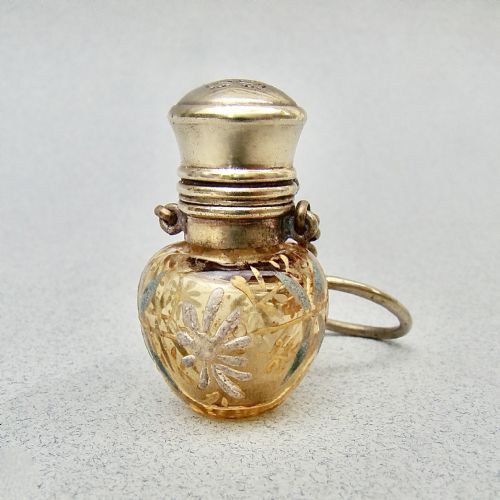
The execution of the silver or ormolu mount dictates distinction, particularly where makers applied detailed chasing, chatelaine chains or figural designs. Intact internal stoppers and functional hinges also elevate the standard of the piece.
Kate Greenaway·Franchini And Bigaglia·Moser
The Victorian Glass Scent Flask Glossary
- Chatelaine
- A decorative belt hook from which women suspended utilitarian items including scent flasks, keys and watches. These mounts often featured specialised suspension loops.
- Cranberry glass
- A transparent pink-red glass produced by adding gold chloride to the molten batch. This colour is characteristic of nineteenth-century tablewares and personal accessories.
- Opaline glass
- An opaque or translucent glass developed in pale shades such as white and turquoise. It imitates porcelain while retaining the smooth surface of glass.
- Vinaigrette
- A small ornamental box or bottle containing a perforated grille over a sponge soaked in aromatic vinegar. They served to counteract unpleasant odours in public spaces.
- Overlay glass
- A technique where a vessel of one glass colour receives one or more exterior layers of contrasting glass. Craftsmen then cut through the outer layers to reveal the base colour underneath.
Victorian Glass Scent Flask: Frequently Asked Questions
What is a victorian glass scent flask?
A victorian glass scent flask is a small personal container designed to hold perfume, featuring a glass body paired with silver or metal mounts. These items were carried in pockets or suspended from chatelaines during the nineteenth century.
They combine practical function with decorative glassmaking techniques, utilising colours such as cranberry, ruby, opaline and green alongside cut crystal.
How were these flasks used?
Owners carried liquid perfume or aromatic vinegar inside the vessel to refresh the senses during daily outings. The secure cap and internal stopper prevented leaks while stored in a pocket or handbag.
Many examples included chatelaine attachments, allowing the wearer to suspend the flask directly from a belt for quick access.
How do I identify a period piece?
Period pieces display nineteenth-century manufacturing traits such as hand-cut facets, applied silver hallmarks, and distinct glass chemistries like opaline or layered overlay. Examining the mount construction and hallmark dates provides reliable chronological markers.
Twentieth-century reproductions typically lack the weight, hand-finished mount details and specific glass colours seen in Victorian examples.
How should I clean my flask?
Clean the glass exterior using a soft cloth and warm soapy water, taking care to avoid harsh abrasives on silver mounts or gilt surfaces. If the interior requires attention, rinse gently with warm water without submerging compromised cement or paper linings.
Keep silver components polished with a dedicated cloth while protecting any historic stoppers or corks from excessive moisture.