
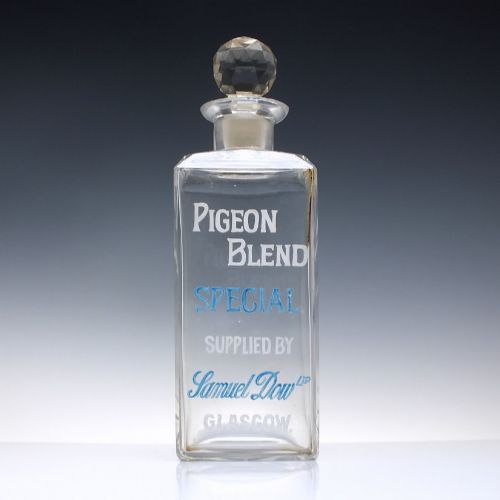
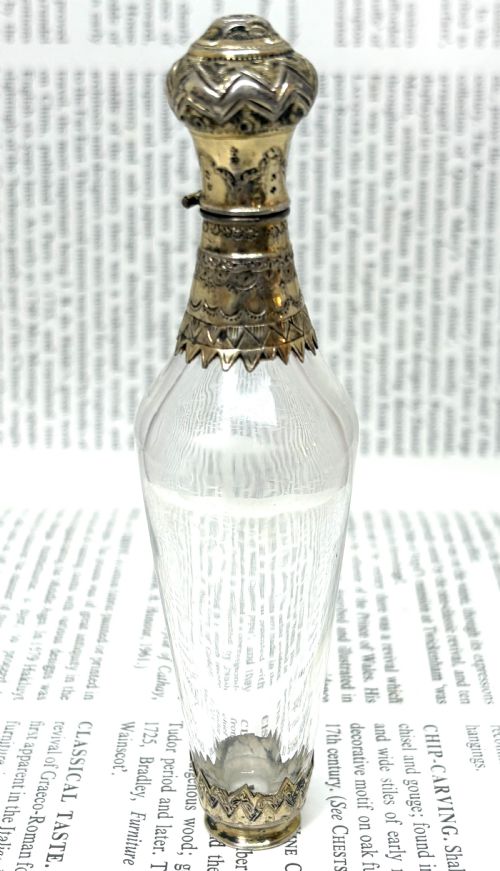


19th Century Glass Flask
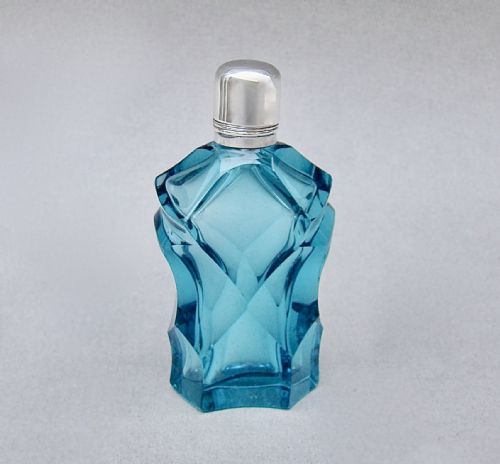
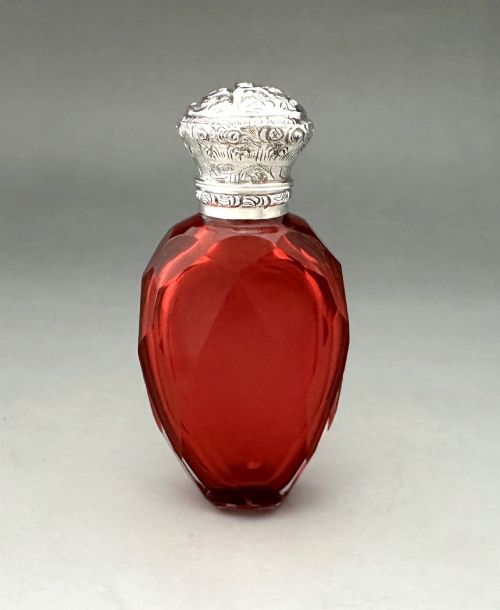
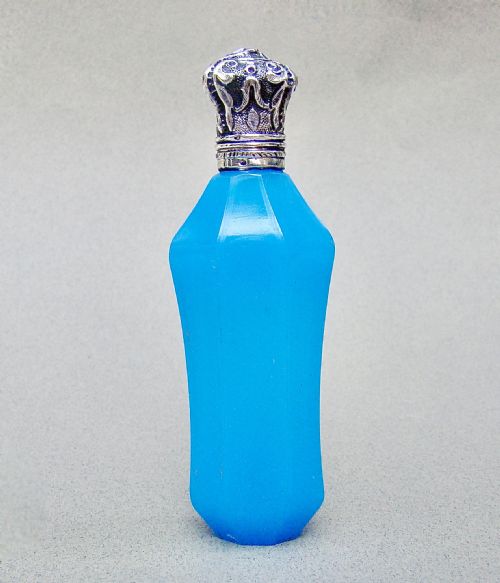
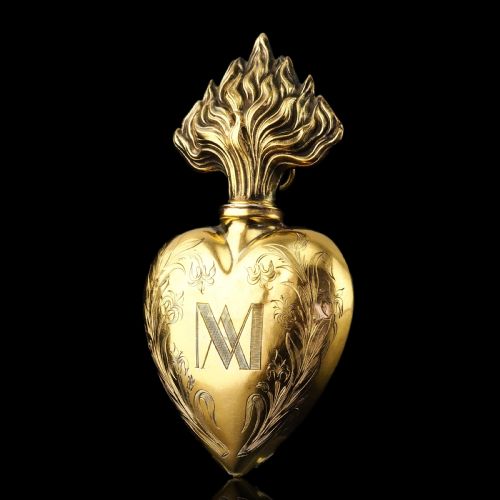
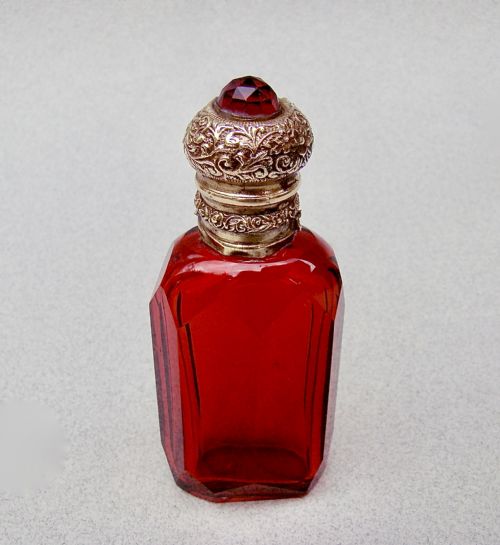
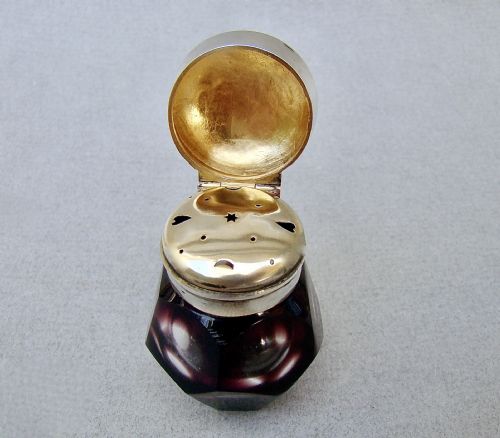
A 19th century glass flask brings portable elegance and pocket-sized utility to a collection, offering coloured glass and metal mountings from the Victorian era.
19th Century Glass Flask
A 19th century glass flask encompasses a wide variety of personal and household vessels, ranging from pocket scent bottles and vinaigrettes to larger spirit decanters and pocket flasks.
The most common versions met on this page are Victorian and French scent bottles, alongside Nailsea glass pocket flasks characterised by looped or trailed white and pink glass loops.
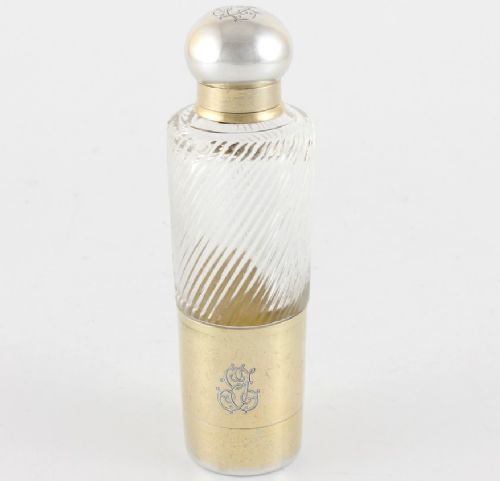
Makers and workshops produced these pieces in forms spanning cylindrical, heart-shaped, double-ended, and figural designs such as animals and dogs, paired with fitted silver or silver-gilt mounts.
Materials and production methods
Makers utilised free-blown, mould-blown, and cased glass techniques, frequently layering different coloured glasses such as cranberry, ruby, teal, vaseline, and opaline glass to achieve rich optical depth.
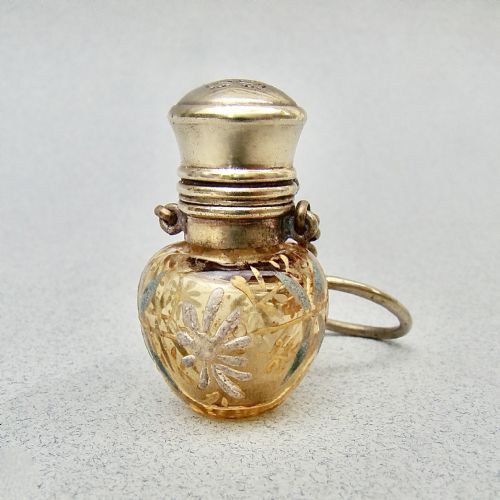
Metalwork mounts in sterling silver, silver gilt, and ormolu were cast, chased, and engraved to secure hinged caps, screw lids, and chatelaine chains to the glass bodies.
Surface decoration involved slicing, cutting, wheel-etching, and enamelling, alongside specialised techniques like murrine glass inclusions and mercury glass silvering.
Geographic origins span English Nailsea production, French Parisian workshops, Venetian Murano glasshouses, and Bohemian factories.
Distinctions in craftsmanship and finish
The quality of a 19th century glass flask rests on the precision of the glass cutting and the weight of the metal mounts, where heavier gauge sterling silver or gilded work indicates a superior commission.
Artistry in coloured glass layering, such as triple-overlay glass or complex Nailsea trailing, separates standard utilitarian bottles from exhibition pieces produced by known glasshouses like Moser or Murano workshops.
The integrity of the fit between the metal collar and the glass neck distinguishes master assembly from routine production, ensuring the stopper or cap seals securely.
Tonnel Paris·Franchini And Bigaglia·S Morden And Co
The 19th Century Glass Flask Glossary
- Nailsea glass
- A type of glass featuring looped or combed white or coloured glass trails within a clear or coloured body, originating from Nailsea near Bristol. These flasks often display distinctive pink or cranberry glass grounds.
- Chatelaine
- A decorative belt hook worn with suspended chains carrying everyday items such as scent bottles and pill boxes. This mounting allowed a lady to keep her personal flask accessible at the waist.
- Vinaigrette
- A small hinged box or bottle containing a sponge soaked in aromatic vinegar, fitted with an internal pierced grille. They were housed in silver and glass containers during the Victorian period.
- Silver gilt
- Silver that has been coated with a thin layer of gold through fire gilding or electroplating. This finish provided a rich golden appearance while utilising a silver base for mounts.
- Overlay glass
- Glass created by casing one layer of coloured glass over a base of another colour, then cutting through the top layer to reveal the contrasting glass beneath. This technique produced sharp geometric or floral patterns.
19th Century Glass Flask: Frequently Asked Questions
How do I clean a glass flask?
Cleaning requires warm water and mild soap, avoiding harsh abrasives that might damage delicate enamel work or silver mounts. Stubborn residue inside narrow necks responds best to specialised bottle brushes rather than chemical solvents.
Silver mounts should be polished separately with a soft cloth to prevent tarnish cleaners from contacting antique glass surfaces or vintage cork seals.
What is Nailsea glass?
Nailsea glass refers to pieces produced by glasshouses featuring characteristic opaque white or pink glass trails looped across a contrasting body. These distinctive patterns were created by applying molten glass threads onto the gather while blowing.
Collectors prize these flasks for their vibrant colour combinations and whimsical pocket forms made during the nineteenth century.
Are double-ended scent bottles rare?
Double-ended scent bottles feature hinged caps at both ends, allowing the owner to carry two different liquids, such as smelling salts and perfume, in a single vessel. They gained popularity during the Victorian era for practical portability.
Finding them complete with original glass stoppers under both metal caps remains a key indicator of preservation.
How can I date a glass flask?
Dating relies on stylistic clues, metal hallmarks, and manufacturing techniques recorded across nineteenth-century production. Victorian sterling silver mounts frequently bear date letters and maker's marks that pinpoint the exact year of manufacture.
Unmarked French or Bohemian pieces require stylistic analysis of the cut glass patterns, colour palettes, and ormolu mounts to place them within specific decades.