





Red Glass Perfume Flask
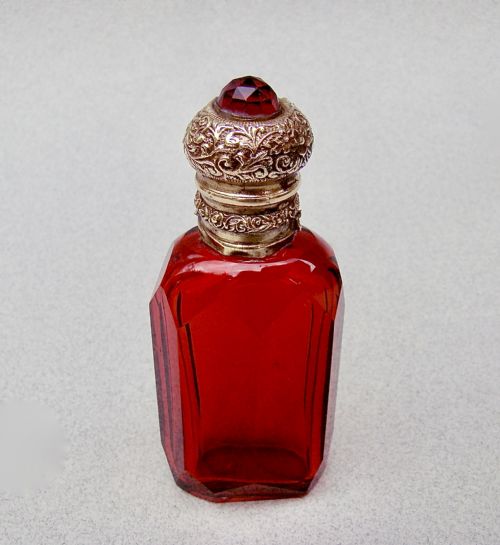
A red glass perfume flask brings rich colour and tactile weight to a dressing table, combining glassmaking skill with precious metal work.
Red Glass Perfume Flask
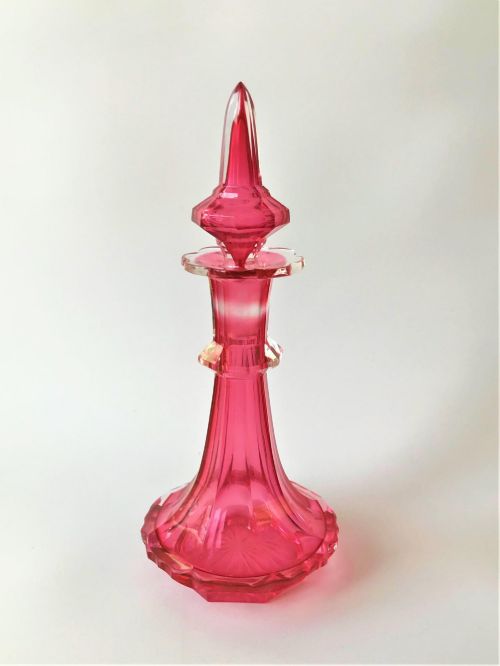
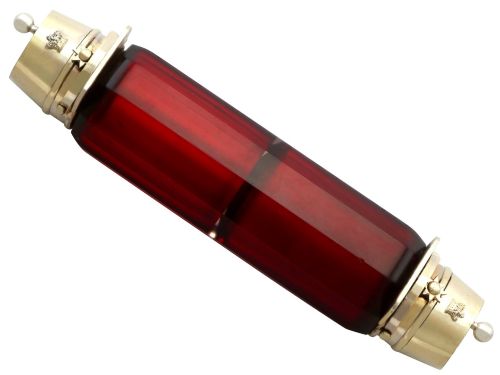
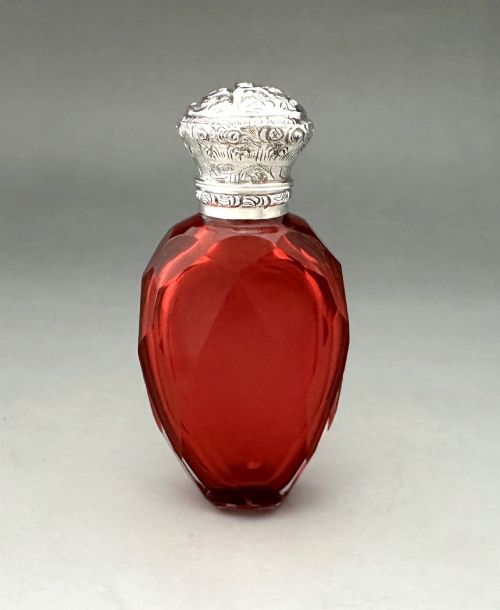
A red glass perfume flask encompasses scent bottles and spirit perfume bottles formed from ruby or cranberry glass. These pieces span the Victorian and Edwardian eras, alongside select French nineteenth-century and Art Deco examples.
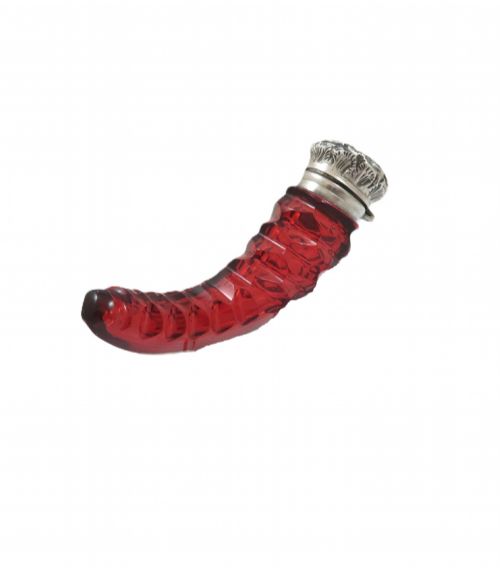
The buyer will most frequently encounter Victorian and Edwardian iterations mounted in silver or sterling silver. These incorporate diverse forms ranging from standard scent bottles to icicle shapes and egg designs.
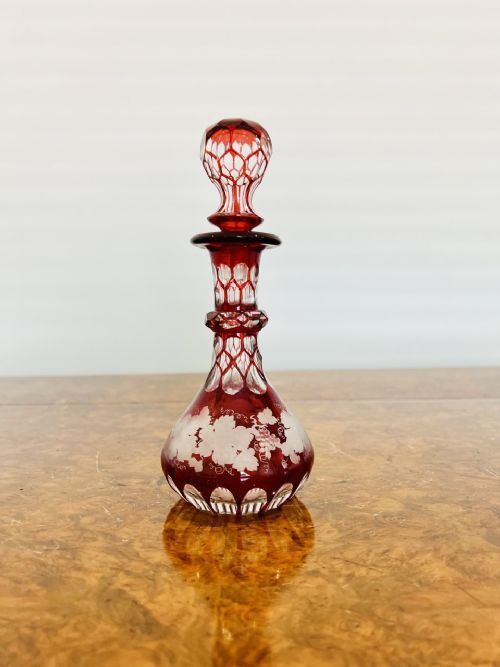
Origin points vary between British workshops, such as Birmingham productions, and continental European output including French and Bohemian pieces. Each regional tradition applies distinct decorative treatments to the coloured glass body.
Materials and construction
Makers shaped the vessels from ruby or cranberry glass, occasionally employing mercury glass or overlay techniques to build contrasting colour layers. Some examples integrate silver-gilt, ormolu, or enamel details directly into the glass body.
Silver mounts and hinged lids were fitted securely to the glass necks, often bearing hallmarks from specific years like eighteen ninety-two. Overlay versions required skilled cutting through a surface layer of glass to expose the contrasting colour underneath.
Red Glass Perfume Flask Retail Price Guide 2026
Typical asking prices for red glass perfume flask among the pieces listed under this phrase on Sellingantiques today, from the lower quarter to the upper quarter. They describe what is for sale here now, not the wider market.
Factors influencing quality
Superior examples display precise glass cutting and deep, even colour saturation within the ruby or cranberry material. The integration of the metal mount demonstrates craftsmanship through secure fitting and refined chasing or enamel work.
The presence of maker attribution, such as work by Karl Palda or Rene Lalique, distinguishes exceptional pieces from standard production. Intricate forms like icicle designs or silver overlay demand greater technical precision than plain cylindrical bottles.
Karl Palda·Rene Lalique
The Red Glass Perfume Flask Glossary
- Ruby glass
- A deep red glass coloured traditionally with gold chloride during the melting process. This material forms the primary body for many nineteenth-century scent containers.
- Cranberry glass
- A translucent pinkish-red glass achieved by adding copper or gold to the batch. It appears frequently in Victorian and Edwardian scent bottles.
- Silver-gilt
- Silver that has been coated with a thin layer of gold on its surface. This finish protects the underlying metal and adds a warm tone to the bottle mounts.
- Ormolu
- Gilded bronze or brass used for decorative mounts and decorative collars. French nineteenth-century pieces frequently utilise this material.
- Overlay glass
- A technique where a layer of coloured glass is cased over a clear or contrasting inner layer. Artisans then cut through the top layer to reveal patterns beneath.
Red Glass Perfume Flask: Frequently Asked Questions
What periods do these bottles come from?
The pieces span from the Georgian era through Victorian and Edwardian times up to the Art Deco period of the nineteen-thirties. Nineteenth-century French and Bohemian examples also appear regularly.
Dates often align with silver hallmarks on the mounts, which help pinpoint the year of manufacture. Victorian examples dominate the selection with diverse silver and glass combinations.
How do ruby and cranberry glass differ?
Ruby glass exhibits a darker, more saturated red hue reminiscent of the gemstone. Cranberry glass tends to show a lighter, pinker red tone.
Both colours derived from similar metallic additives during the glassmaking process but were handled differently by Victorian and Edwardian glasshouses.
What metals were used for the mounts?
Sterling silver, silver-gilt, and ormolu serve as the primary metals for collars, caps, and hinged lids. Birmingham assay marks frequently appear on British silver mounts from the eighteen nineties.
French pieces often favour ormolu or gilded brass to complement the rich red glass bodies.
How were these bottles used historically?
Owners carried them in reticules or displayed them on dressing tables to hold liquid perfumes and volatile salts. The secure metal caps prevented evaporation of the contents.
Spirit perfume bottles also served a dual purpose for carrying refreshing alcohol-based tonics during the nineteenth century.
What is overlay glass?
Overlay glass consists of two or more distinct layers of coloured glass fused together during blowing. Craftsmen then cut away sections of the outer layer to reveal the contrasting glass underneath.
Bohemian workshops specialised in this technique, producing striking patterns on cranberry glass bottles.