



Antique Silver Smell Bottle
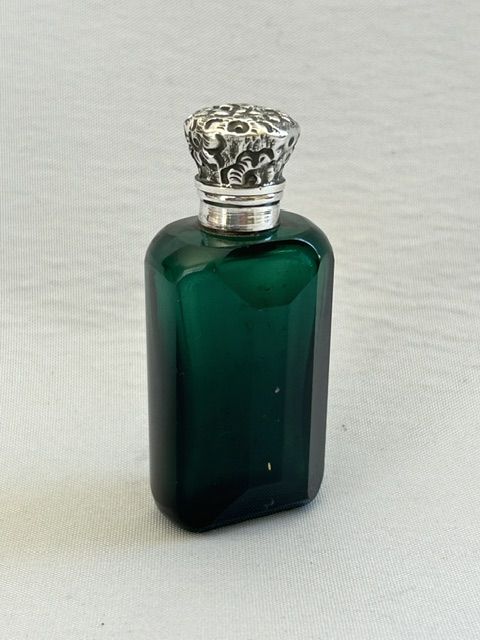
An antique silver smell bottle is a small, portable container crafted to hold perfumes or aromatic vinegars.
Antique Silver Smell Bottle
When you search for an antique silver smell bottle, you are looking at personal scent containers and vinaigrettes made in Georgian, Victorian and Edwardian periods. These portable vessels were designed to hold perfumes, scented oils or aromatic vinegars used to mask unpleasant odours or revive the senses.
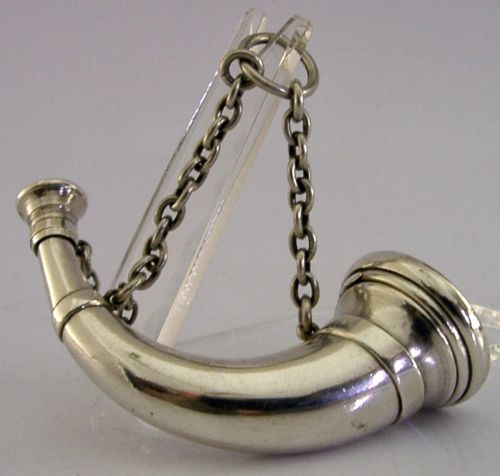
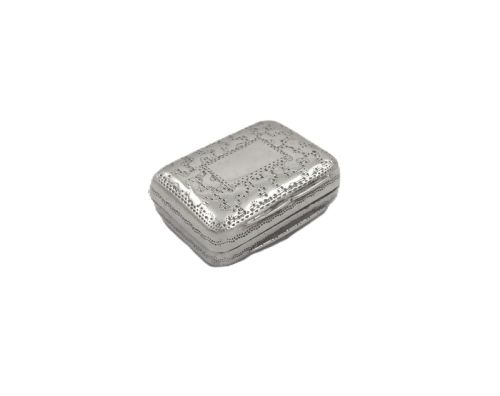
The versions you are most likely to meet on this page span from the late eighteenth century through to the early twentieth century. They appear in forms such as single scent bottles, double-ended flasks, novelty shapes like hunting horns and fish, and small vinaigrettes with internal pierced grilles.
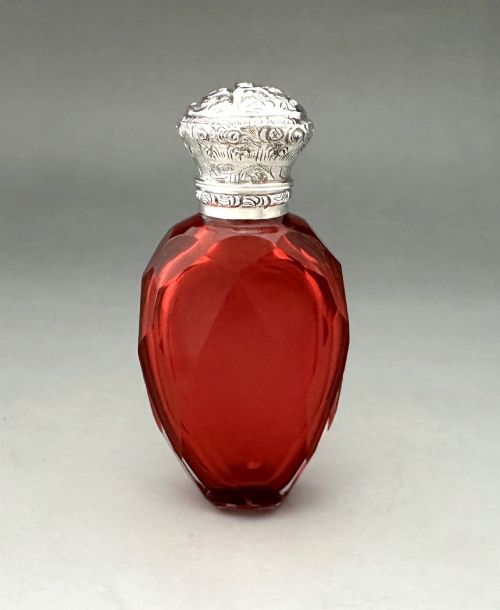
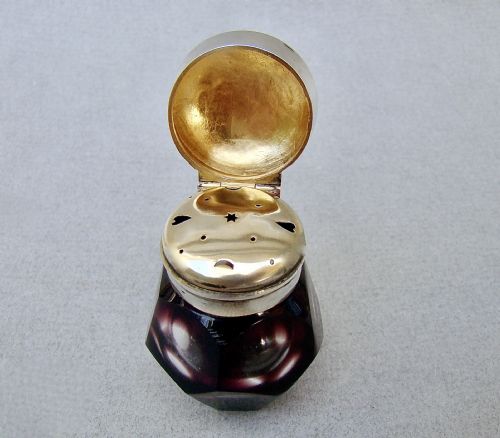
Makers housed these vessels in sterling silver or silver gilt mounts, frequently combining the metal with coloured glass bodies. Examples range from miniature champagne bottles to cut and etched glass cylinders designed to sit in a pocket or hang from a chatelaine.
How they were made
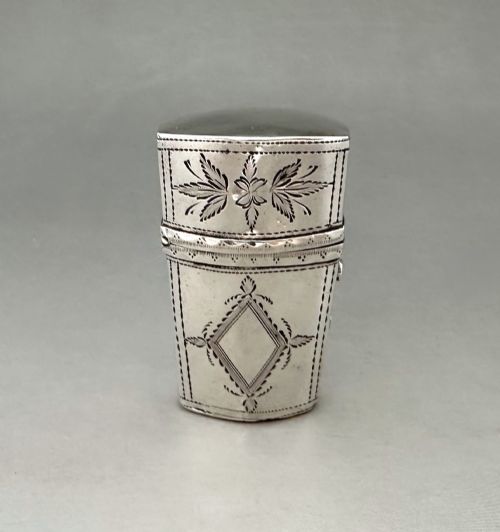
Silversmiths constructed the mounts, caps and internal grilles using sterling silver, frequently applying silver gilt or intricate engraved detail. These metal elements were paired with blown, cut, etched or overlaid glass bodies in ruby, cranberry, amethyst, Bristol green and opaline colours.
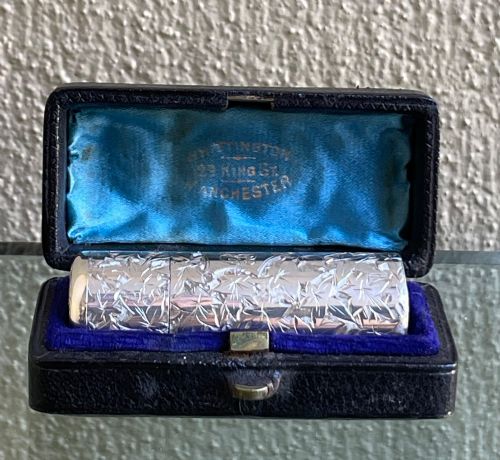
Makers also utilised supplementary materials like leather and velvet for fitted cases or specific novelty designs such as speckled eggs. Hinged lids, screw caps and articulated joints required precise metalworking to ensure a secure seal for liquid perfumes and pungent vinegars.
Makers shaped silver smell bottles into novelty forms including hunting horns, articulated fish, speckled eggs and miniature liquor bottles.
What varies in quality
The distinction between standard items and superior examples rests on the complexity of the silversmith's work and the quality of the glass body. Engraved detail, silver gilt finishes and unusual novelty forms require higher levels of craftsmanship than plain silver mounts.
Makers who produced specialised glass, such as multi-coloured cased layers or finely cut and etched crystal, created pieces of greater visual depth. The presence of clear hallmarks, original internal stoppers and intact pierced grilles in vinaigrettes elevate the standing of a piece.
Horton And Allday·Sampson Mordan·Edward Smith·G H James And Co
The Antique Silver Smell Bottle Glossary
- Vinaigrette
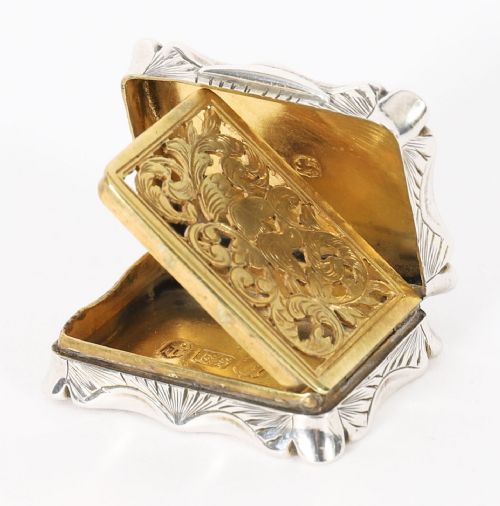
- A small decorative container featuring an internal pierced grille that holds a sponge soaked in aromatic vinegar. These small silver boxes were carried during the Georgian and Victorian eras.
- Silver Gilt
- Silver that has been coated with a thin layer of gold on its surface. This technique provides a rich golden appearance while utilising a silver base structure.
- Chatelaine
- A decorative belt hook worn with a series of suspended chains from which useful household items like scent bottles hung. Ladies utilised them for practical access to personal accessories.
- Double Ended
- A scent bottle featuring two separate compartments and caps, often designed to hold two different perfumes simultaneously. These glass cylinders taper toward both ends.
Antique Silver Smell Bottle: Frequently Asked Questions
How were vinaigrettes used?
Vinaigrettes were used to hold a small sponge saturated with aromatic vinegar rather than liquid perfume. Opening the hinged lid allowed the wearer to inhale the pungent scent.
They served as a remedy against faintness or unpleasant odours in crowded public spaces. The internal pierced silver grille kept the saturated sponge separate from the decorative case.
What is a double ended scent bottle?
A double ended scent bottle is a symmetrical glass flask with a cap at both ends. This design allowed the owner to carry two different fragrances in one portable container.
Silversmiths mounted silver hinged or screw caps onto each end of the cut glass body. They date commonly to the nineteenth century.
How do I date a silver smell bottle?
You date a silver smell bottle by examining the hallmarks stamped into the silver mounts. These marks identify the assay office, the year of manufacture and the silversmith.
Stylistic elements like cut glass patterns and glass colours also provide clues to the period. Georgian pieces tend to show different mount styles compared to later Victorian or Edwardian examples.