
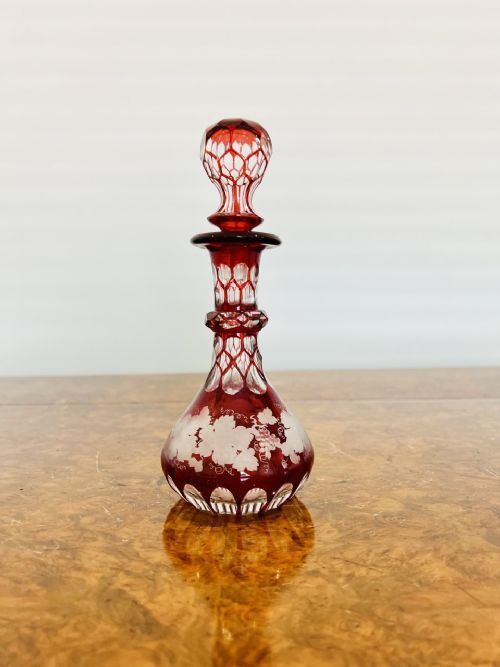


Cranberry Glass Perfume Bottle
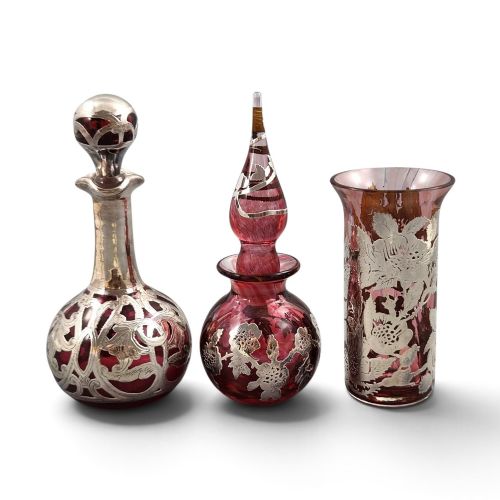
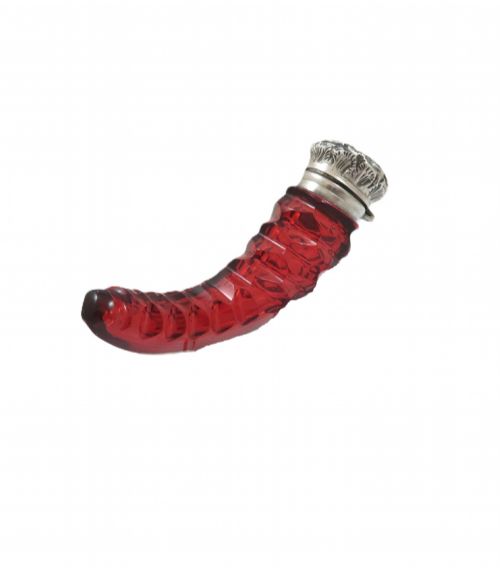
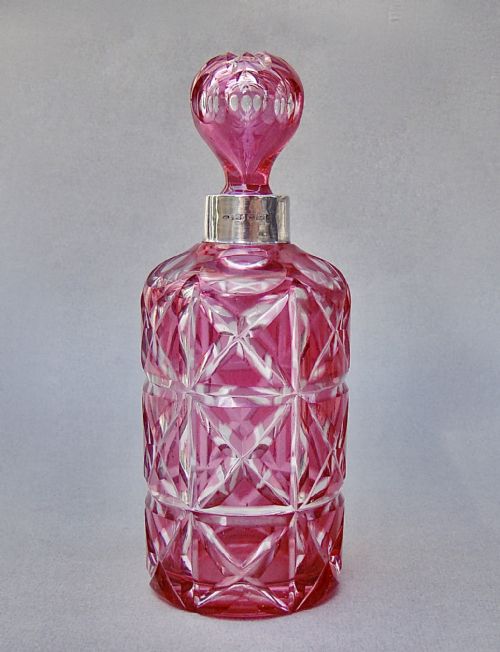
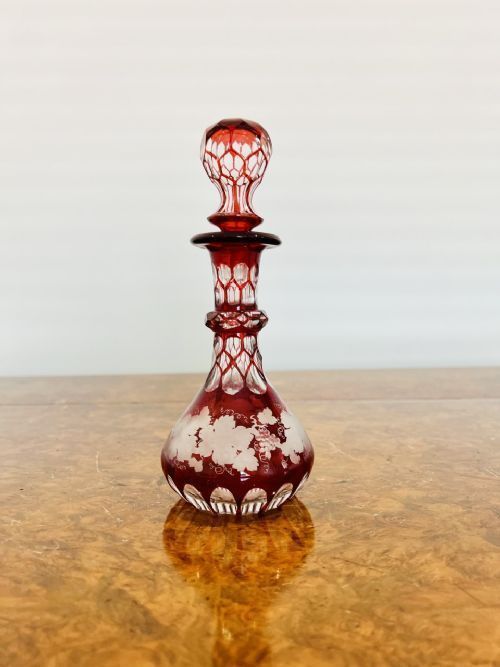
These cranberry glass perfume bottle examples combine rich red hues with silver mounts, offering a tactile piece of dressing table history.
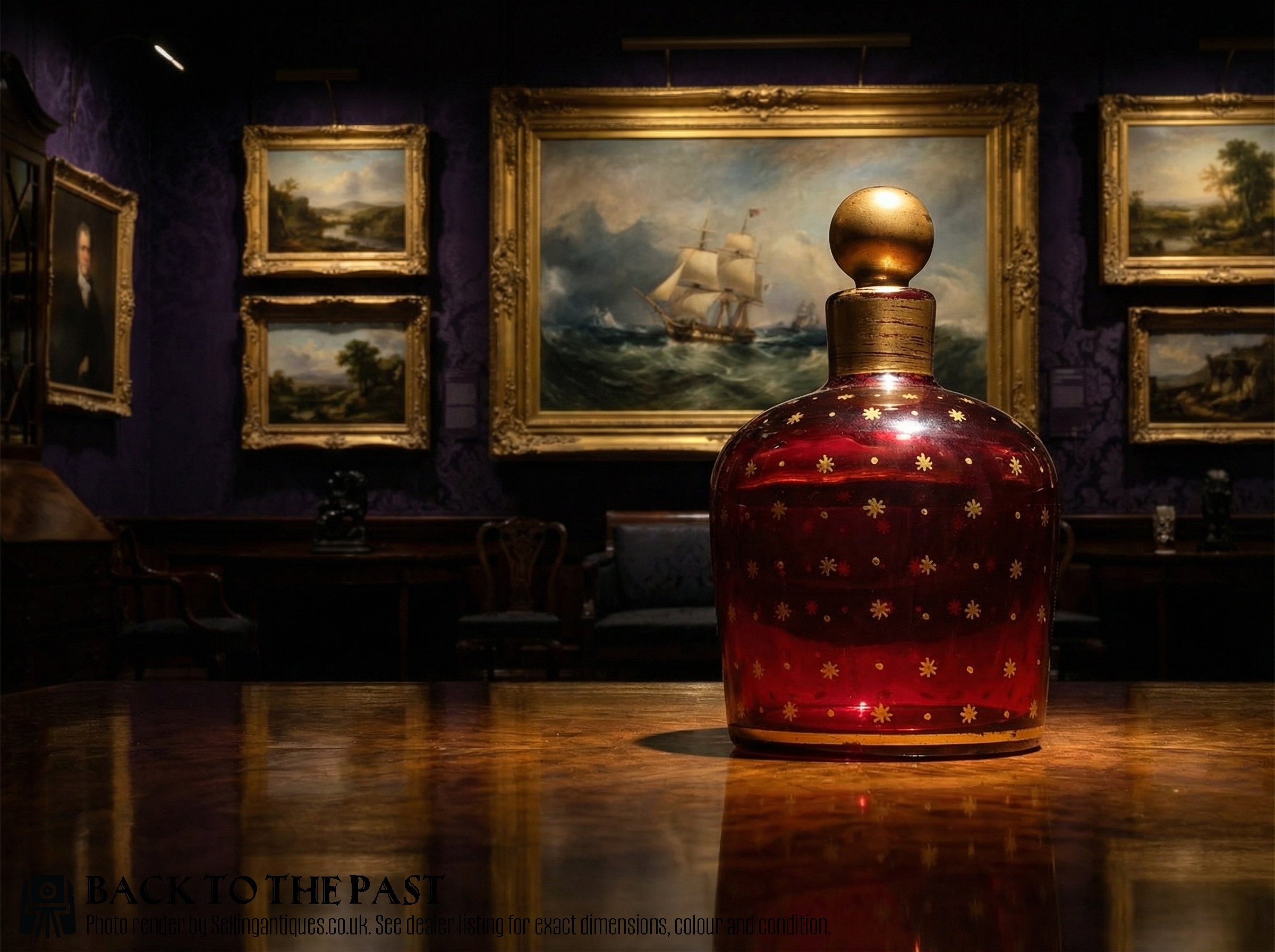
What They Are
A cranberry glass perfume bottle brings together vibrant pinkish-red glass and polished metal mounts designed for the Victorian and Edwardian dressing table. You will most frequently meet Victorian and Edwardian examples featuring sterling silver tops or hinged lids.
The selection ranges from small pocket companions to larger vanity vessels, often combined with cut glass or overlay techniques. French nineteenth-century pieces also appear, alongside specialised double-end formats and integrated vinaigrettes.
How They Were Made
The distinctive red colour of cranberry glass relies on the addition of gold chloride to the molten glass batch during production. Makers shaped these vessels through glassblowing, sometimes applying layered overlay techniques that were subsequently cut back to reveal contrasting depths.
Mounts and lids typically utilise sterling silver, shaped and fastened securely to the glass necks. Gilding and gold leaf details frequently adorn the exterior surfaces of nineteenth-century French and English pieces.
Retail Price Guide 2026
Typical UK retail prices for cranberry glass perfume bottle, calculated from the Sellingantiques database of over a million retail prices indexed since 2003. This retail price guide relies exclusively on Sellingantiques data; no external sources or auction records are used, so the figures do not describe the wider market.
The archive and current listings span Victorian, Edwardian, and nineteenth-century French periods, uniting cranberry glass with sterling silver and cut crystal.
What Varies in Quality
Quality rests upon the depth and evenness of the glass colour, alongside the crispness of any wheel-cut or overlay work. Superior examples display substantial sterling silver mounts with clear hallmarks rather than thin, unmarked metal.
The integration between the glass body and the metal collar dictates the overall finish. Refined pieces maintain smooth, secure hinges and well-fitted stoppers that speak to careful workshop assembly.
The Cranberry Glass Perfume Bottle Glossary
- Cranberry Glass
- A transparent pinkish-red glass coloured by the addition of gold. It became hugely popular during the Victorian era for tableware and decorative vanity items.
- Sterling Silver
- A silver alloy containing 92.5 percent pure silver and 7.5 percent other metals, usually copper. English pieces frequently carry hallmark stamps indicating the year and assay office.
- Overlay
- A technique involving a layer of coloured glass cased over a clear or contrasting inner layer. Artisans cut through the outer layer to create intricate patterns and windows.
- Double End
- A scent bottle design featuring two separate compartments accessed from opposite ends. These often served dual purposes, holding perfume in one side and smelling salts in the other.
- Vinaigrette
- A small ornamental box or bottle containing a perforated grille over a sponge soaked in aromatic vinegar. They sat inside vanity accessories to combat unpleasant odours.
Frequently Asked Questions
What is cranberry glass?
Cranberry glass is a distinctively bright red or pink glass created by melting gold into the glass mixture. It gained widespread popularity across Victorian and Edwardian households for decorative and vanity items.
The intensity of the shade depends on the amount of gold used and the specific temperatures applied during the blowing process.
How do I date a perfume bottle?
Dating relies heavily on hallmarks stamped onto the sterling silver mounts, which indicate the assay office and year of manufacture. Stylistic shifts in the glass cutting and the shape of the bottle also provide chronological markers.
Victorian pieces tend to show heavier ornamentation, whereas Edwardian examples often lean towards simpler, more restrained silhouettes.
Were these bottles used daily?
Victorian and Edwardian owners kept these scent bottles on dressing tables or carried smaller versions in reticules and pockets. They held personal fragrances for daily use outside the home.
The addition of screw caps or secure hinged lids prevented precious perfumes from evaporating during travel.
What are double-end bottles?
Double-end bottles feature two separate vessels joined together with a cap at each end. This clever format allowed owners to carry two different scents or a perfume alongside smelling salts.
They represent a more complex manufacturing technique than standard single-compartment scent bottles.