
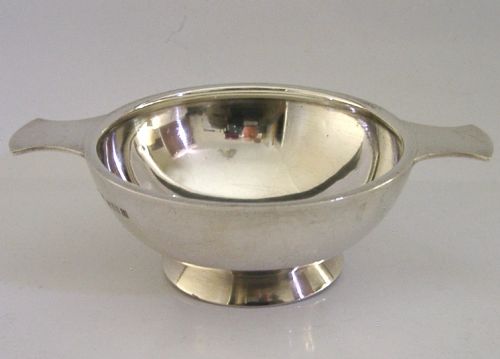
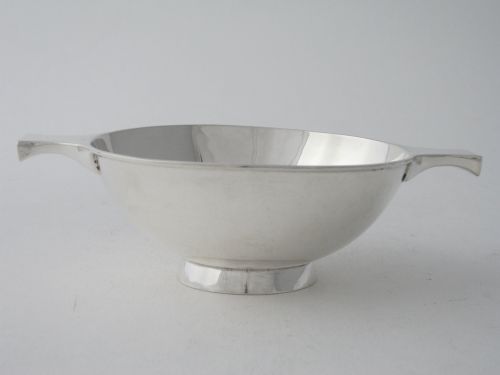
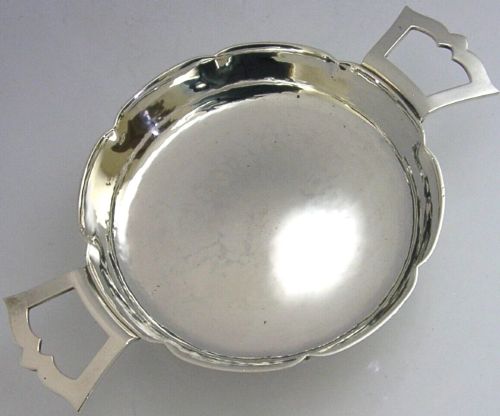
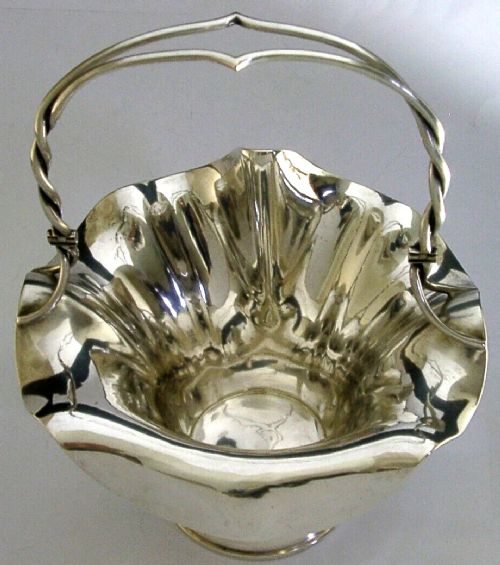

Silver Bowl with Handles
A silver bowl with handles combines practical weight with domestic display, turning simple service into a centrepiece.
Silver Bowl with Handles
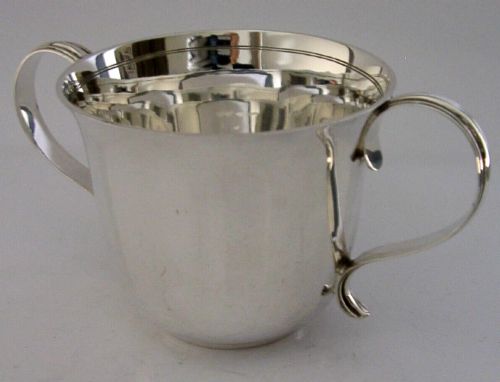
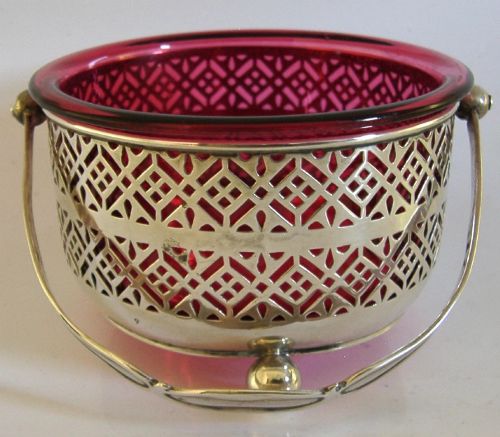
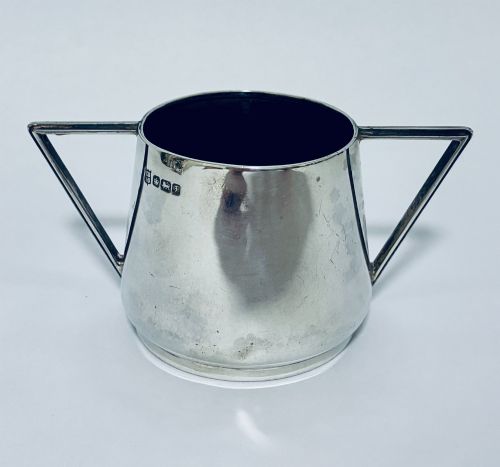
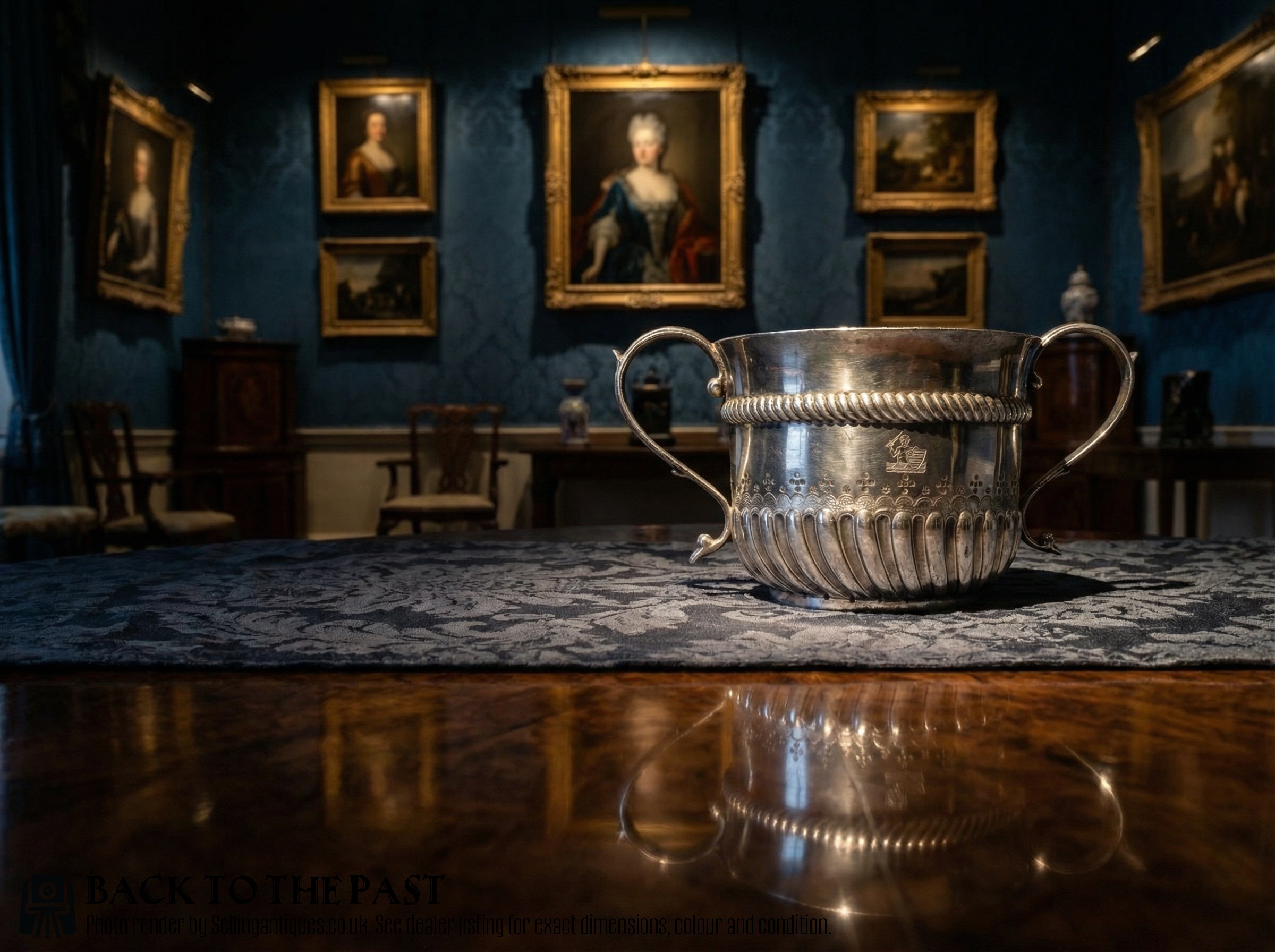
When you search for a silver bowl with handles, you look at hollowware spanning from the late seventeenth century through to the Art Deco era, including sugar baskets, porringers, and punch bowls. The versions met most often on this page are Edwardian and Victorian silver-plated or sterling pieces, frequently fitted with coloured glass liners or cast decorative handles.
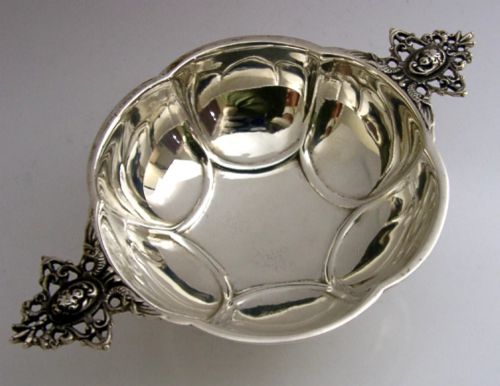
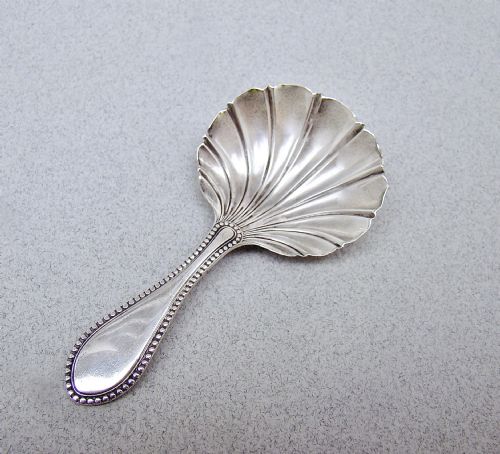
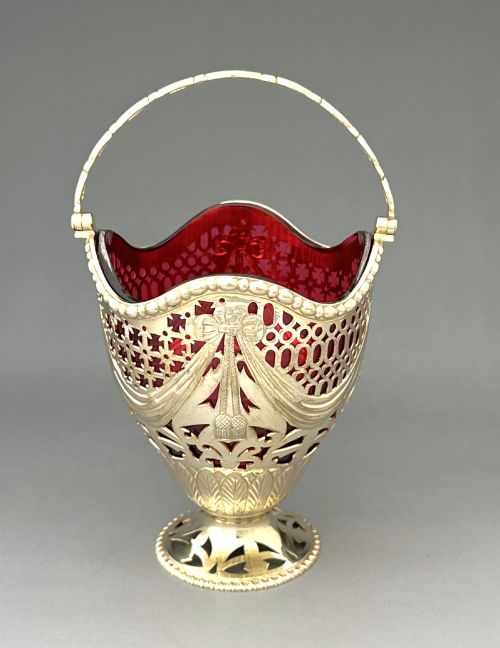
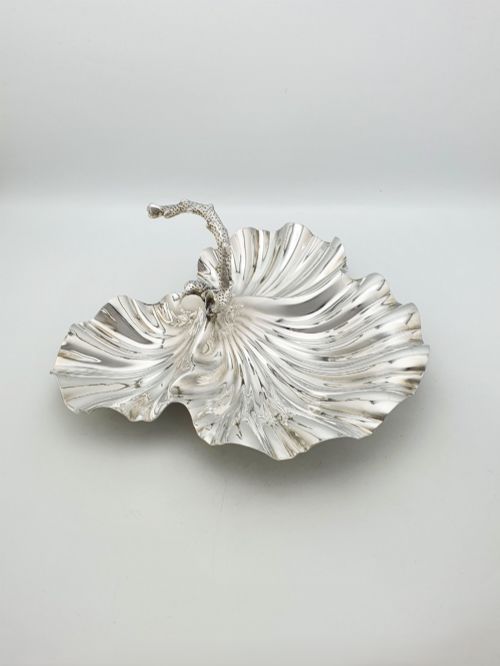
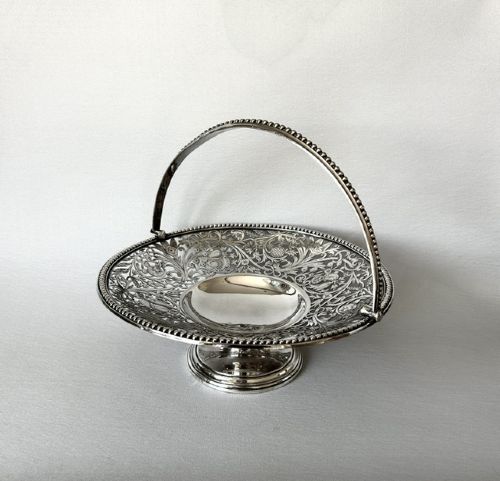
Forms range from deep footed bowls with twin lion mask mounts to pierced fruit baskets and classical neo-classical vessels with loop handles. Some take the shape of shell dishes or incorporate wood and antler, showing a wide domestic utility across dining rooms and drawing rooms.
How they were made
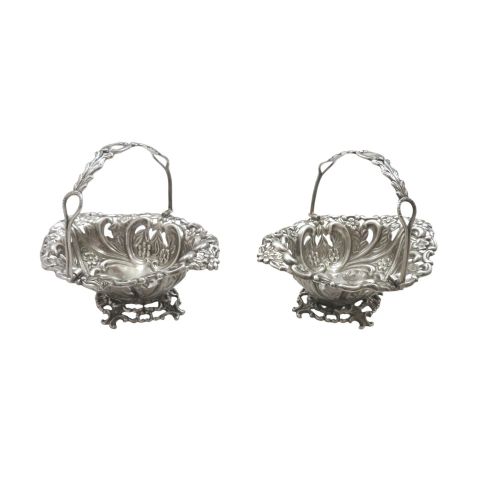
Maker's hands shaped these items from solid sterling silver or laid silver plate over base metals like nickel silver, sometimes adding a heavy gold wash known as silver-gilt. Workshops utilised techniques such as repoussé to hammer floral and bird decoration from the reverse, alongside casting for solid handles in the forms of leaves, scrollwork, or animal heads.
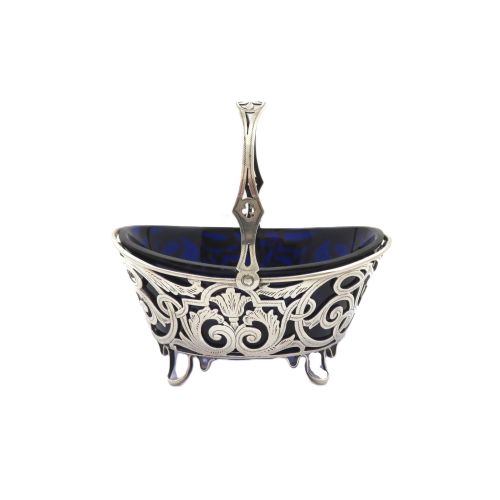
Many designs incorporate contrasting inserts of ruby, cranberry, or cobalt glass, requiring blown glass liners to fit snugly within pierced or solid silver frameworks. Details were finished with hand engraving, applied beaded rims, and reeded mounts.
A salad bowl listed here pairs silver plate with sturdy oak and genuine antler handles for rustic dining.
What varies in quality
Quality rests in the crispness of the repoussé work and the weight of the metal itself, distinguishing thin pressed plating from substantial cast elements. Pieces with well-defined chased motifs and heavy mounts demonstrate superior workshop standards.
The integration of secondary materials also alters character, such as the clarity of coloured glass liners and the secure fit of applied tab or loop handles. Early examples from the seventeenth and eighteenth centuries show distinct hand-hammered surfaces that differ markedly from later machine-rolled production.
Thomas Bradbury·Daniel and Arter
The Silver Bowl with Handles Glossary
- Porringer
- A small two-handled bowl used for porage, broth, or liquids. These early vessels typically feature flat pierced tab handles.
- Repoussé
- A method of ornamentation where metal is hammered from the reverse side to form raised relief patterns on the front.
- Silver-Gilt
- Sterling silver that has been coated with a thin layer of gold on the surface. This technique provides a rich, warm interior finish often seen on bowls and baskets.
- Electroplated Nickel Silver
- A base metal alloy of copper, nickel, and zinc coated with a layer of silver using electrolysis. It became a common substitute for solid sterling during the Victorian period.
- Quaich
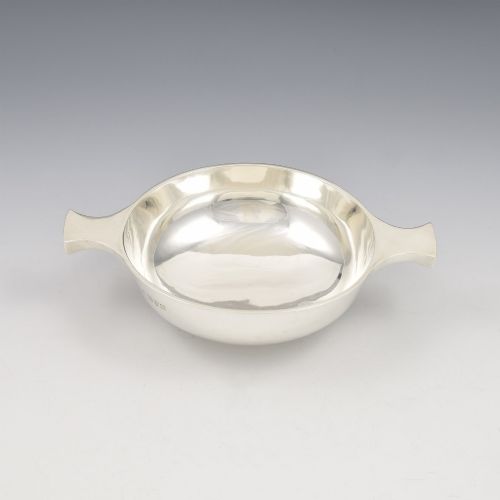
- A traditional Scottish two-handled drinking vessel. These shallow bowls usually display simple applied tab handles.
Silver Bowl with Handles: Frequently Asked Questions
What were handled silver bowls used for?
These vessels served various domestic functions at the table, from holding sugar and fruit to presenting punch, nuts, or side dishes. The handles made passing heavy contents around a dining table safer and easier.
Over time, their roles shifted from practical service to decorative display on sideboards and central tables, particularly when combined with brightly coloured glass liners.
How can I tell the age of a bowl?
Age is identified through a combination of hallmarks, construction methods, and stylistic cues such as neo-classical swags or Edwardian floral repoussé. Sterling silver pieces often carry date letters and town marks stamped into the metal.
Unmarked silver-plated items rely on their manufacturing style, handle design, and the presence of base metals underneath worn plate to suggest a Victorian or later date.
Why do some bowls have glass liners?
Glass liners were introduced to protect the metal from acidic foods such as fruit, berries, or moist preserves. Cranberry, ruby, and cobalt glass also added vibrant colour contrast against the polished silver or plate.
These removable inserts made cleaning much simpler after dining, preventing sticky residues from hardening directly onto the silver surface.