




Pair Silver Bonbon Bowls
These pair silver bonbon bowls offer delicate serving vessels designed to hold sweets, bringing period charm and refined metalwork to the table.
Pair Silver Bonbon Bowls
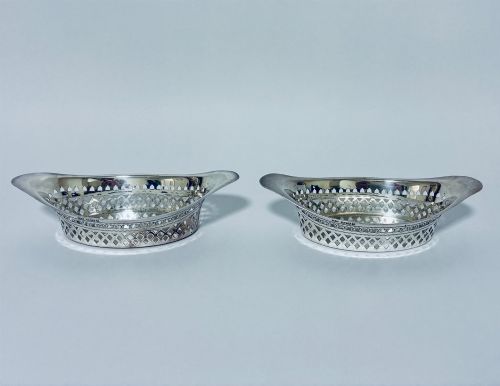
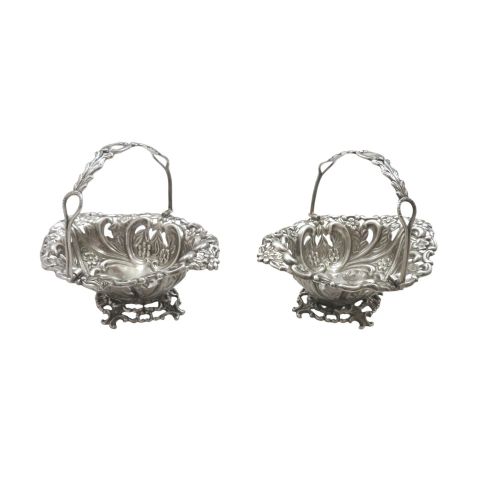
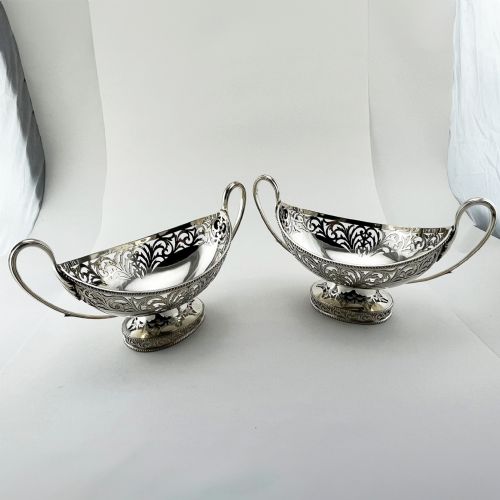
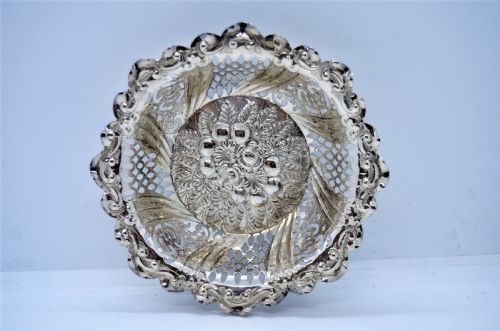
When you search for pair silver bonbon bowls, you encounter matched sets intended for serving confectioneries, small cakes, and sweetmeats. These pieces emerge across various historical periods, ranging from Georgian and Victorian eras through to the Art Deco period.
The selections available here span multiple functional forms, including decorative baskets, sweet stands, pedestal dishes, and footed bowls. Many retain supplementary elements such as cut-glass liners, tortoiseshell accents, or velvet and satin fitted cases.
Victorian and Edwardian examples sit alongside Georgian pedestal forms and 1930s designs bearing hallmarks from makers like Viners and Thomas Bradbury. Buyers frequently find matched pairs configured as sweet dishes, dessert bowls, and reeded handled servers.
How they were made
Makers utilised sterling silver and silver plate, often pairing the primary metal with contrasting materials such as glass liners and tortoiseshell. Vermeil finishes, providing a gilded interior surface, appear on specific Georgian pedestal pieces to contrast with the exterior silver.
Construction techniques include piercing, embossing, and casting, resulting in ornamental baskets and footed dishes with detailed handles. Manufacturers combined traditional silversmithing methods with fitted glass components, securing structural integrity while enhancing visual appeal.
Listings feature sterling silver, silver plate, and vermeil alongside auxiliary materials like cut-glass, tortoiseshell, velvet, and satin.
What varies in quality
The standard of execution in these items rests on the crispness of the chased decoration, the weight of the metal, and the preservation of original components like glass liners. Pieces retaining fitted presentation cases or bearing clear hallmarking demonstrate distinct manufacturing provenance.
Thomas Bradbury·Viners
The Pair Silver Bonbon Bowls Glossary
- Bonbon dish
- A small open vessel specifically designed for holding sweets, bonbons, or small confectioneries. These items often feature footed bases or swing handles.
- Pedestal dish
- A vessel raised upon a central foot or stem, elevating the bowl above the tabletop. This form frequently appears in Georgian and Victorian dining silver.
- Vermeil
- Sterling silver that has been coated with a thin layer of gold on the interior surface. This technique prevents the silver from tarnishing when in contact with acidic foods.
- Hallmark
- An official stamp applied to precious metals indicating the standard of purity, the assay office, and the date letter. British silver pieces typically display these stamped symbols.
- Reeded handle
- A grip decorated with parallel rounded parallel bands resembling reeds. This style appears on serving dishes across the nineteenth century.
Pair Silver Bonbon Bowls: Frequently Asked Questions
What are pair silver bonbon bowls?
These items are matched sets of small open vessels created to serve sweets, desserts, and confectioneries at the dining table. They date from the eighteenth century to the twentieth century in various decorative styles.
They appear as baskets, pedestal dishes, and sweet stands, frequently accompanied by handles or fitted liners. Their dual nature combines practical dining use with ornamental display.
How were these bowls used historically?
Historically, hosts placed these dishes on dining tables during dessert courses to hold sugar plums, nuts, and small candies. Guests would help themselves directly from the bowls during formal meals.
Over time, their placement shifted from dining tables to sideboards, drawing rooms, and mantelpieces as decorative accessories. They remained functional items for hospitality within middle and upper-class households.
How do I identify Victorian examples?
Victorian pieces often display characteristic period ornamentation such as Rococo Revival scrollwork, heavily embossed patterns, or pierced basket designs. Examining the overall form provides initial clues regarding the manufacturing era.
Official hallmarks stamped onto the metal confirm the exact year of production and assay office origin. These marks remain the most reliable method for dating nineteenth-century silver.
How should I clean silver bowls?
Maintenance requires gentle washing with mild soapy water and a soft cloth to remove everyday dust and residue. Avoid harsh abrasive cleaners that can wear away thin silver plating or damage underlying metal.
Specialist silver cloth helps preserve the natural polish without stripping aged patination. Storing pieces away from damp environments prevents excessive tarnishing.
Can I use glass liners safely?
Original glass liners provide a protective barrier between sticky sweets and the silver or silver-plated surface below. Handling them carefully during washing prevents chipping, as replacement liners can prove difficult to match.
Inspect the rim where the glass meets the metal to ensure a stable fit without wobbling. Removing the liner for separate cleaning protects both components from damage.