


Sheraton Painted Furniture
Sheraton painted furniture brings classical grace to domestic interiors through delicate timber surfaces adorned with fine hand-painted decoration.
Sheraton Painted Furniture
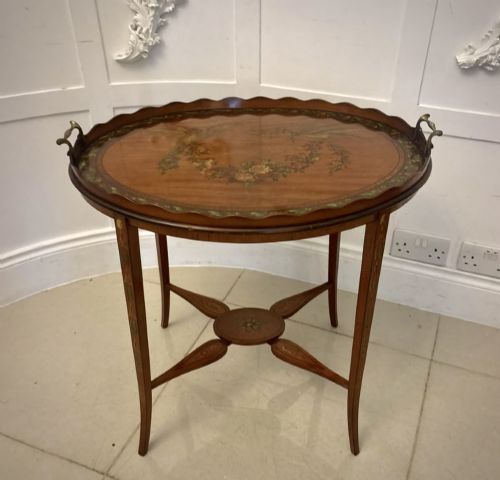
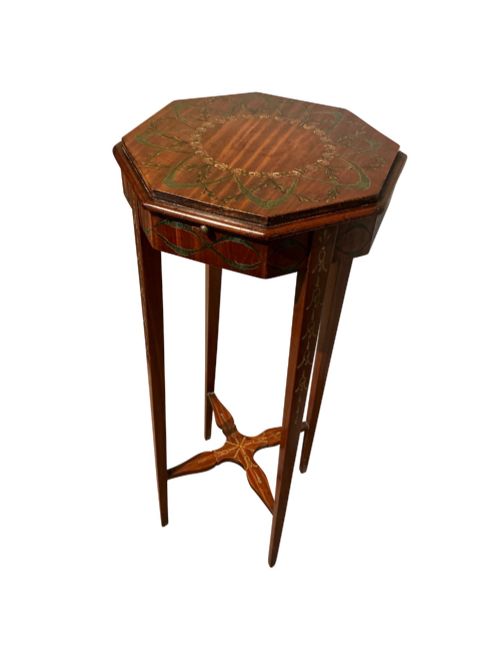
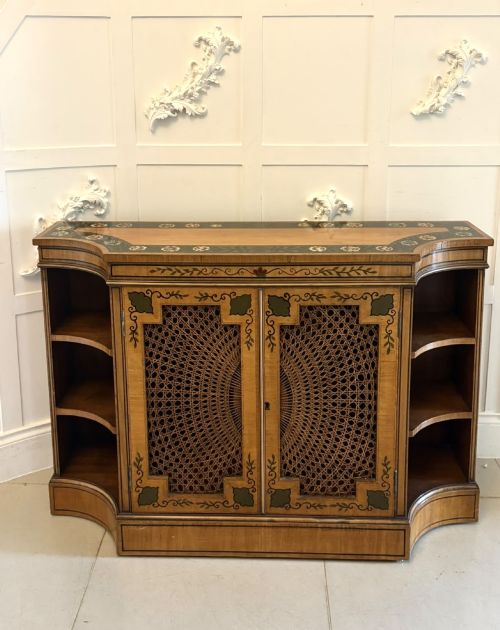
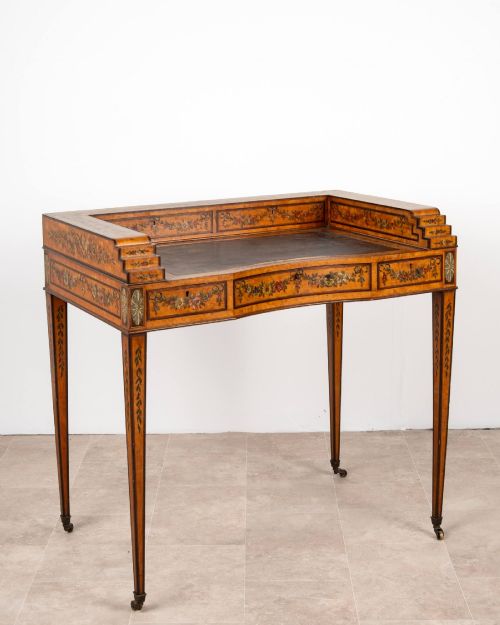
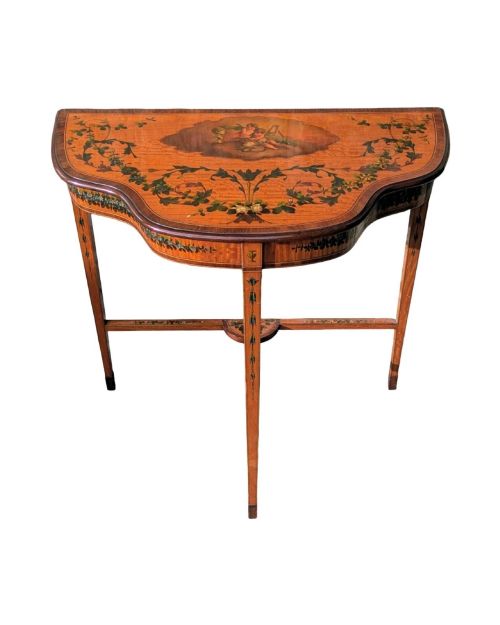
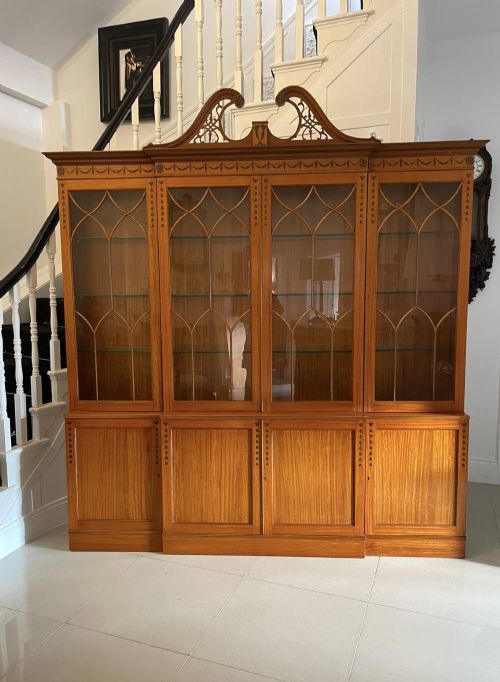
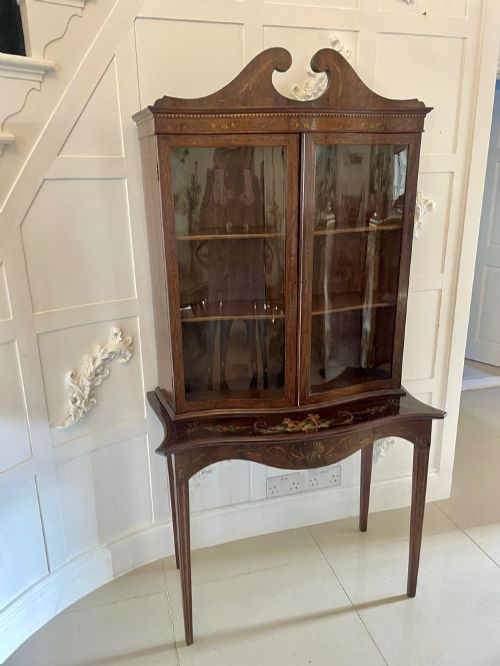
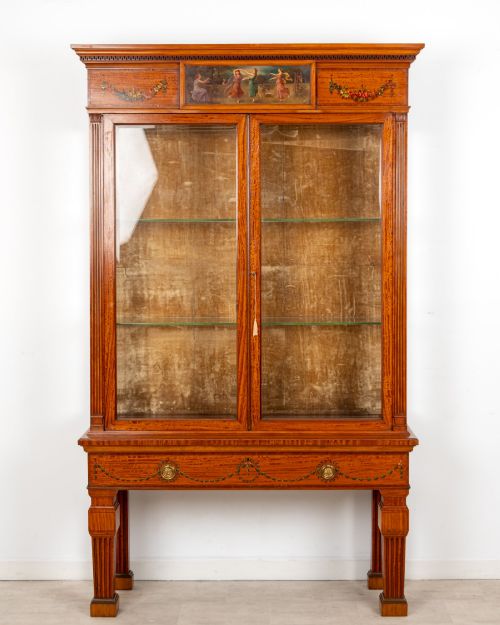
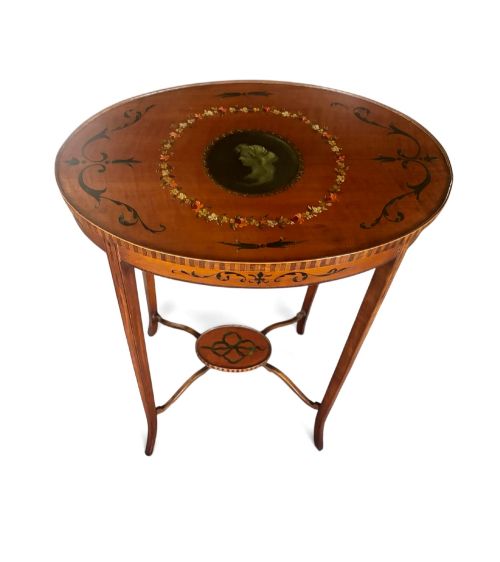
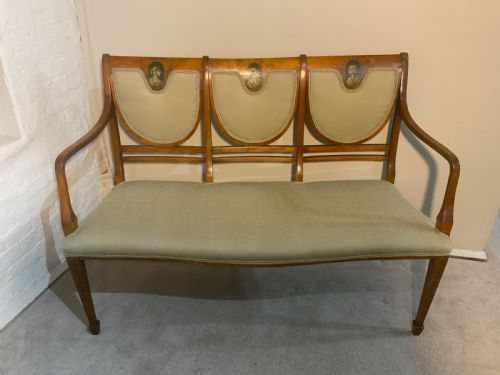
Sheraton painted furniture encompasses an array of decorative domestic forms, from display cabinets and side tables to writing desks and armchairs. Buyers exploring these pieces encounter works spanning the Georgian, Regency, Victorian, and Edwardian eras, with the Sheraton Revival of the late nineteenth and early twentieth centuries representing a significant proportion of the items.
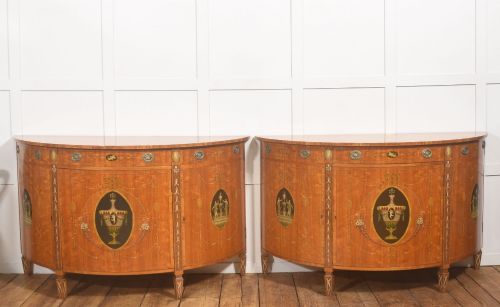
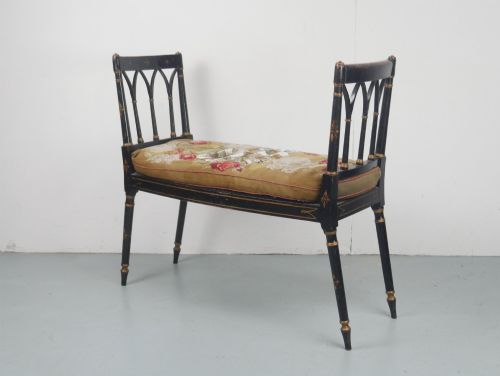
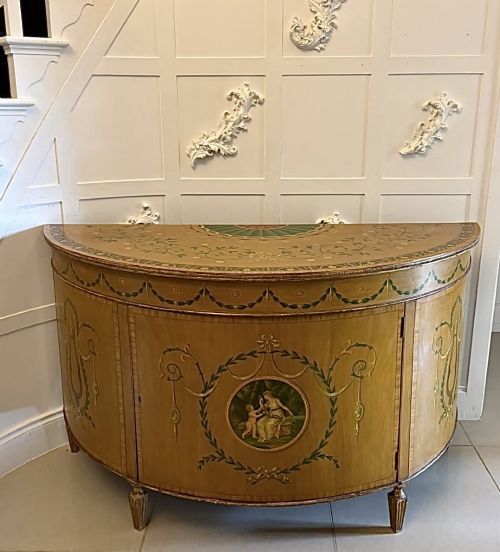
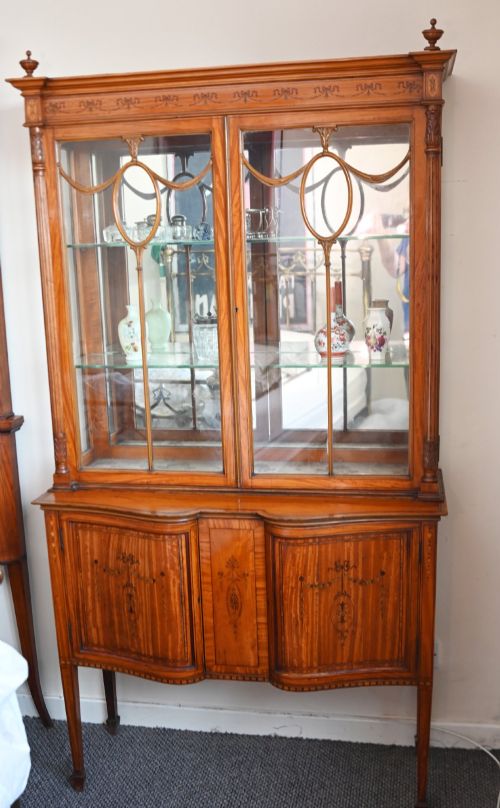
The objects frequently take the form of satinwood or mahogany display cabinets, demi-lune commodes, occasional tables, and library chairs. These items reflect neoclassical tastes through restrained proportions, balanced cabinetry, and ornamented panels.
Originating in eighteenth-century design principles and reinterpreted across subsequent decades, these works serve as functional storage pieces and decorative centerpieces. The surviving examples demonstrate the enduring appeal of painted timber surfaces within traditional and eclectic interiors.
Materials and construction methods
Makers utilised fine timbers, predominantly satinwood and mahogany, providing a pale or rich ground suitable for delicate ornamentation. Brass hardware, glass panels for cabinets, and upholstered elements for seating complemented the primary wooden structures.
Surface decoration involved hand-painted polychrome motifs, floral garlands, and classical panels applied directly to the timber. Cabinetmakers combined traditional joinery techniques with surface painting to achieve light, elegant proportions in items such as writing desks, commodes, and wardrobes.
Sheraton Painted Furniture Retail Price Guide 2026
Typical asking prices for sheraton painted furniture among the pieces listed under this phrase on Sellingantiques today, from the lower quarter to the upper quarter. They describe what is for sale here now, not the wider market.
Card tables fold down discreetly, ready to host evening games of whist after hiding their painted classical panels all day.
Distinctions in quality
The standard of painted decoration heavily dictates the distinction between ordinary and superior pieces. Hand-painted floral motifs and classical panels executed with fine brushwork and detailed shading separate masterwork items from more modest production.
The choice and preparation of the timber ground also define the upper tier of craftsmanship. Fine-grained satinwood veneers and solid mahogany foundations display superior figure and stability, reflecting the expertise of prominent makers and workshops.
Hampton and Sons·Maple and Co
The Sheraton Painted Furniture Glossary
- Satinwood
- A durable, lustrous timber with a golden sheen, frequently used as the primary veneer for decorative neoclassical cabinetry.
- Demi-lune
- A half-moon shape characteristic of side tables, commodes, and games tables designed to stand flat against a wall.
- Sheraton Revival
- A late nineteenth and early twentieth-century design movement recreating the light, neoclassical forms associated with eighteenth-century maker Thomas Sheraton.
- Bergere
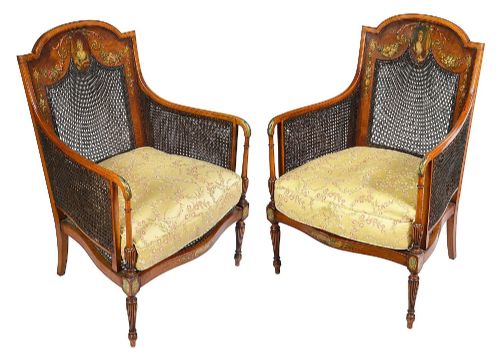
- An enclosed upholstered armchair with exposed wooden framing, often seen in satinwood library suites.
- Astral glazing
- Cabinet door construction featuring slender wooden bars arranged in geometric patterns to hold glass panes.
Sheraton Painted Furniture: Frequently Asked Questions
What periods do these pieces come from?
The pieces span from the late eighteenth-century Georgian era through the Regency period and into the Victorian age. A large portion originates from the Edwardian Sheraton Revival around nineteen hundred.
Craftsmen across these periods reinterpreted classical designs, utilising satinwood and mahogany to produce matching cabinets, desks, and seating.
How do I care for painted timber surfaces?
Protect the hand-painted decoration and satinwood or mahogany timber by keeping pieces away from direct sunlight and moisture. Dust gently with a soft, dry cloth.
Avoid chemical polishes that might degrade the original painted decoration or vintage varnish over time.
Where were these cabinets and tables used?
These items functioned primarily in principal rooms such as drawing rooms, libraries, and formal bedrooms. Display cabinets showcased porcelain, while writing desks and Pembroke tables served daily domestic correspondence.
Their decorative painted panels allowed them to function as aesthetic centerpieces as well as practical furniture.
How do I distinguish revival pieces from original ones?
Examination of construction methods, secondary woods, and wear patterns helps indicate the manufacturing date. Eighteenth-century pieces exhibit distinct joinery and ageing compared to late nineteenth-century Sheraton Revival items.
Historical context and materials such as Edwardian satinwood or Victorian mahogany provide further clues to the age of the piece.