



Georgian Satinwood Credenza
A georgian satinwood credenza brings refined grain and classical lines to a room, offering both display space and concealed storage.
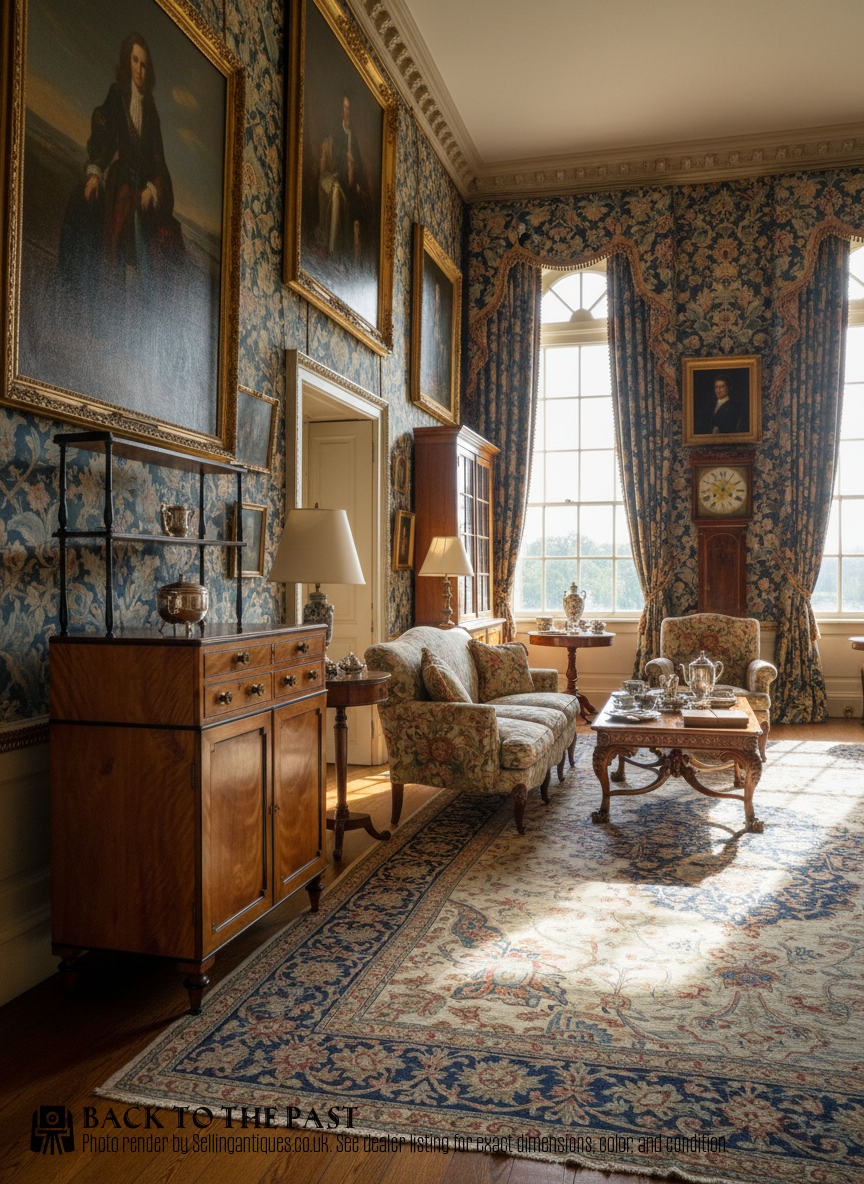
Georgian Satinwood Credenza
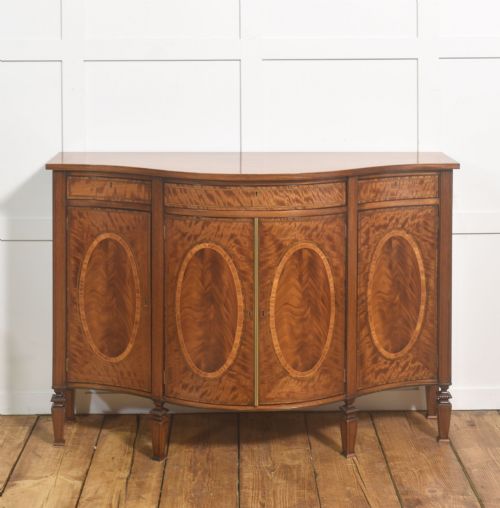
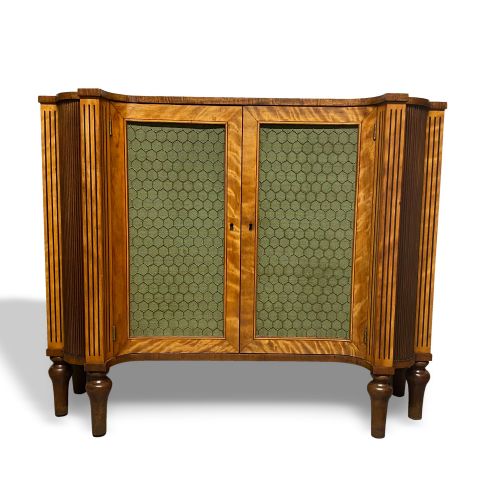
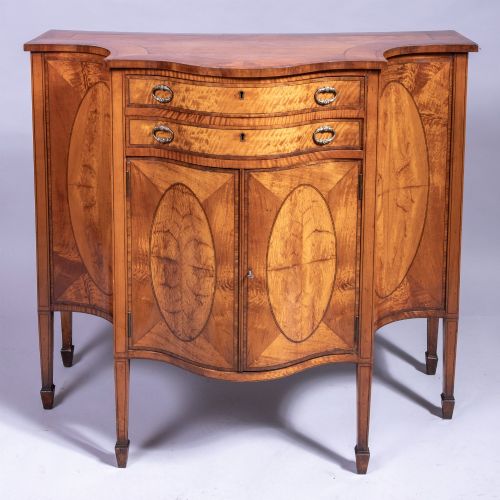
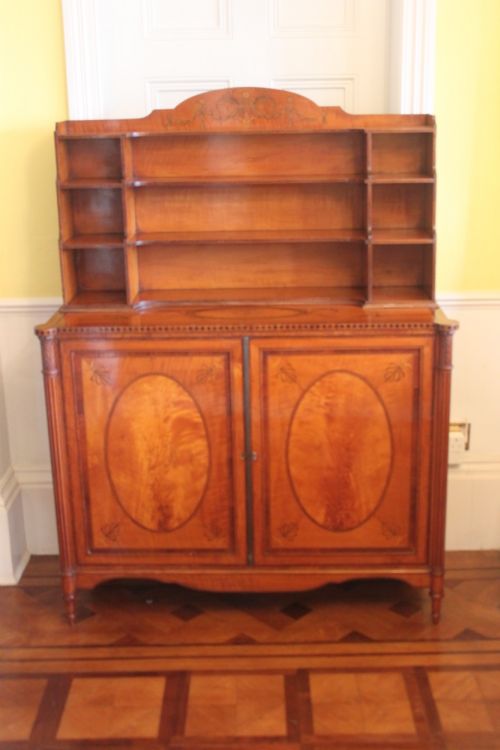
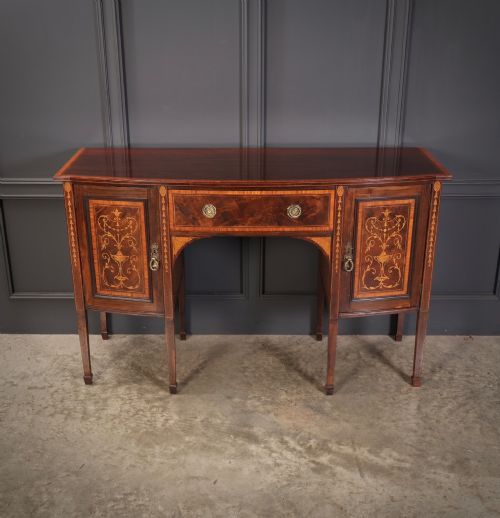
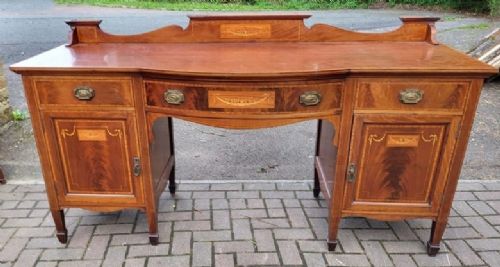
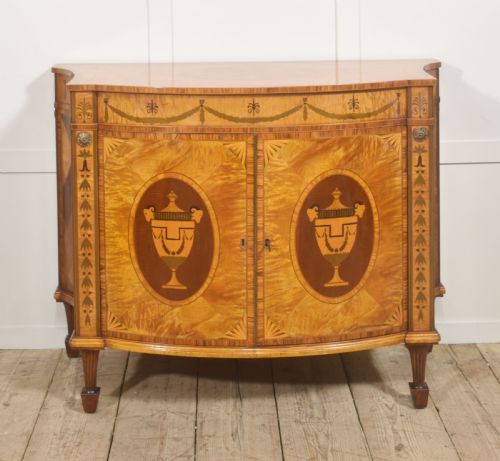
When searching for a georgian satinwood credenza, buyers encounter fine timber furniture ranging from eighteenth-century originals to later revival interpretations. The forms include bow-front sideboards, demi-lune commodes, and side cabinets designed for formal reception rooms.
The selection spans periods from the mid-eighteenth century through the Edwardian era and the twentieth century. Sheraton Revival and George III styles dominate, featuring curved fronts and symmetrical proportions.
Materials and construction
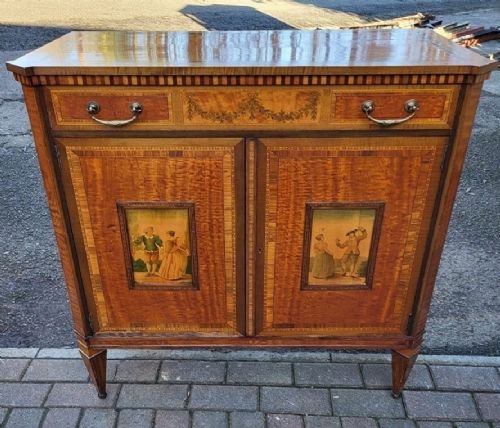
Cabinet makers utilised satinwood as the primary timber, often combined with mahogany, rosewood, and ebony. Craftspeople applied intricate wood inlay, marquetry, and painted classical panels to decorate the surfaces.
Brass fittings, including handles, gallery rails, and escutcheons, punctuate the polished timber. Construction methods rely on traditional joinery to support curved bow-front and demi-lune shapes.
Listings feature satinwood, mahogany, and rosewood across pieces spanning the eighteenth to the twentieth centuries.
Distinguishing quality in craftsmanship
The sophistication of the marquetry and the precision of the wood inlay define the upper tier of pieces. Crisp detailing in painted panels and the selection of figured timber distinguish finer examples from simpler workshops.
Structural integrity of curved doors and drawers reflects the joiner's skill. Original brass hardware and well-preserved surface polishes elevate the standing of a cabinet.
Maple and Co·Gillows
The Georgian Satinwood Credenza Glossary
- Credenza
- A sideboard or cabinet used for storage and serving, often featuring cupboards and drawers.
- Satinwood
- A durable, lustrous tropical timber with a golden sheen, frequently used for veneering and fine furniture.
- Marquetry
- Decorative patterns formed by fitting together small pieces of veneer into timber surfaces.
- Demi-lune
- A half-moon shape common in tables, commodes, and side cabinets of the period.
- Bow-front
- A convex curved cabinet front that projects outward in the centre.
Georgian Satinwood Credenza: Frequently Asked Questions
How do I identify a revival piece?
Revival pieces draw on eighteenth-century design vocabulary but typically date from the late nineteenth or early twentieth centuries.
Examination of timber ageing, construction techniques, and secondary woods helps distinguish an original period piece from a later interpretation.
Where were these cabinets placed?
Original pieces stood in formal dining rooms and drawing rooms to hold silver, linen, and porcelain.
Today, they adapt easily to modern interiors as sideboards in living areas or display surfaces in hallways.
What maintenance do they require?
Polished satinwood surfaces need protection from direct sunlight and excessive moisture to prevent fading and veneer lifting.
Regular dusting with a dry cloth and occasional application of appropriate furniture wax preserves the timber's lustre.