
Regency Chiffonier Bookcase
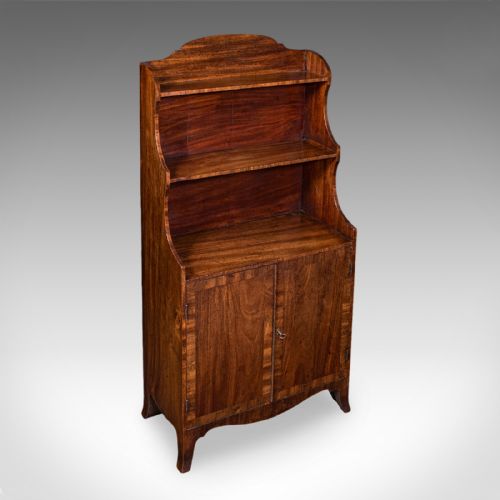
A regency chiffonier bookcase combines a lower enclosed cupboard with upper open or glazed shelving, designed for elegant storage in the principal rooms of a grand home.
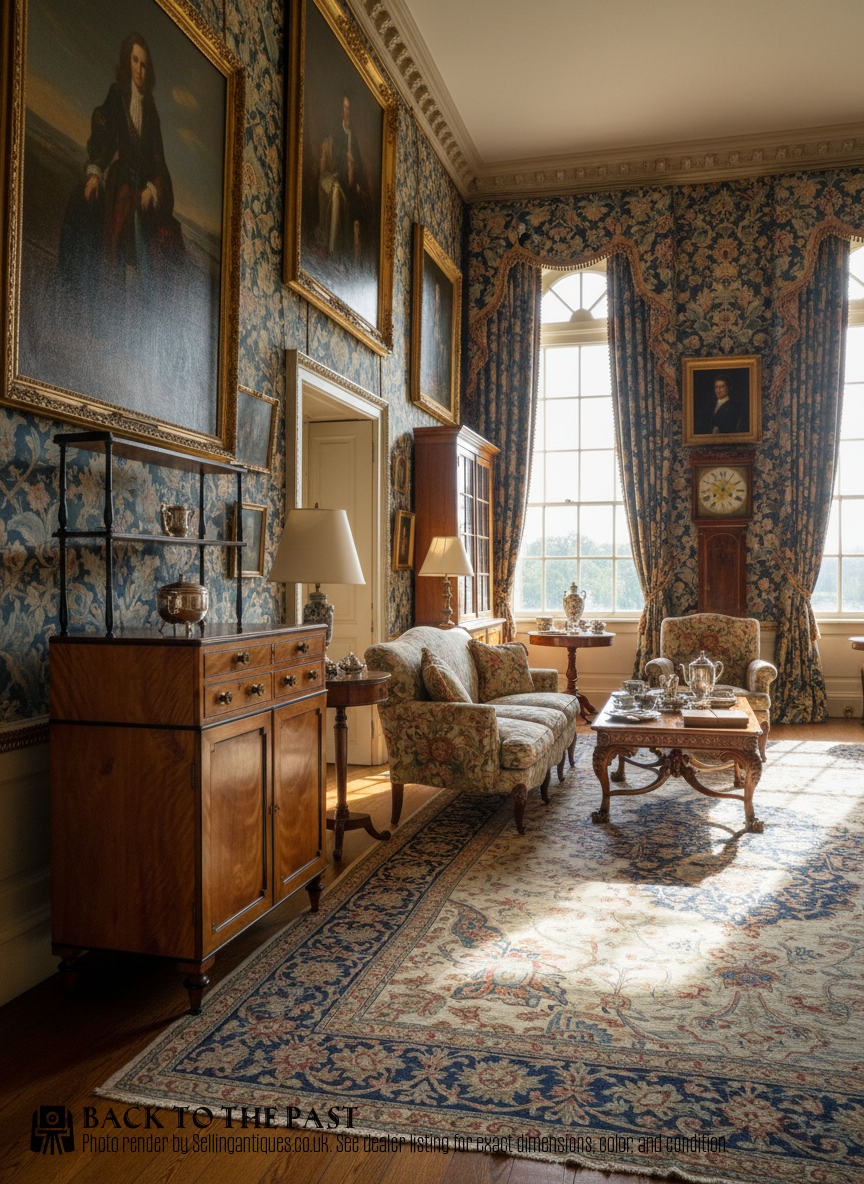
Regency Chiffonier Bookcase
A regency chiffonier bookcase is a hybrid furniture form combining a low side cabinet base with shelving above, serving both display and storage functions. These pieces emerge predominantly from the Regency and William IV periods, alongside later 19th-century interpretations.
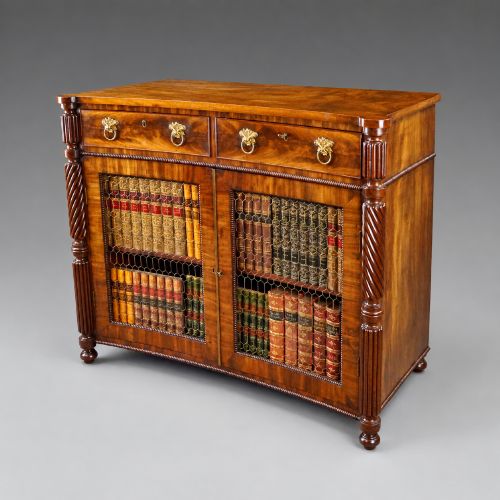
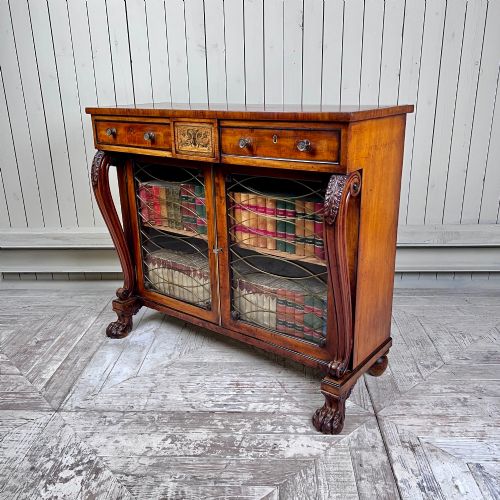
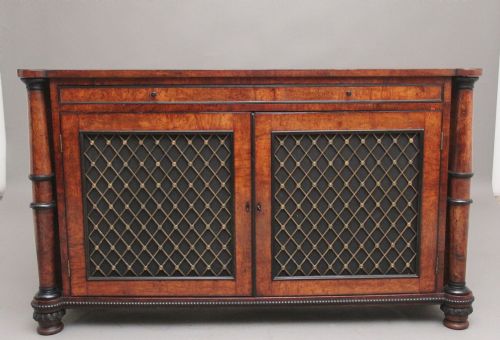
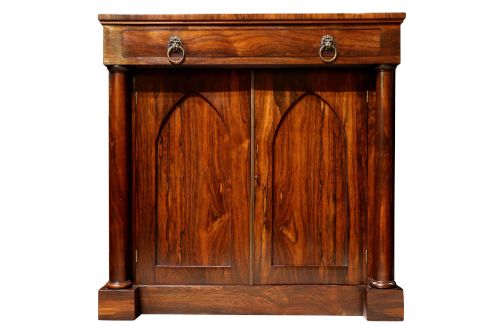
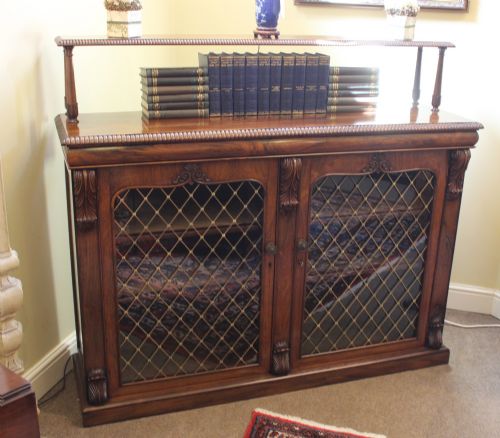
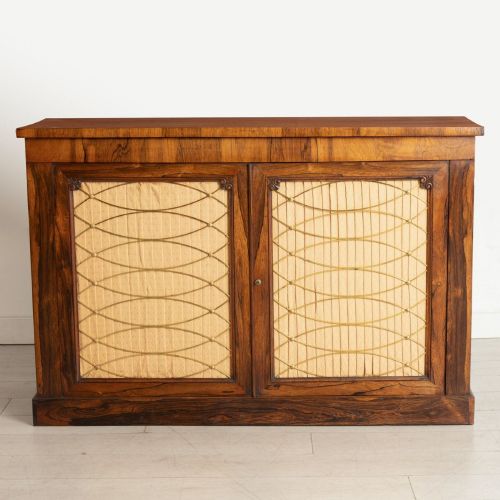
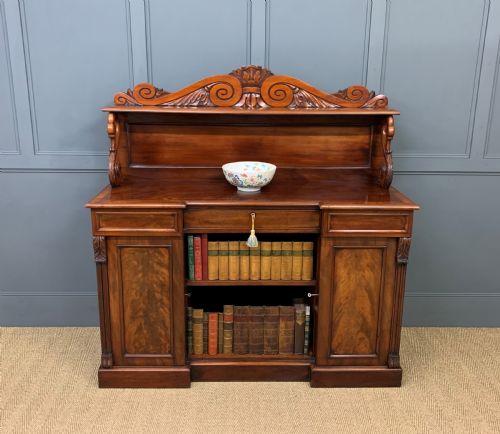
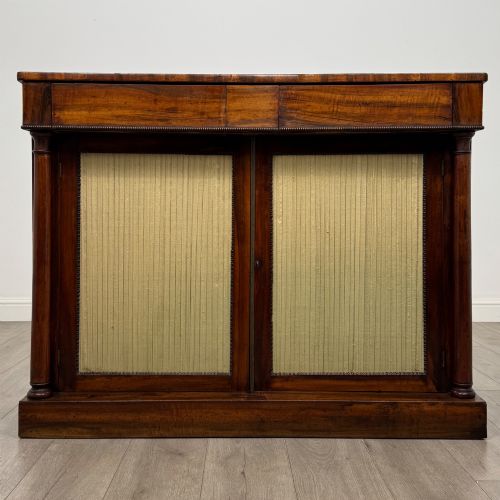
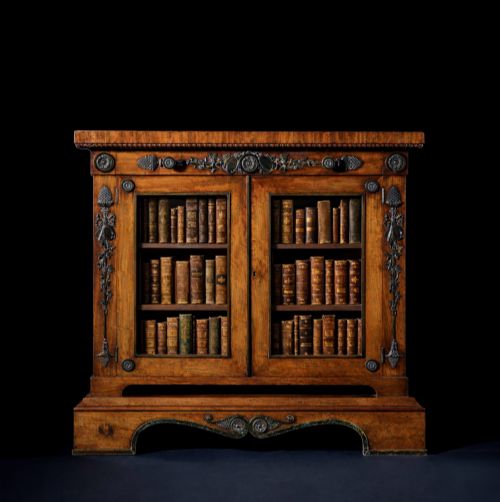
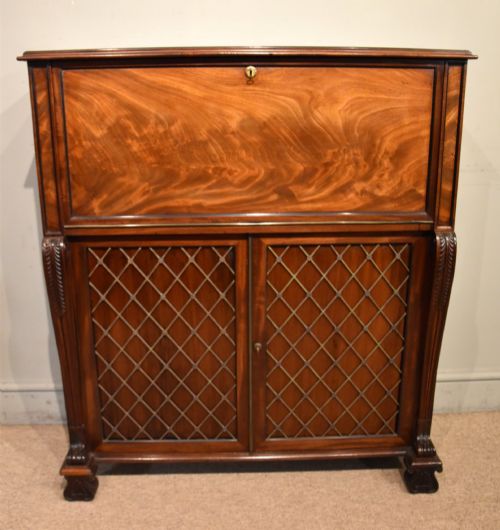
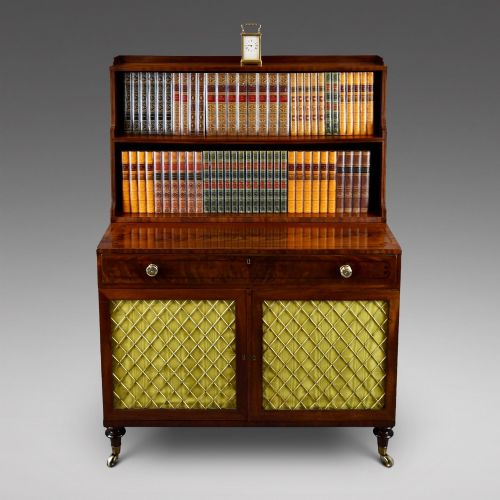
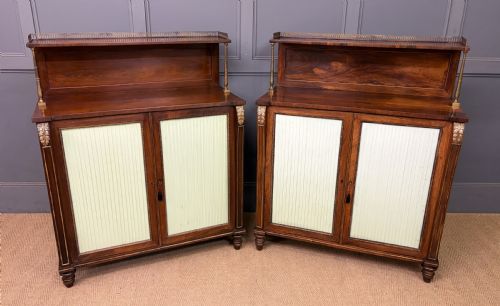
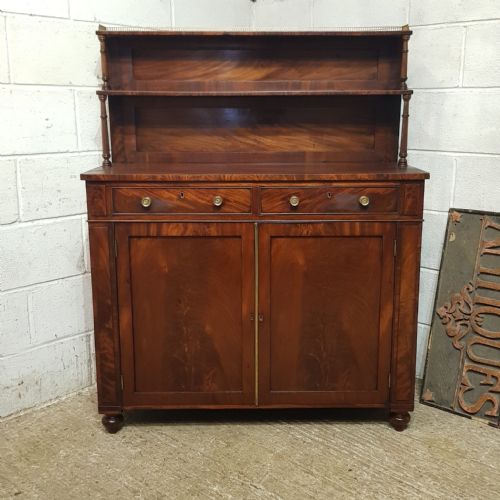
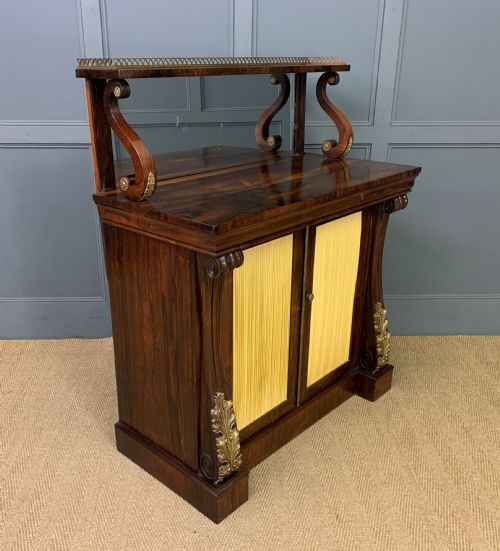
The version most commonly met on this page pairs a mahogany or rosewood carcass with lower cupboard doors, occasionally featuring pleated fabric panels or brass grilles, beneath open or glazed upper shelves.
Materials and Construction
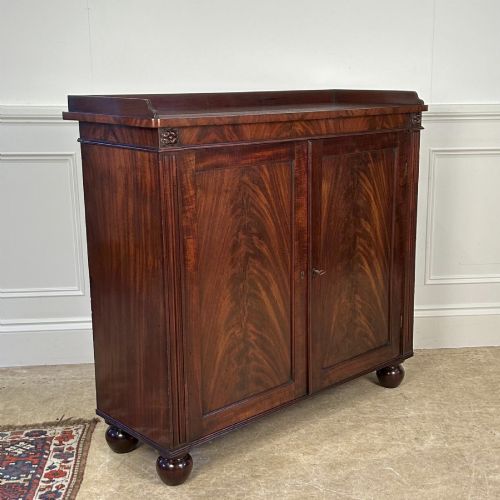
Cabinet makers constructed these pieces using dense hardwoods such as mahogany and rosewood, often applying flame mahogany veneer to create striking figured surfaces on the primary doors and drawers. Ebony details and brass inlay provide sharp linear contrast across the timber surfaces.
Fine joinery underpins the structure, integrating brass mounts, glass panes, and pleated fabric panels behind door grilles. Pollard oak and amboyna also appear as choice timbers among these side cabinets and bookcases.
Pleated fabric panels behind brass grilles kept the dust off books while discreetly hiding whatever was stashed inside.
Distinctions in Quality
The refinement of the timber and the precision of the brass inlay distinguish the upper tier of these cabinets from simpler examples. Finely figured flame mahogany veneer and intricate bronze mounts indicate superior workshop output.
Proportion and original condition dictate the standing of a piece, where neat dimensions and unaltered brass grilles or pleated chiffon panels elevate the cabinet's integrity.
Gillows
The Regency Chiffonier Bookcase Glossary
- Chiffonier
- A low sideboard or cabinet featuring enclosed lower cupboards, frequently surmounted by a shelf or bookcase superstructure. This form became a staple of Regency and Victorian drawing rooms.
- Flame mahogany veneer
- A thin slice of mahogany timber cut from the fork of the tree, producing a distinctive flickering flame pattern. Cabinet makers applied this to door fronts for decorative impact.
- Brass grille
- A fine wire mesh set into cabinet doors to protect books while allowing visibility of the contents. These grilles are often backed with pleated fabric.
- Breakfront
- A cabinet design where the central section projects forward from the flanking wings. This architectural arrangement creates depth and variation across the front elevation.
Regency Chiffonier Bookcase: Frequently Asked Questions
What is a regency chiffonier bookcase?
A regency chiffonier bookcase is a compact dual-purpose furniture form that unites a lower enclosed storage cupboard with upper display shelving. Originating in the early 19th century, these pieces served practical functions in drawing rooms and parlours.
Cabinet makers designed them to house books and display decorative objects within a neat footprint. They bridge the gap between a traditional bookcase and a low sideboard.
How were these cabinets used?
These cabinets served primarily in formal rooms for storing valued books and displaying ornaments on the upper shelves. The lower enclosed cupboards kept household items out of sight.
In the drawing room, they functioned as serving surfaces and general storage. The combination of open shelving and locked cupboard space suited the social habits of the period.
Which timbers are most common?
Mahogany and rosewood dominate the construction of these pieces, frequently enhanced by flame mahogany veneers. Cabinet makers selected these dense hardwoods for their rich natural grain and durability.
Accents in ebony, pollard oak, and amboyna also appear across specific examples. Brass inlay and mounts provide metallic contrast to the dark timber surfaces.
How do I spot a Regency period piece?
Regency pieces typically display classical restraint, balanced proportions, and specific decorative motifs such as brass inlay and lattice grilles. The use of solid rosewood or flame mahogany veneer aligns with the aesthetic of the early 19th century.
Construction methods, secondary timbers, and characteristic hardware help distinguish authentic Regency items from later Victorian or 20th-century revivals.