
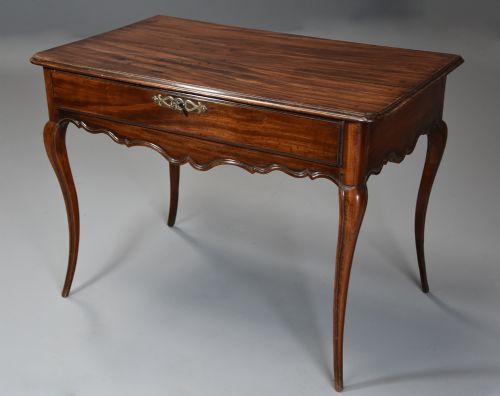


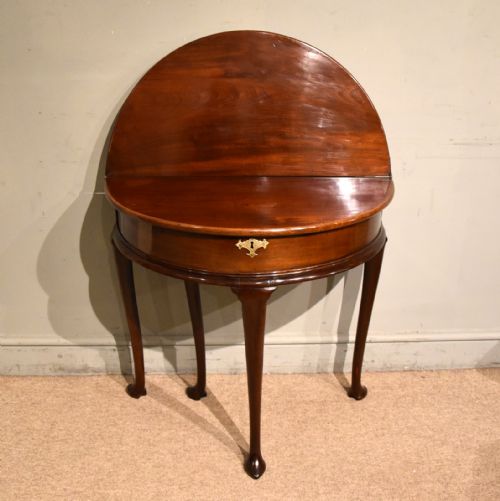


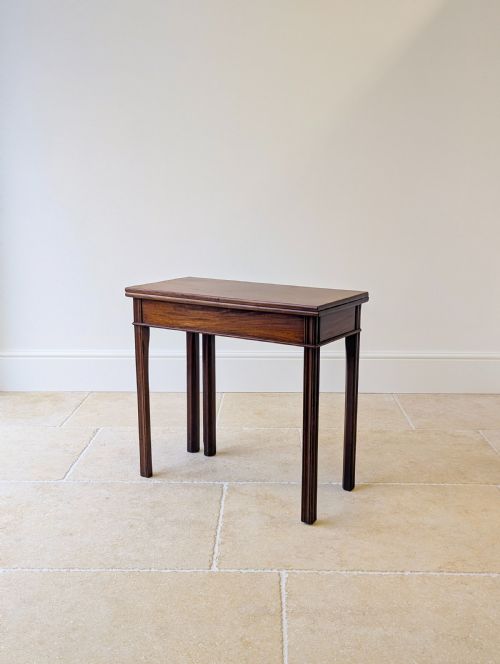

Late 18th Century Desk
When you want a late 18th century desk, you are looking at practical furniture built during the Georgian period from mahogany, satinwood, and walnut.
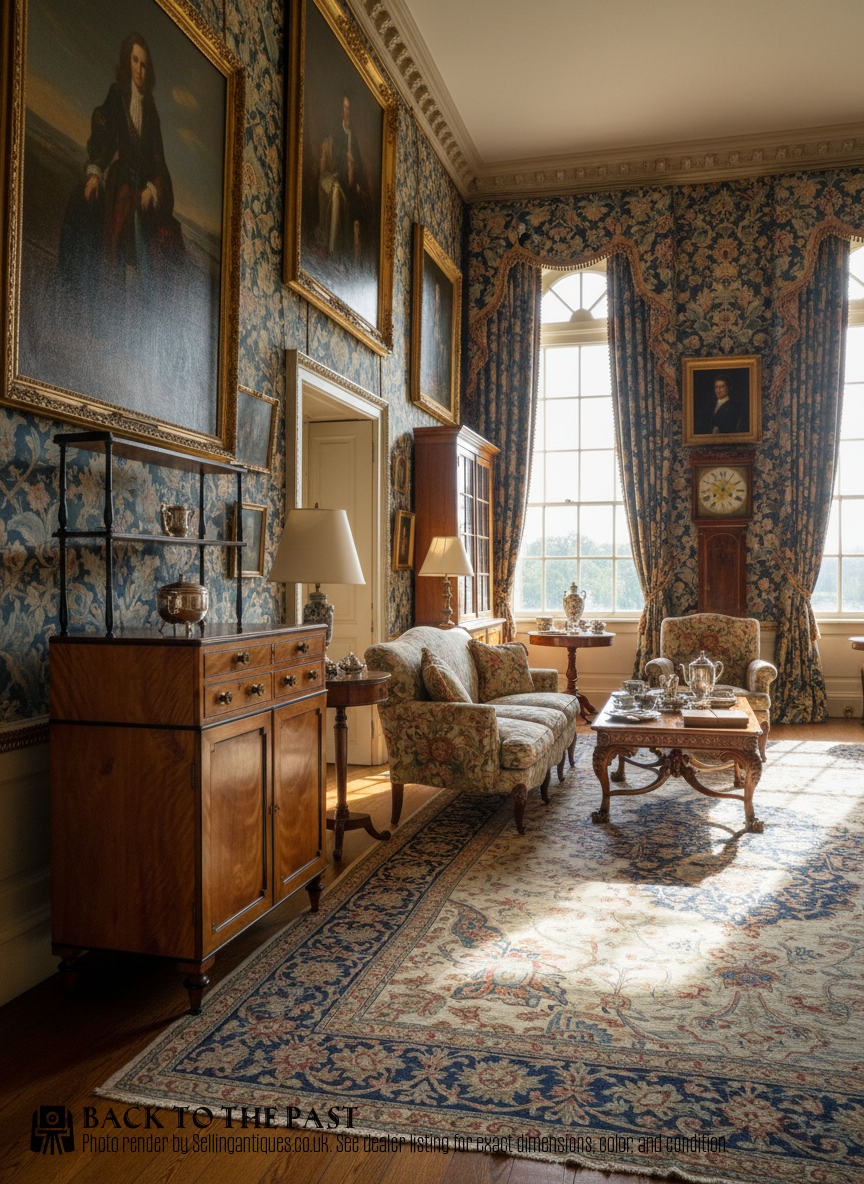
Late 18th Century Desk
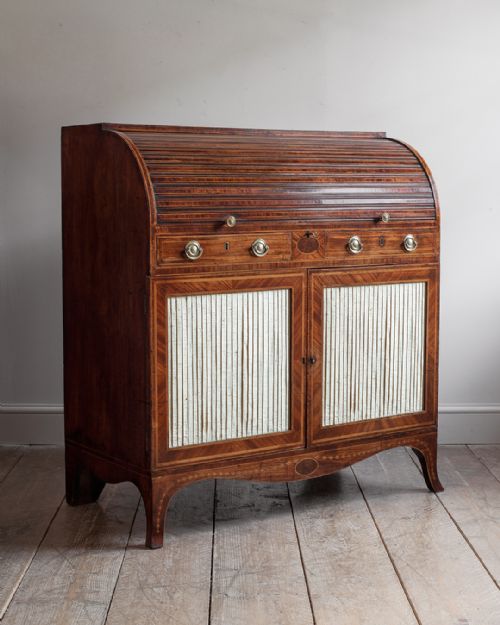
A late 18th century desk encompasses forms such as kneehole desks, cylinder tambour bureaux, roll-top writing desks, and secretaire bookcases designed for domestic study or library use. Buyers seeking this phrase encounter pieces predominantly from the Georgian era, alongside related writing tables and bureau bookcases.
The selection ranges from compact satinwood writing tables attributed to the Sheraton style to substantial mahogany kneehole desks on bracket feet and walnut bureau forms. These items reflect the domestic writing needs of the Georgian period, executed in regional oak as well as imported timbers.
How they were made
Cabinet makers utilised dense hardwoods such as mahogany, walnut, and oak for structural carcasses, often incorporating lighter decorative timbers like satinwood for veneer and inlay. Brass fittings such as handles, escutcheons, and hinges provide functional contrast to the dark grain.
Joinery techniques included dovetailed drawer construction, bracket feet, and sliding tambour shutters operated by hidden internal mechanisms. Surfaces were finished with fine hand-rubbed polishes that highlighted the natural figure of the timber.
Late 18th Century Desk Retail Price Guide 2026
Typical asking prices for late 18th century desk among the pieces listed under this phrase on Sellingantiques today, from the lower quarter to the upper quarter. They describe what is for sale here now, not the wider market.
Listings for late 18th century desks feature mahogany, satinwood, walnut, and oak, alongside brass hardware and occasional leather writing inserts.
What varies in quality
The visual success of a piece depends on the figuration of the mahogany or the careful matching of satinwood veneers across large expanses. Superior examples display thoughtful grain selection where top surfaces and drawer fronts present unified patterns.
Design ambition dictates distinction, separating standard utility desks from refined pieces incorporating complex tambour mechanisms, secretaire drawers, or delicate inlay. The harmony of proportions and the retention of original brass hardware elevate the standing of individual items.
Gillows
The Late 18th Century Desk Glossary
- Tambour
- A sliding shutter formed of narrow vertical strips of wood glued to canvas backing, allowing it to curve around a cylinder. This mechanism conceals the writing surface and pigeonholes on specialised desks.
- Secretaire
- A desk or chest of drawers featuring a fitted pull-down writing flap that encloses small compartments and pigeonholes. It combines storage with a dedicated writing surface.
- Kneehole desk
- A compact freestanding desk featuring a central recessed space for the user's legs, flanked by pedestals of small drawers. They typically stand on bracket feet.
- Satinwood
- A durable, light-yellow timber with a lustrous sheen, highly favored during the Sheraton period for fine veneers and marquetry inlay. It provides a striking contrast against darker woods like mahogany.
Late 18th Century Desk: Frequently Asked Questions
What is a tambour desk?
A tambour desk utilises flexible strips of wood mounted on fabric to create a sliding shutter that covers the writing surface. This clever mechanism allows the user to secure papers without needing a traditional hinged lid.
Such designs became popular in the late 18th century as cabinet makers sought space-saving solutions for compact studies. They offer a neat appearance when closed while providing immediate access to pigeonholes and drawers.
Where were these desks used?
These desks served in the private studies, libraries, and withdrawing rooms of Georgian townhouses and country estates. They provided a dedicated space for correspondence, account management, and reading.
Their domestic placement meant they were designed to be viewed from multiple angles, leading makers to finish the backs even on smaller writing tables and kneehole forms.
How do I care for antique mahogany?
Antique mahogany requires stable indoor humidity and protection from direct sunlight to prevent the timber from drying or fading. Regular dusting with a soft, dry cloth preserves the finish without building up heavy wax residues.
Avoiding placement near direct heat sources ensures the wood joints and veneers remain stable over time. Gentle treatment maintains the natural patina developed over centuries.