
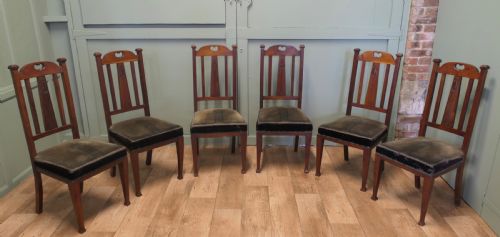
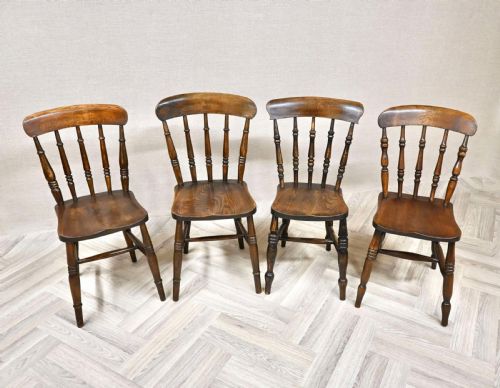
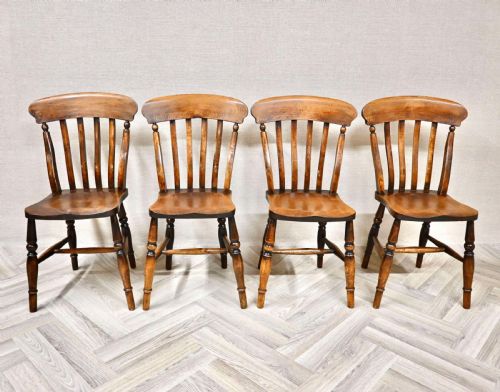
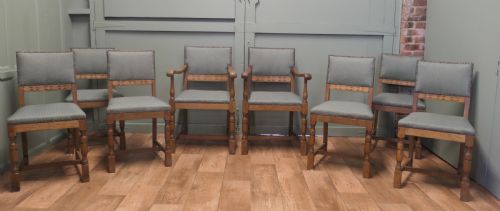


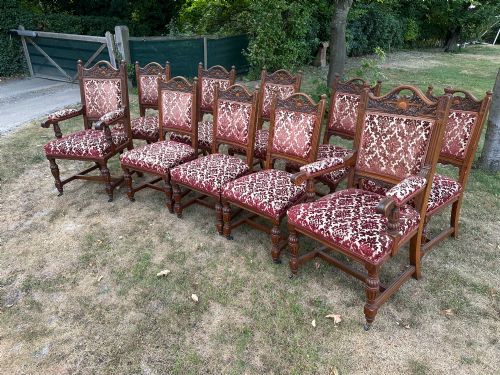
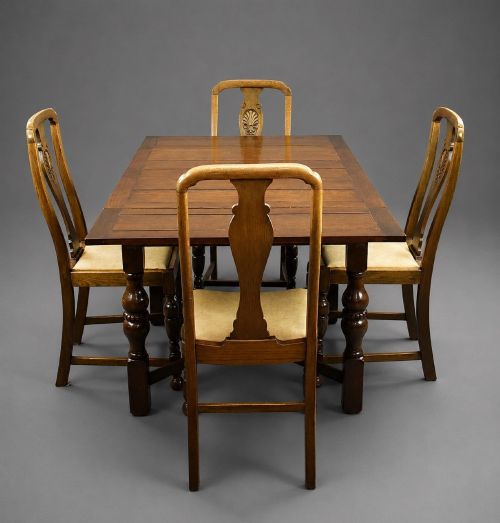
Set of Oak Chairs
A set of oak chairs brings strong timber grain and enduring form to a room, offering matched seating built for daily dining.
What these pieces are
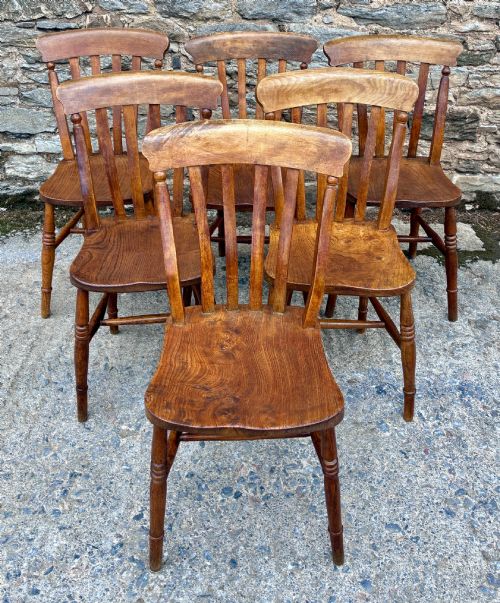
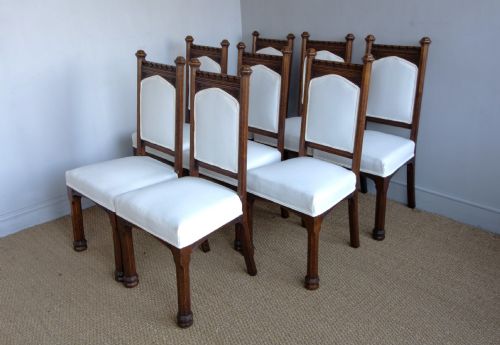
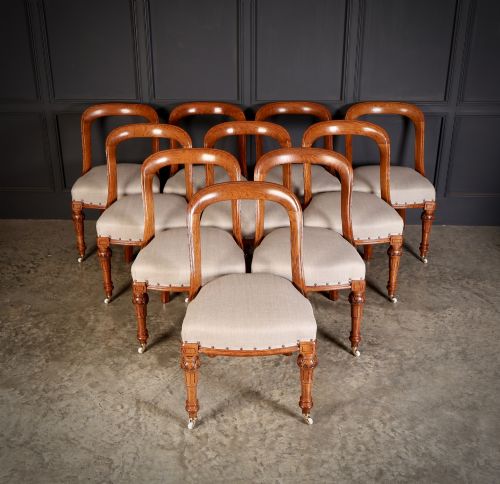
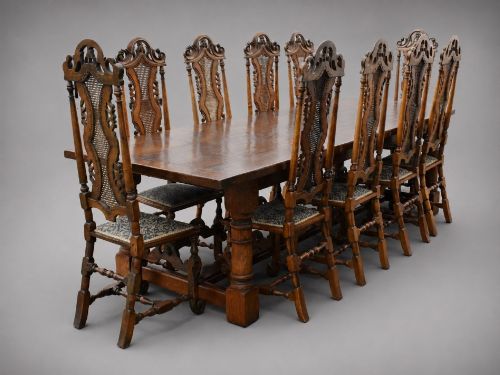
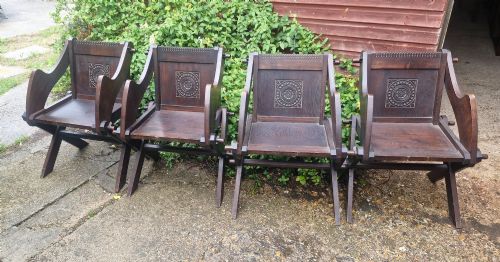
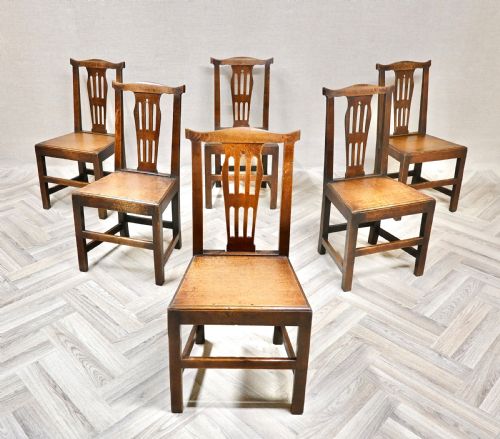
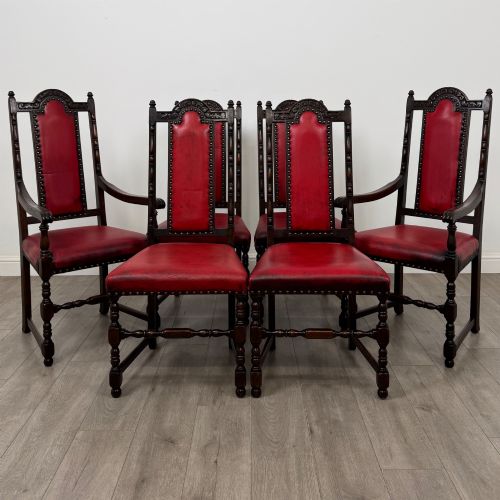
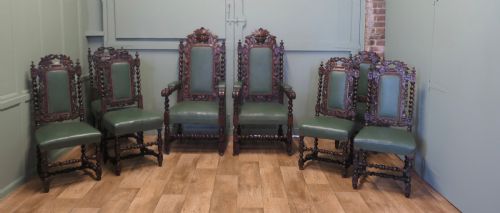
When you search for a set of oak chairs, you encounter matched groups designed primarily for the dining room, spanning provincial country styles to formal revival designs. The selections range from small groups of four to extensive suites of twenty-two, reflecting domestic and institutional dining requirements across multiple centuries.
The material evidence on this page draws heavily from British, French, and country workshops, showing styles from seventeenth-century Jacobean and Farthingale forms through Georgian proportions, Victorian Gothic revivals, and twentieth-century Arts and Crafts movements. Dining chairs form the overwhelming majority of these groupings, often accompanied by rush, leather, or upholstered seating inserts.
Earlier periods yield sturdy high-back formats and turned supports, while later decades introduce lattice backs, ladder backs, and clean golden oak lines associated with maker workshops. Buyers frequently select these groupings to anchor a dining table with substantial timber presence and historically distinct carpentry.
What varies in quality
Quality rests upon the integrity of the original joinery and the retention of matching elements across every chair in the group. Sets that remain entirely uniform in timber tone, wear patterns, and structural dimensions command greater consideration than assembled groups matched at a later date.
The depth and crispness of hand-carved detailing distinguish standard provincial production from ambitious workshop output. Furthermore, the survival of authentic early upholstery materials, original rush seating, and maker labels elevates the integrity of the suite.
Retail Price Guide 2026
Typical UK retail prices for set of oak chairs, calculated from the Sellingantiques database of over a million retail prices indexed since 2003. This retail price guide relies exclusively on Sellingantiques data; no external sources or auction records are used, so the figures do not describe the wider market.
Materials recorded across the archive include solid oak paired with leather, brass tacks, rush, and various upholstery fabrics.
Liberty & Co·Charles Bevan·Heals·Gordon Russell·Lethaby·Titchmarsh & Goodwin·Jas Shoolbred Ltd·Neville Neal
The Set of Oak Chairs Glossary
- Barley Twist
- A turned column resembling a twisted rope, popular on chair legs and stretchers during the seventeenth and early twentieth centuries.
- Farthingale Chair
- A wide, armless seat without upholstery on the frame, designed in the seventeenth century to accommodate expansive contemporary fashion.
- Rush Seat
- A woven seating surface made from dried marsh grasses, commonly found on country ladder-back chairs.
- Ladder Back
- A chair back featuring multiple horizontal wooden slats running between the vertical rear uprights.
- Crest Rail
- The topmost horizontal member of a chair back, often carved or shaped to define the decorative style.
Frequently Asked Questions
How do I care for antique oak chairs?
Feed the dry timber periodically with traditional beeswax to maintain moisture and preserve the natural sheen of the grain.
Keep the seating away from direct heat sources and dramatic humidity shifts to prevent timber splitting and joint loosening.
Are these chairs suitable for daily use?
Solid oak construction provides exceptional structural strength, making these chairs robust enough for regular dining room employment.
Buyers should verify that the frame joints remain tight and that rush or leather inserts are sound before heavy seating.
How can I tell a matched set from a composite set?
Examine the grain patterns, timber colour, and exact dimensions across every chair in the group to confirm unified origin.
Subtle variations in hand-carved motifs or slight height discrepancies often indicate individual chairs gathered together subsequently.
What is the difference between country and formal oak chairs?
Country versions utilise regional vernacular designs like ladder backs and rush pads, prioritising simple utility and local timber availability.
Formal examples display stylistic revivals, elaborate carved crests, and professional upholstery reflecting high-style domestic interior fashions.