






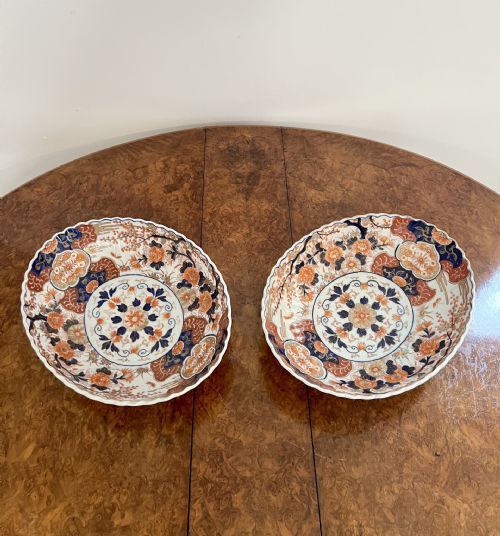

Scalloped Edge Ceramic Dishes
These scalloped edge ceramic dishes bring together centuries of intricate glaze work and porcelain forms from Japanese and European makers.
Scalloped Edge Ceramic Dishes
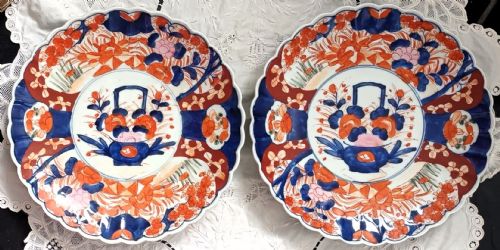
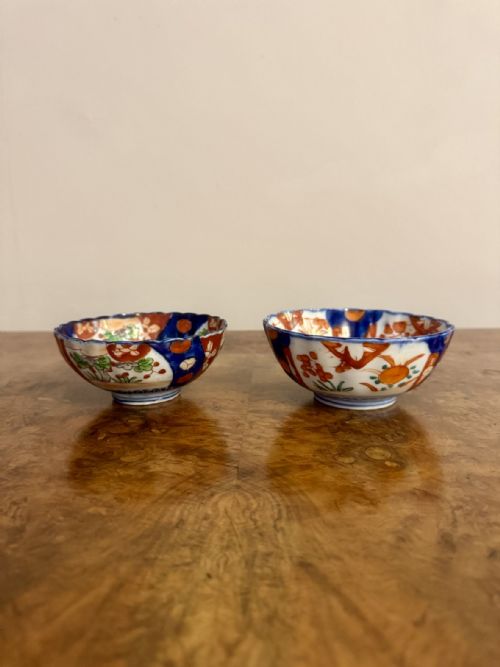
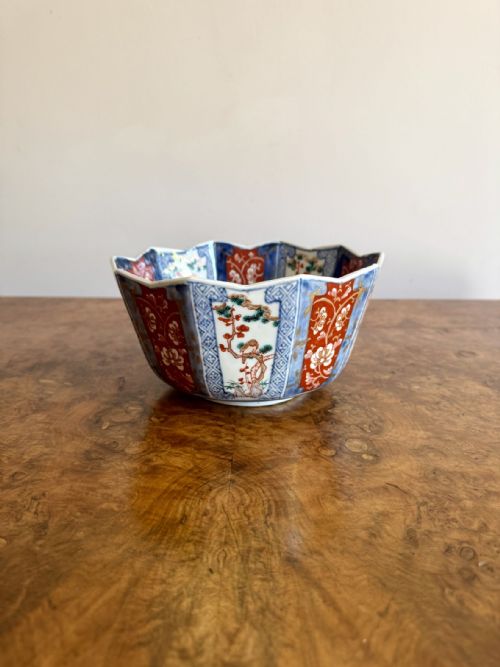
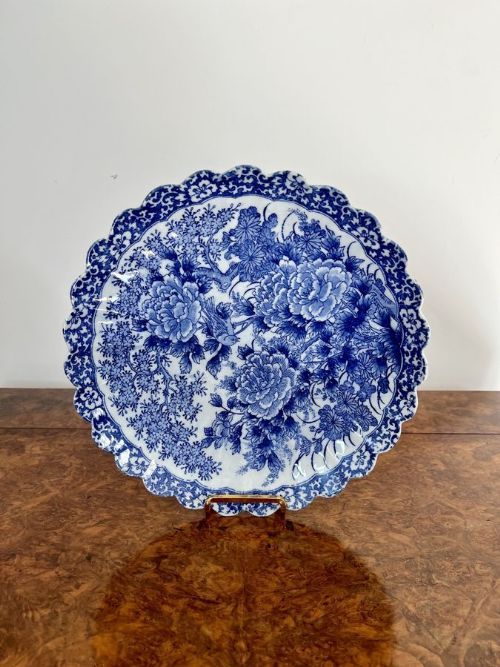
When you search for scalloped edge ceramic dishes, you encounter a selection spanning the seventeenth, eighteenth, nineteenth, and early twentieth centuries. The pieces on this page lean heavily toward Japanese Imari porcelain chargers, plates, and bowls produced during the Meiji period, alongside European earthenware and faience.
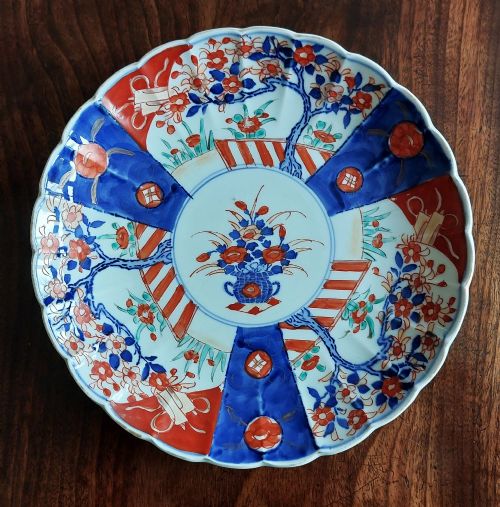
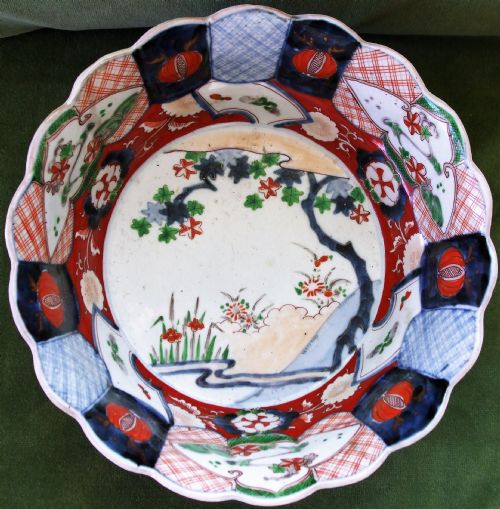
Forms range widely from large display chargers and serving platters down to small bowls and decorative plates. Japanese Imari works dominate the selection, often featuring distinct panel designs, exotic birds, or figures like the Seven Lucky Gods painted in deep blues and iron reds.
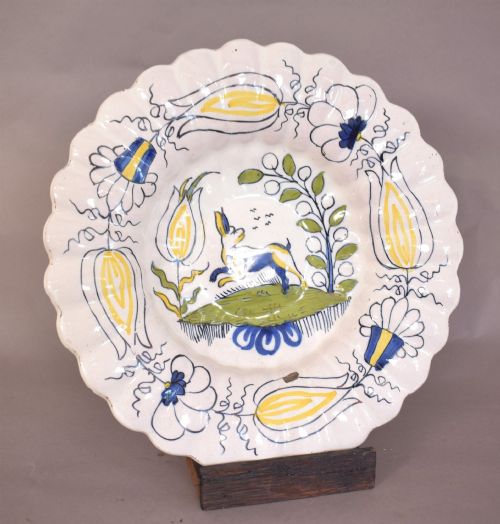
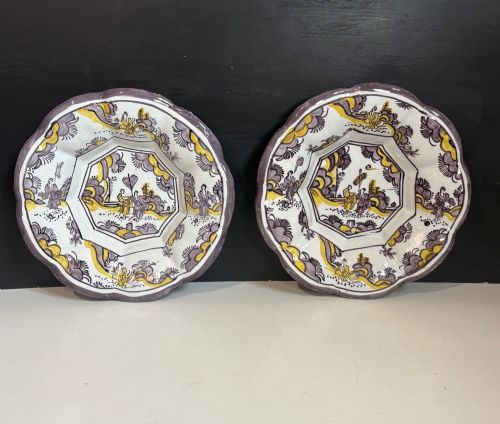
European contributions bring tin-glazed earthenware, Dutch Baroque styles, and French porcelain into the mix. Buyers find everything from single cabinet plates to matched sets of several items intended for formal display or table use.
Materials and methods
The physical construction relies primarily on porcelain and earthenware bodies shaped by hand or moulded before firing. Artisans applied tin glaze, enamel, and gold leaf over the ceramic base to achieve the rich surface textures seen on eighteenth-century French porcelain and Japanese export wares.
Pigments were hand-painted directly onto the ceramic surface, often utilising underglaze blue combined with overglaze iron red and gilt highlights. Firing took place in traditional kilns, resulting in the varied glaze pooling and iron speckling characteristic of antique ceramics.
Several antique Imari chargers proudly depict the Seven Lucky Gods sharing space with exotic birds on a single plate.
Distinctions in quality
Quality rests heavily on the crispness of the moulded edge and the precision of the hand-painted brushwork. Superior pieces exhibit clean cobalt blues, vibrant enamel colours that sit well within their borders, and generous applications of gold leaf that have aged evenly.
The depth and clarity of the porcelain body also separate standard items from exceptional ones. Finer examples display balanced proportions, steady rims on large chargers, and pictorial compositions that demonstrate clear artistic control by the maker.
The Scalloped Edge Ceramic Dishes Glossary
- Imari
- A style of Japanese porcelain decorated in underglaze blue, iron red, and gold, named after the port from which it was shipped to Europe. It became immensely popular across Western households during the Edo and Meiji periods.
- Charger
- A large decorative plate or platter used traditionally for ceremonial dining or as a base setting for other dishes. In antique ceramics, these pieces measure significantly larger than standard dinner plates.
- Faience
- European tin-glazed earthenware decorated with opaque metallic oxide glazes. It often mimics the appearance of imported porcelain.
- Meiji Period
- The era in Japanese history spanning from 1868 to 1912, associated with a massive output of export ceramics destined for Western markets. Pieces from this time frequently combine traditional motifs with refined decorative techniques.
- Tin Glazed
- A ceramic glaze made opaque by the addition of tin oxide, providing a smooth white surface suitable for direct painting. This technique underpins much of the historical European earthenware on this page.
Scalloped Edge Ceramic Dishes: Frequently Asked Questions
How do I date these ceramics?
Dating relies on stylistic clues, glaze characteristics, and the historical context of the manufacturing period. Japanese pieces often align with the Meiji era or nineteenth-century export standards, while European works show distinct tin-glazing or porcelain formulas typical of the eighteenth and nineteenth centuries.
Examining the foot ring, wear patterns, and pigment application provides further confirmation of age. Makers' marks or regional styles also narrow down the production window.
Were these dishes meant for food?
Many larger chargers and decorative plates served primarily as display pieces on sideboards or walls rather than for daily dining. Smaller bowls and matching sets saw actual use in domestic settings for serving food during formal meals.
Over time, collectors shifted their focus toward preserving these items as decorative works of art. Their historical use often dictated their current condition and survival rate.
How should I display them?
Displaying large chargers requires sturdy wall hangers or dedicated plate stands designed to support heavier porcelain and earthenware safely. Placing them away from direct sunlight protects the overglaze enamels and gold leaf from fading.
Smaller bowls and plates fit comfortably within glass cabinets or on open shelving where their interior patterns remain visible. Mixing Japanese Imari with European faience creates striking contrasts in colour and form.
What defines Japanese Imari?
Japanese Imari is defined by a distinct palette consisting mainly of cobalt blue underglaze, iron red overglaze, and supplementary gold leaf. The designs frequently incorporate floral motifs, brocade patterns, and figurative scenes.
Originating in Arita, these wares were exported in large quantities to satisfy European demand for ornate porcelain. Their bold colour schemes remain instantly recognizable among antique ceramics.