

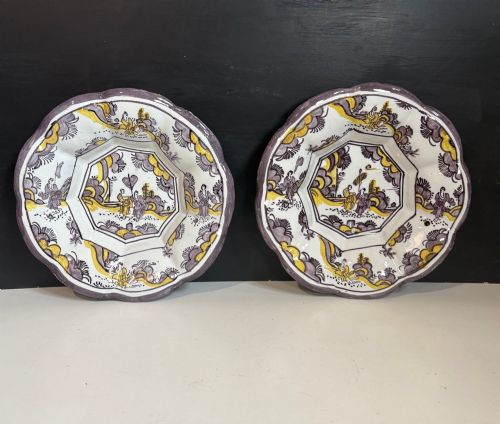


Continental Tin Glaze Faience
Continental tin glaze faience brings domestic earthenware decorated in cobalt oxide and polychrome palettes from European potteries straight to your table.
Continental Tin Glaze Faience
Continental tin glaze faience covers European earthenware coated in an opaque white metallic glaze that accepts painted pigments. When you search for continental tin glaze faience, you encounter objects ranging from small personal snuff boxes to large charger plates and apothecary jars.
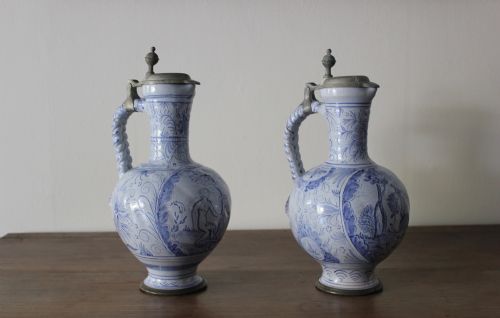
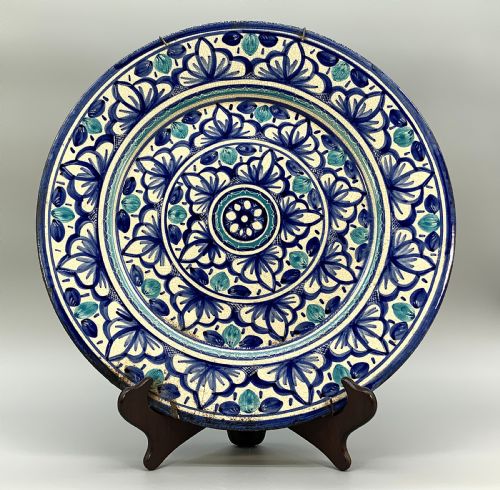
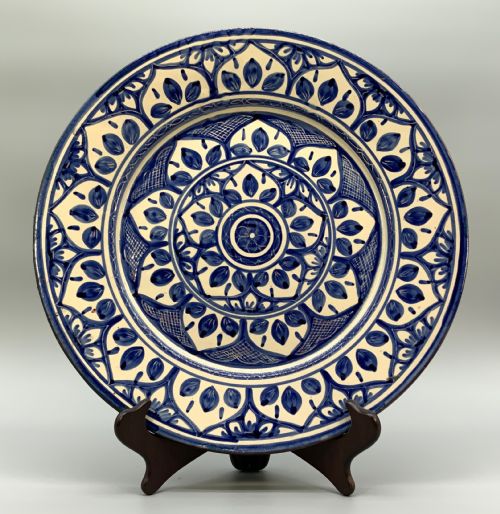
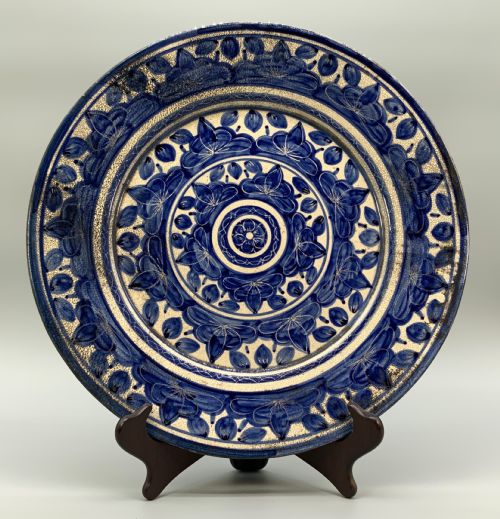
The pieces on this page span several centuries, including seventeenth century items and eighteenth century delftware alongside later revivals. Dutch delftware and Moorish style plates dominate the forms, offering both blue and white designs and polychrome decoration.
Domestic vessels and display dishes sit alongside ewers, jugs, and apothecary jars. These domestic and decorative items demonstrate the sustained European engagement with tin-glazed ceramic traditions across different regions and centuries.
How they were made
Potters formed objects from earthenware clay before applying a tin-rich glaze that dried to a smooth, opaque white surface. This absorbent glaze surface received painted pigments directly, requiring skilled brushwork because the porous ground permitted no correction of errors.
Cobalt oxide provided the intense blue tones seen on vessels and chargers, whilst other pieces received multi-coloured polychrome pigments. Firing fixed the metal oxides into the gloss surface, creating the characteristic hard finish of European faience.
Continental Tin Glaze Faience Retail Price Guide 2026
Typical asking prices for continental tin glaze faience among the pieces listed under this phrase on Sellingantiques today, from the lower quarter to the upper quarter. They describe what is for sale here now, not the wider market.
The listings span earthenware, tin-glazed earthenware, and ceramic objects across the seventeenth, eighteenth, and nineteenth centuries.
What varies in quality
Quality rests upon the control of the brush and the clarity of the painted narrative across plates and jars. Strong cobalt application and well-defined polychrome detailing distinguish the finer examples from simpler provincial work.
The density and smoothness of the white tin glaze affect the visual depth of the underlying decoration. A clean, even glaze layer enhances the painted design, whereas uneven thickness alters the crispness of the final appearance.
The Continental Tin Glaze Faience Glossary
- Tin Glaze
- A lead glaze rendered opaque by the addition of tin oxide, providing a white background for painted decoration. This formulation forms the essential base of European faience and delftware.
- Faience
- European tin-glazed earthenware produced in imitation of imported Chinese porcelain or fine Italian majolica. The term covers wares from Dutch, French, and other continental production centres.
- Cobalt Oxide
- A mineral pigment used to achieve deep blue painting under or within the glaze. It reacts to high kiln temperatures by producing vibrant blue shades.
- Polychrome
- Decoration employing multiple colours rather than a single hue like blue and white. Palette choices on these wares typically include reds, yellows, greens, and manganese purples.
- Charger Plate
- A large decorative plate intended for display on walls or sideboards rather than everyday dining use. These large surfaces frequently carry the most ambitious painted schemes.
Continental Tin Glaze Faience: Frequently Asked Questions
What is continental tin glaze faience?
Continental tin glaze faience refers to European earthenware coated in an opaque white metallic glaze and decorated with painted pigments. These ceramics were produced across various European regions and centuries, encompassing both blue and white and polychrome designs.
Items range from large wall chargers and apothecary jars to small pocket snuff boxes. Each piece reflects the specific stylistic preferences and ceramic techniques of its production centre and era.
How do I date a piece of faience?
Dating faience relies on stylistic indicators, glaze characteristics, and potting techniques. Seventeenth and eighteenth-century pieces often display distinct potting weights and pigment qualities that differ from later nineteenth-century revivals and twentieth-century interpretations.
Examining the foot rim, glaze shrinkage, and painting style helps place an object within its historical period. Comparing pieces to dated examples from known ceramic traditions clarifies their age.
How were apothecary jars used?
Apothecary jars held dried herbs, medicinal compounds, and syrups in pharmacies and dispensaries. Their heavy earthenware bodies and opaque tin glaze protected contents from light and moisture.
Many jars feature painted labels or decorative flourishes on the front to identify specific contents. They were designed for functional storage on apothecary shelves rather than domestic dining tables.
How do I display charger plates?
Charger plates suit wall hanging or placement on plate stands due to their substantial diameter and decorative painted surfaces. Their size makes them focal points in a room, allowing the cobalt or polychrome patterns to be viewed clearly.
When displaying them, ensure secure mountings that support the weight of the earthenware body. Keeping them away from direct heat sources protects the historic glaze surface over time.
What is the difference between delft and faience?
Delft specifically denotes tin-glazed earthenware produced in the Netherlands, particularly associated with the town of Delft. Faience is the broader continental term encompassing similar tin-glazed ceramics made across France, Germany, and other European regions.
While Dutch delftware focuses heavily on blue and white painting influenced by Chinese porcelain, continental faience includes diverse regional styles, shapes, and polychrome palettes.