

Satinwood Inlay Desk
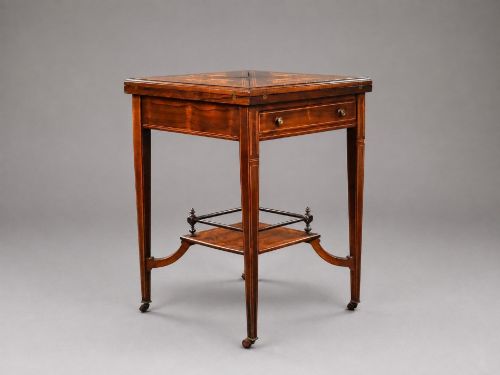
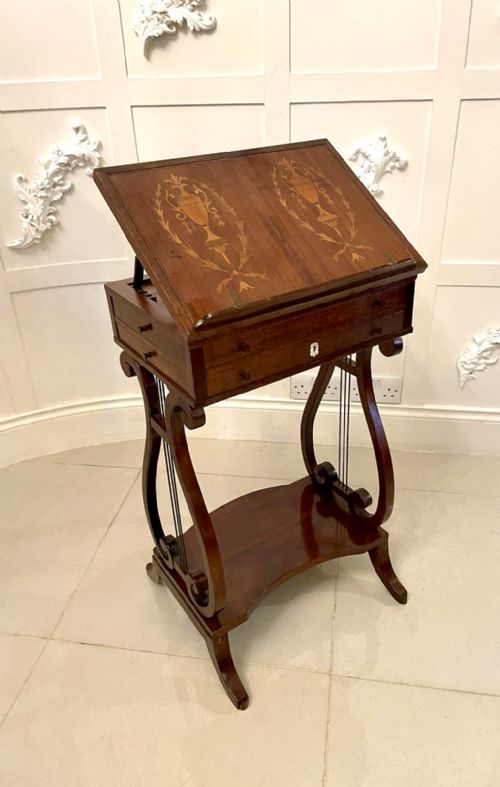
A satinwood inlay desk brings bright, figured timber and delicate contrast into a room, spanning styles from eighteenth-century George III pieces to Edwardian revivals.
Satinwood Inlay Desk
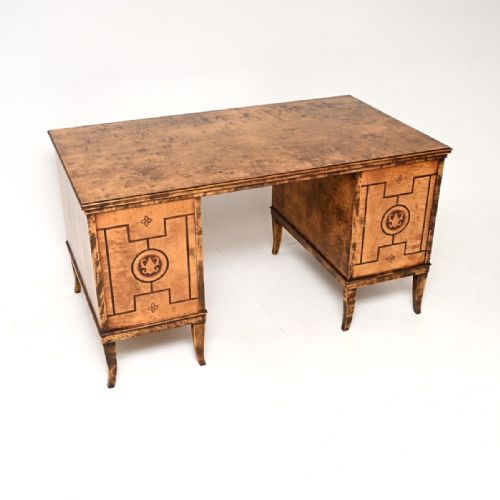
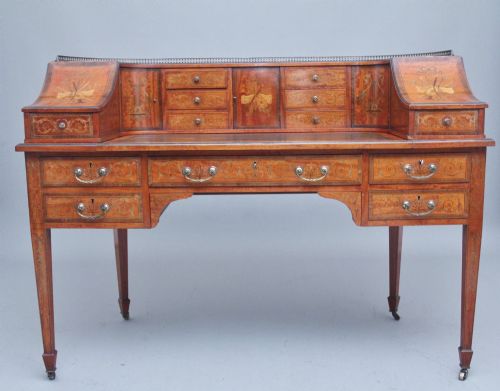
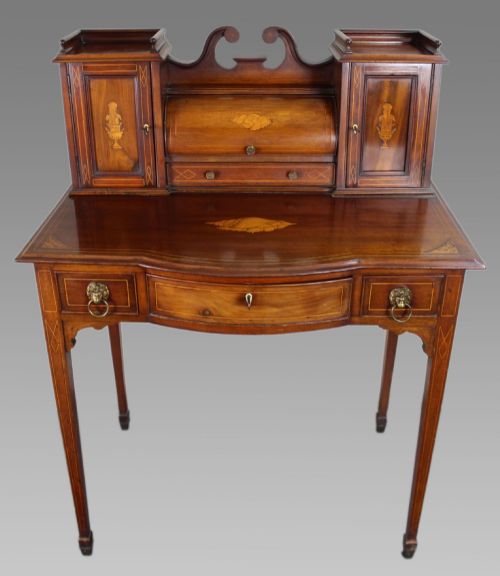
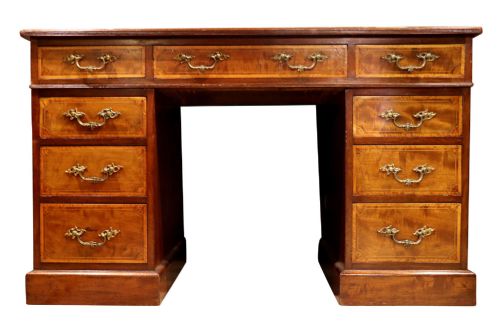
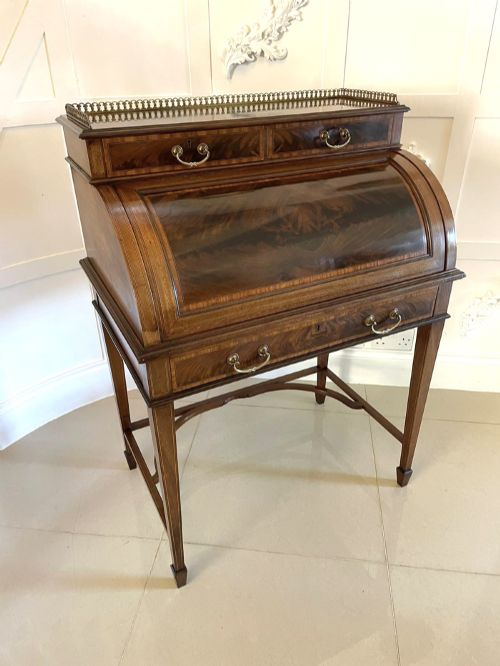
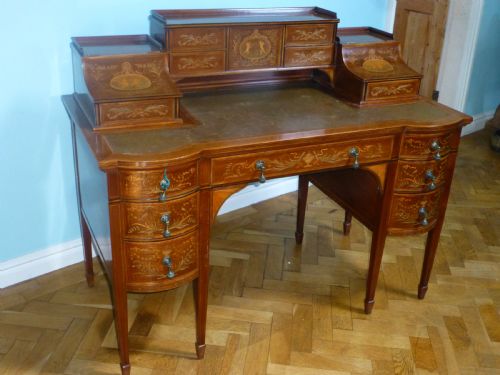
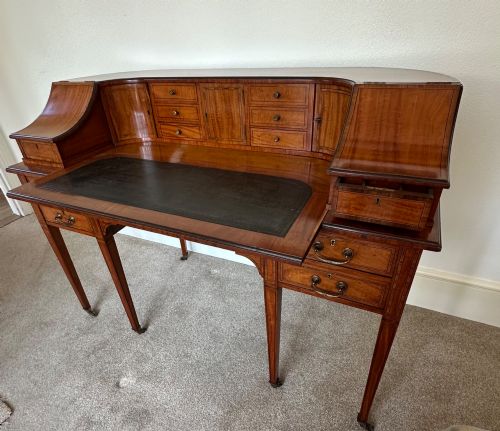
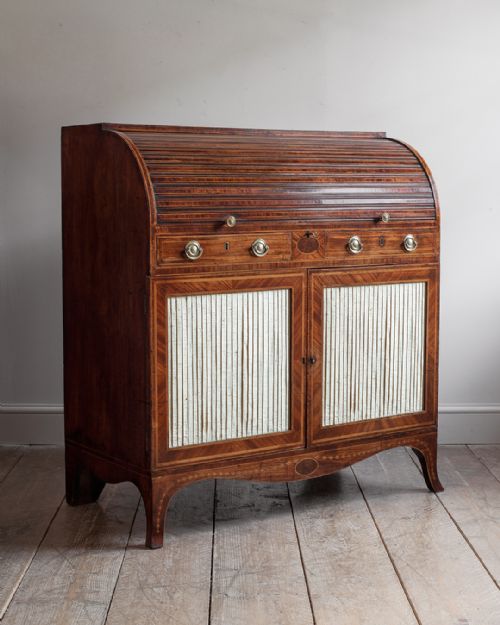
A satinwood inlay desk encompasses a range of writing furniture, from compact ladies' tables and kidney-shaped writing desks to elaborate Carlton House desks and cylinder bureaus. These pieces emerge predominantly from the Edwardian era and the nineteenth century, alongside select eighteenth-century George III examples.
The Edwardian interpretation frequently displays Sheraton Revival influences, pairing mahogany carcasses with satinwood banding and stringing. Kidney-shaped writing tables and freestanding cylinder desks dominate the selection, often bearing the craftsmanship of prominent London cabinet-makers.
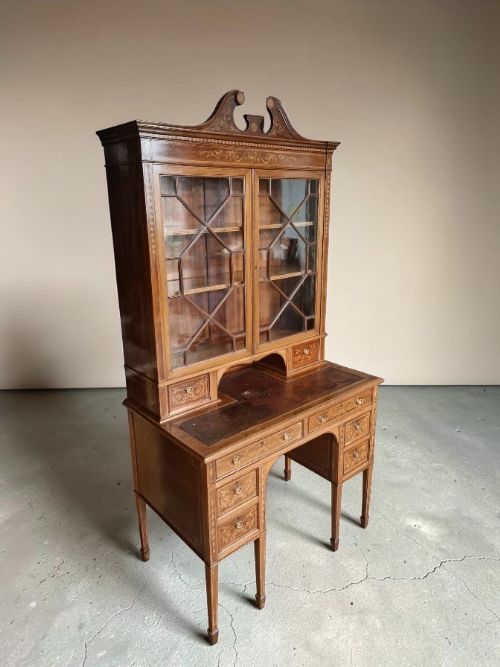
Earlier eighteenth-century pieces rely on solid satinwood or sabicu combined with meticulous marquetry, representing the height of neoclassical cabinet-making. Buyers encounter everything from simple occasional writing tables to fitted bureau bookcases and partner desks.
Culls and Craftsmanship
Quality rests upon the crispness of the marquetry and the choice of timber figure, where tightly mottled satinwood contrasts sharply with plain, washed-out veneers. The fineness of the stringing lines and the integrity of the original hardware distinguish superior workshops from mass production.
Structural refinement shows in the execution of curved tambour shutters, smoothly operating cylinder tops, and internal pigeonholes fitted with secret drawers. Original leather inserts and well-preserved maker stamps elevate a piece above standard domestic furniture.
Campaign style writing tables arrived with folding legs, proving that even eighteenth-century travelling scholars refused to draft peace treaties on bare camp beds.
Edwards & Roberts·Maple & Co
The Satinwood Inlay Desk Glossary
- Satinwood
- A lustrous, yellow-gold hardwood native to Ceylon and the West Indies, prized for its natural sheen and decorative veneer potential. It forms the primary visual element in neoclassical and revival writing furniture.
- Carlton House desk
- A horseshoe-shaped writing desk featuring a stepped superstructure of small drawers and compartments curving around the back of the writing surface. This form gained popularity during the late eighteenth century and saw extensive revival production in the Edwardian period.
- Marquetry
- The art of forming decorative patterns on a wooden carcass using thin veneers of various coloured timbers, shells, or metals. It differs from inlay by assembling the entire design before applying it to the surface.
- Cylinder desk
- A writing desk with a curved, quarter-circle wooden shutter that rolls back to reveal a pull-out writing slide and pigeonholes. It keeps the workspace tidy when closed.
- Stringing
- Narrow strips of contrasting wood inlay used to outline drawer fronts, tabletops, and panels. This technique defines geometric boundaries in Sheraton and Regency pieces.
Satinwood Inlay Desk: Frequently Asked Questions
How do I care for a satinwood desk?
Keep the timber away from direct sunlight and excessive heat to prevent the light satinwood veneer from darkening or splitting. Apply microcrystalline wax periodically to nourish the surface without building up heavy residue.
Avoid placing damp items or unsealed cups directly onto the wooden surface or the leather insert. Use soft, dry cloths for dusting to protect the delicate stringing and marquetry details.
Are these desks suitable for daily use?
Many Edwardian and nineteenth-century writing desks function well for modern laptop use or correspondence, provided the writing surface is treated with care. Compact forms like kidney desks and occasional tables fit easily into smaller study spaces.
Consider the height and kneehole clearance of older pieces, as historical seating dimensions differ from modern office chairs. Selecting a sturdy pedestal desk ensures ample stability for regular writing tasks.
How do I distinguish an 18th-century desk from an Edwardian revival?
Examine the construction methods, secondary timbers, and the oxidation of the wood beneath the drawers and back panels. Eighteenth-century pieces typically employ hand-cut dovetails and native oak or pine linings.
Revival pieces from the Edwardian period often utilise machine-sawn components, different interior drawer construction, and distinct retail stamps. The sharpness of the Sheraton Revival style also reflects late-Victorian or Edwardian interpretations of neoclassical design.
What is a cylinder tambour bureau?
A cylinder tambour bureau combines a rolling slatted tambour shutter with a concealed writing surface. The slatted construction allows the flexible wooden curtain to track around a curved recess.
This mechanism conceals the interior stationery compartments and drawers when not in use. It represents an intricate evolution of eighteenth-century space-saving cabinetry.