
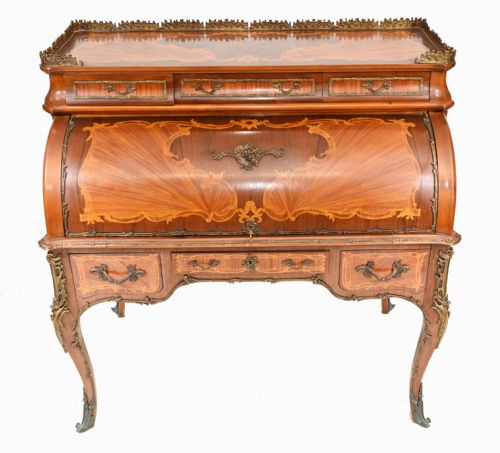


Marquetry Cylinder Bureau
A marquetry cylinder bureau brings together intricate inlaid woodwork and a curved roll-top action to conceal a fitted writing surface.
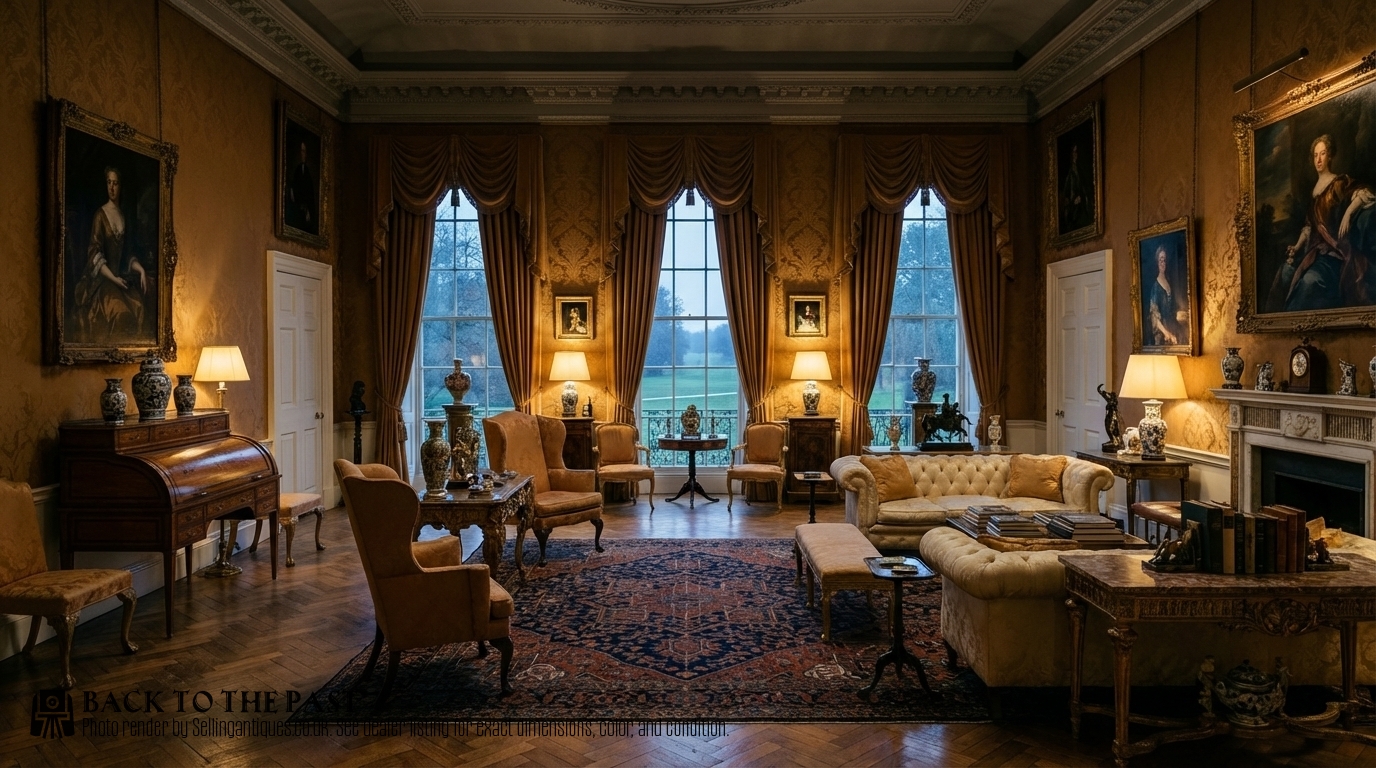
Marquetry Cylinder Bureau
A marquetry cylinder bureau offers a practical writing desk where a curved wooden shell rolls back to reveal fitted drawers and pigeonholes. When you search for a marquetry cylinder bureau, you encounter pieces spanning the eighteenth century through the Edwardian period and the early twentieth century.
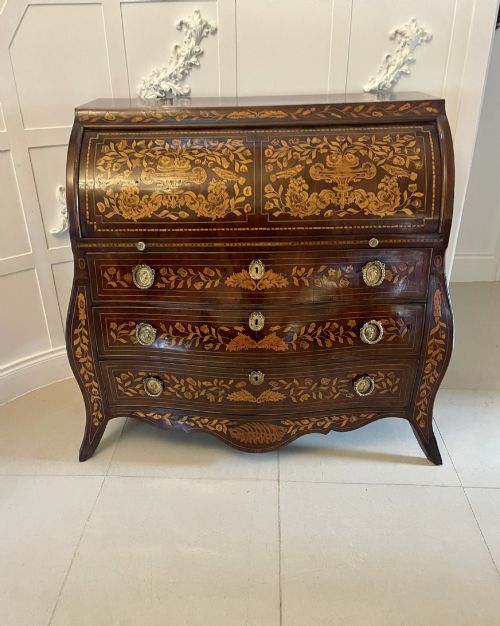
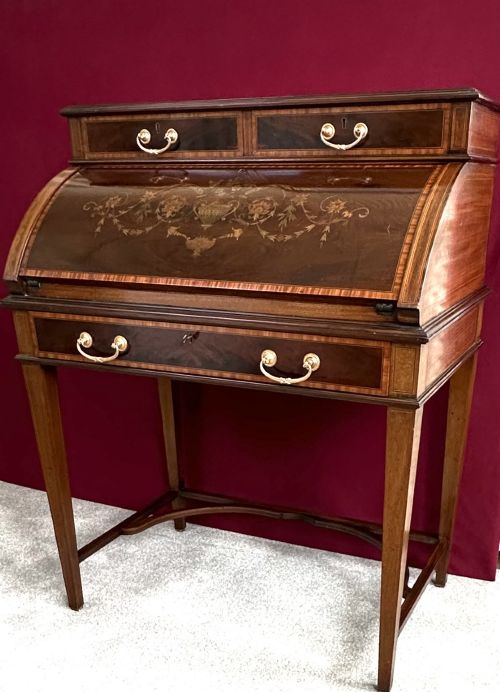
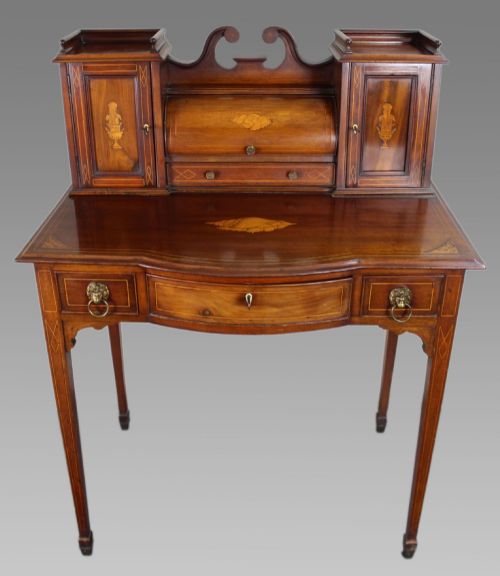
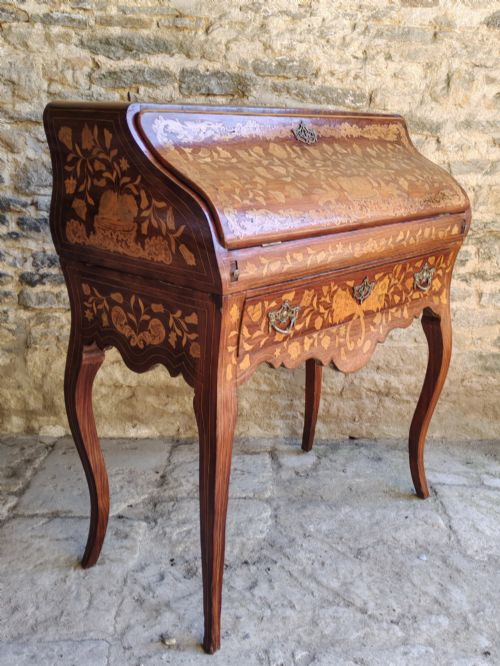
The selection ranges from substantial Dutch burr walnut and floral marquetry examples to refined English Sheraton Revival satinwood designs and French revival pieces. These desks served as private writing spaces in grand homes, combining secure storage with elaborate decorative surfaces.
Materials and construction
Cabinet makers built these desks using foundational timbers like mahogany, walnut, and satinwood, applying veneers of rosewood, fruitwood, and partridgewood for the exterior surfaces. The curved cylinder requires precise joinery to ensure the slatted roll-top moves smoothly within its tracks.
Marquetry and parquetry ornamentation involved cutting fine veneers of contrasting timbers, sometimes enhanced with brass and ormolu mounts. Craftsmen laid these pictorial or geometric floral designs meticulously onto the carcase before polishing the wood to a high lustre.
Secret drawers hidden behind faux book spines reward owners who know where to press inside the cylinder.
Judging quality and craftsmanship
The distinction between standard utility and superior craftsmanship rests in the depth of the floral marquetry and the choice of primary timbers, such as burr walnut or figured satinwood. Finer pieces display crisp, highly detailed veneer work that maintains its alignment across the moving cylinder and the stationary carcase.
Internal arrangement further separates grades, with better workshops providing fitted maple or satinwood interior drawers with secret compartments and leather-lined pull-out writing slides. The smoothness of the mechanical roll-top action and the integration of original brass hardware indicate the original maker's skill.
Edwards and Roberts·Maple and Co·Linke
The Marquetry Cylinder Bureau Glossary
- Cylinder bureau
- A writing desk featuring a curved, quarter-circle wooden shutter that rolls back to uncover the writing surface and interior drawers. This mechanism protects the desk contents from dust and prying eyes.
- Marquetry
- A decorative technique where small pieces of contrasting veneer are assembled to create pictorial patterns, typically floral motifs. Artisans shape woods like fruitwood and satinwood to form these complex designs.
- Parquetry
- Geometric wood inlay forming repeating patterns such as cubes or chequers across the surface of the furniture. It differs from marquetry by relying on angular, repeating motifs rather than pictorial scenes.
- Tambour
- A flexible shutter made from narrow vertical strips of wood glued to a fabric backing, allowing the writing surface to slide open around a curve. It appears on several George III and Sheraton period desks.
- Ormolu
- Gilded bronze mounts and decorative trimmings applied to French and revival pieces. These metallic details highlight the corners, feet, and key escutcheons of the furniture.
Marquetry Cylinder Bureau: Frequently Asked Questions
How does a cylinder action work?
The curved wooden shutter travels along recessed tracks within the desk sides, rotating smoothly upward and backward into the superstructure when opened. This action simultaneously pulls out the writing surface on many English and continental designs.
Maintaining the mechanism involves keeping the wooden tracks clean and dry so the slatted wood moves without binding against the interior frame.
Where were these desks placed?
Owners typically positioned these bureaus in private studies, drawing rooms, or bedrooms where correspondence and personal accounts were managed. Their finished backs often allowed them to sit away from the wall in the centre of a room.
They functioned primarily as private writing cabinets rather than heavy library desks, suiting lighter domestic tasks and letter writing.
How do I care for marquetry surfaces?
Protect the delicate fruitwood and satinwood veneers by keeping the desk away from direct sunlight and steady heat sources that cause timber to dry and warp. Regular dusting with a soft, dry cloth preserves the polished finish without building up heavy wax residues.
Apply a traditional beeswax polish sparingly only when the wood appears dry, buffing gently along the grain to maintain the natural lustre.
How do I distinguish Dutch from English styles?
Dutch marquetry pieces often display exuberant floral and urn designs executed in burr walnut with bombe front profiles, reflecting seventeenth and eighteenth-century traditions. English examples, such as Sheraton Revival or George III styles, tend to favour lighter satinwood and mahogany with restrained geometric banding.
Examining the secondary woods inside the drawers provides further clues to regional origin and helps confirm the period of manufacture.