


Victorian Inkstand Tray
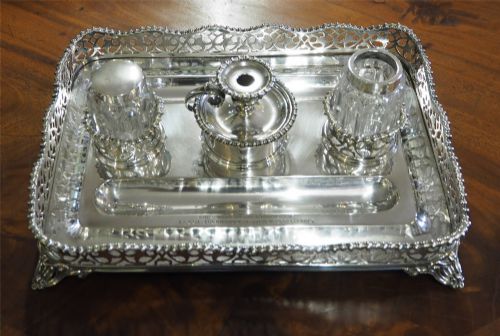
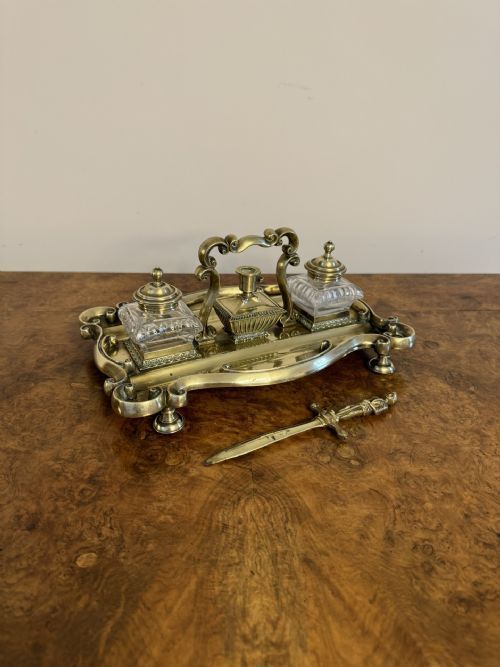
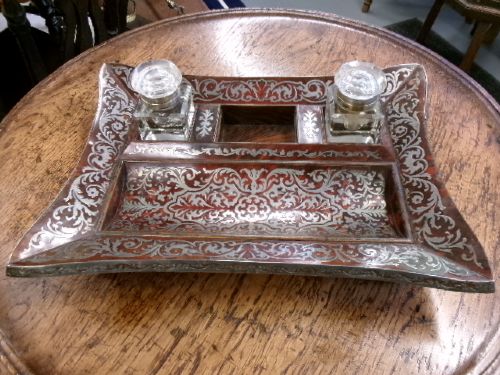
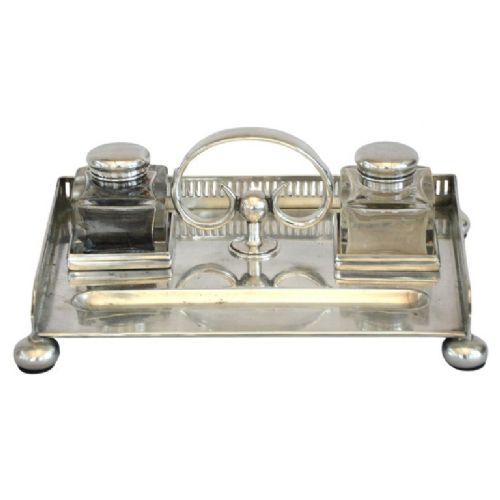
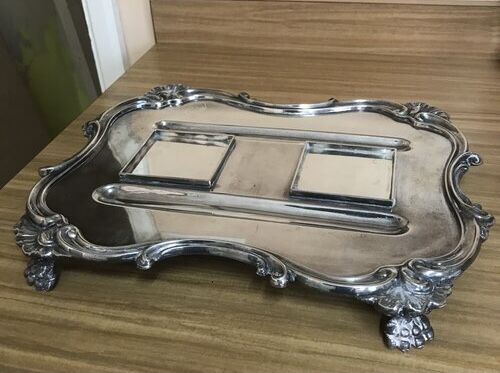
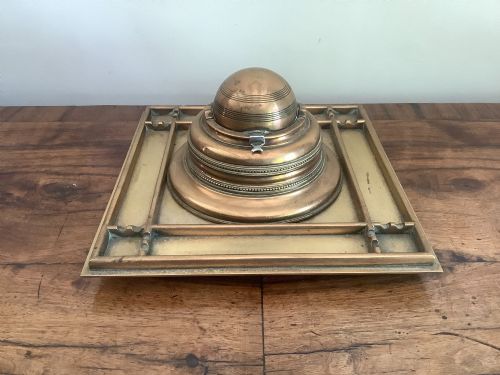
A victorian inkstand tray anchors the desktop with fitted wells for ink and channels for pens, combining utility with material craftsmanship.
Victorian Inkstand Tray
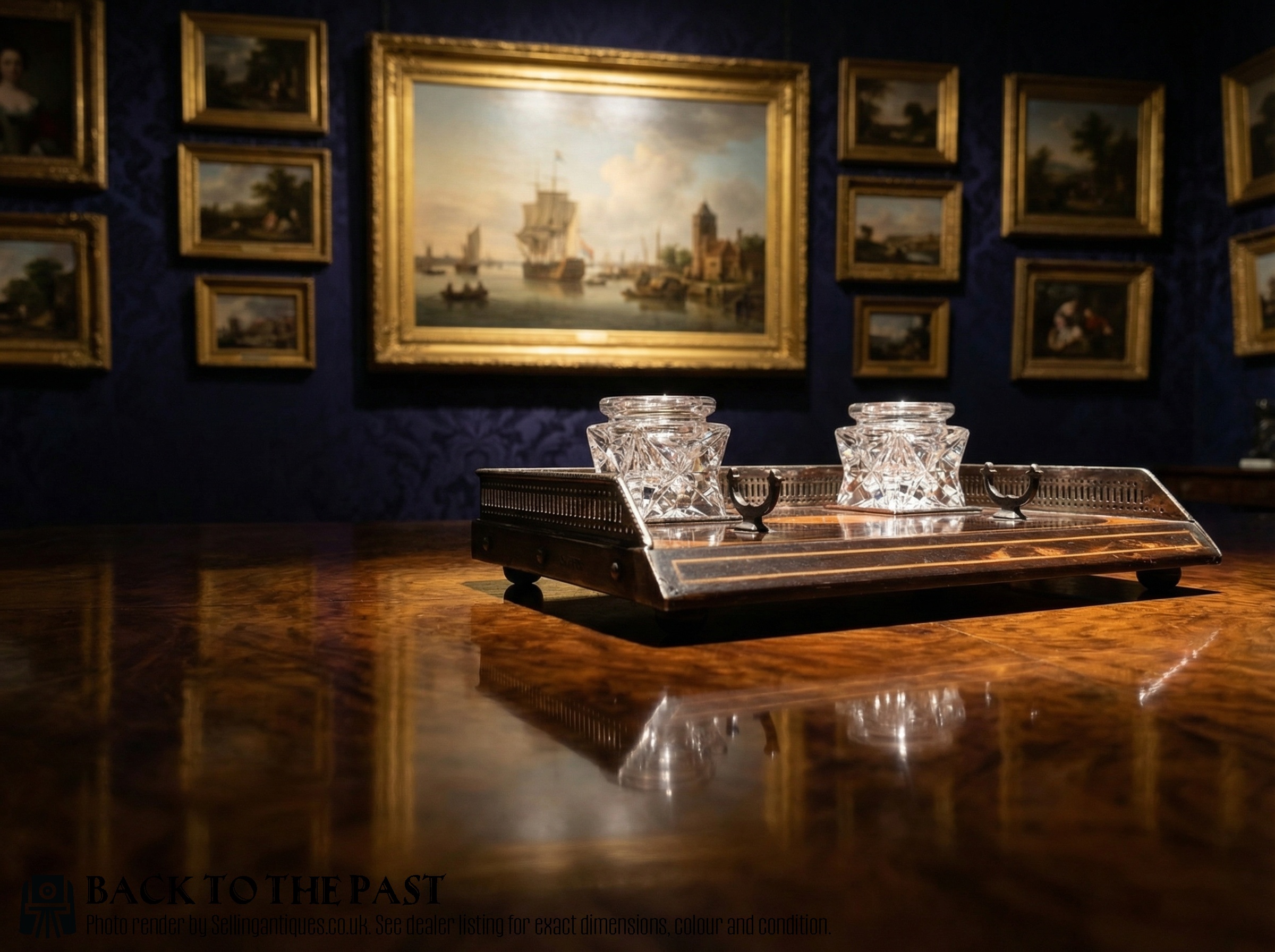
A victorian inkstand tray provides a dedicated desktop station for writing equipment, arranging glass or ceramic inkwells alongside pen rests and compartments. These desk accessories appear in forms ranging from heavy silver plated trays and solid silver stands to carved wooden bases and papier-mâché tidies.
The pieces on this page span the Victorian era alongside adjacent nineteenth-century styles, including French Napoleon III, Art Nouveau, and Black Forest carvings. Buyers encounter items configured with single or double inkwells, often accompanied by matching chambersticks, stamp boxes, or pen trays.
How They Were Made
Materials span cast and sheet brass, silver plate, sterling silver, cut glass, and porcelain, alongside dense timbers such as coromandel, walnut, oak, and rosewood. Artisans incorporated decorative treatments including mother-of-pearl inlay, tortoiseshell, agate cabochons, champlevé enamel, and hand-painted papier-mâché.
Carpentry techniques join figured wood veneers to solid carcases, while metalwork combines cast bronze and brass with applied silver plating or mercury gilding. Glass inkwells utilise heavy cut crystal fitted with hinged metal lids, often secured by collars of silver or brass.
Black Forest carvers occasionally abandoned formal geometry entirely, crafting entire inkstands in the likeness of crouching bears and watchful cats.
What Varies in Quality
Quality rests upon the weight and integration of materials, distinguishing heavy cast brass and solid silver from lighter plated alternatives. Finer examples display meticulous marquetry, crisp chasing on metal mounts, and undamaged fitted glass liners that sit flush within their designated wells.
The distinction between standard production items and premier workshop pieces appears in the complexity of the design, such as combined chambersticks, double ink reservoirs, and the inclusion of original matching pens or stoppers.
Elkington·Walker And Hall·Harrods·Robert Garrard·Minton·Rupert Favell·James Cartland And Sons·W M F
The Victorian Inkstand Tray Glossary
- Inkstand
- A fitted tray or stand holding one or more inkwells and provision for writing implements. It forms the central writing accessory of the nineteenth-century desk.
- Chamberstick
- A small portable candlestick mounted directly onto the inkstand tray. It provided light for sealing letters with wax.
- Coromandel
- A dense, heavily figured exotic timber imported from Asia, frequently used for luxury Victorian desk boxes and stands. Its dark brown grain displays contrasting lighter streaks.
- Champlevé
- An enamelling technique where troughs are dug into a metal surface and filled with vitreous paste before firing. This method decorates many French bronze and brass stands.
- Papier-mâché
- A composite material made from paper pulp or layers of paper glued, pressed, and lacquered. Kashmiri and European makers utilised it for lightweight, hand-painted desk trays.
Victorian Inkstand Tray: Frequently Asked Questions
What is a victorian inkstand tray used for?
These trays organised writing materials on nineteenth-century desks by holding inkwells, sanders, and pen rests in one stable place. They kept corrosive ink off the desktop and provided a designated spot for dipping quill or steel nib pens.
Beyond basic function, they served as decorative desk furniture reflecting the status and taste of the owner through materials like silver, brass, and exotic woods.
How do I clean a brass or silver inkstand?
Cleaning requires gentle removal of dust and dried ink residue using soft brushes and mild non-abrasive solutions on the metal components. Care must be taken around fitted wood veneers, leather inserts, and delicate enamel work to avoid moisture damage.
Glass inkwells benefit from warm soapy water and bottle brushes, ensuring all old ink sediment is cleared away without straining the antique glass.
How do I tell an original Victorian inkstand from a later copy?
Original pieces show period construction methods, such as hand-cut dovetails in wooden bases, cast rather than stamped brass mounts, and genuine period hallmarks on silver components. Wear patterns should match decades of handling, particularly around pen rests and inkwell openings.
Materials also offer clues, as genuine coromandel, tortoiseshell, and old cut glass exhibit weight, patination, and manufacturing traits typical of nineteenth-century workshops.
Can I still use antique inkstands for writing?
Many antique inkstands remain functional, though glass wells should be inspected for hairline cracks before filling with modern fountain pen ink. Metal collars and hinged lids must be checked to ensure they close tightly enough to prevent the ink from evaporating too quickly.
Many collectors prefer to display them dry to preserve the interior fabric and metal finishes from corrosive staining.