



Silver Mounted Inkstand
A silver mounted inkstand brings tangible weight and historic utility to the writing desk.
Silver Mounted Inkstand
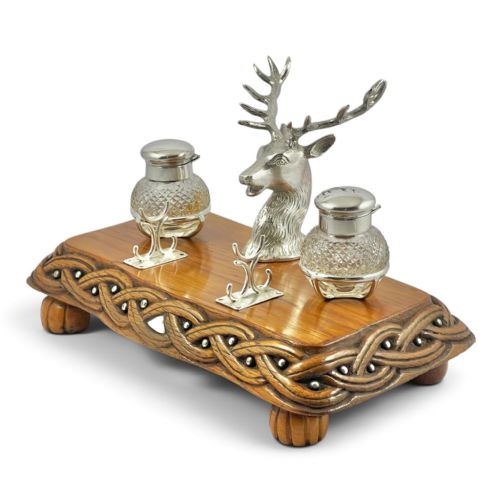
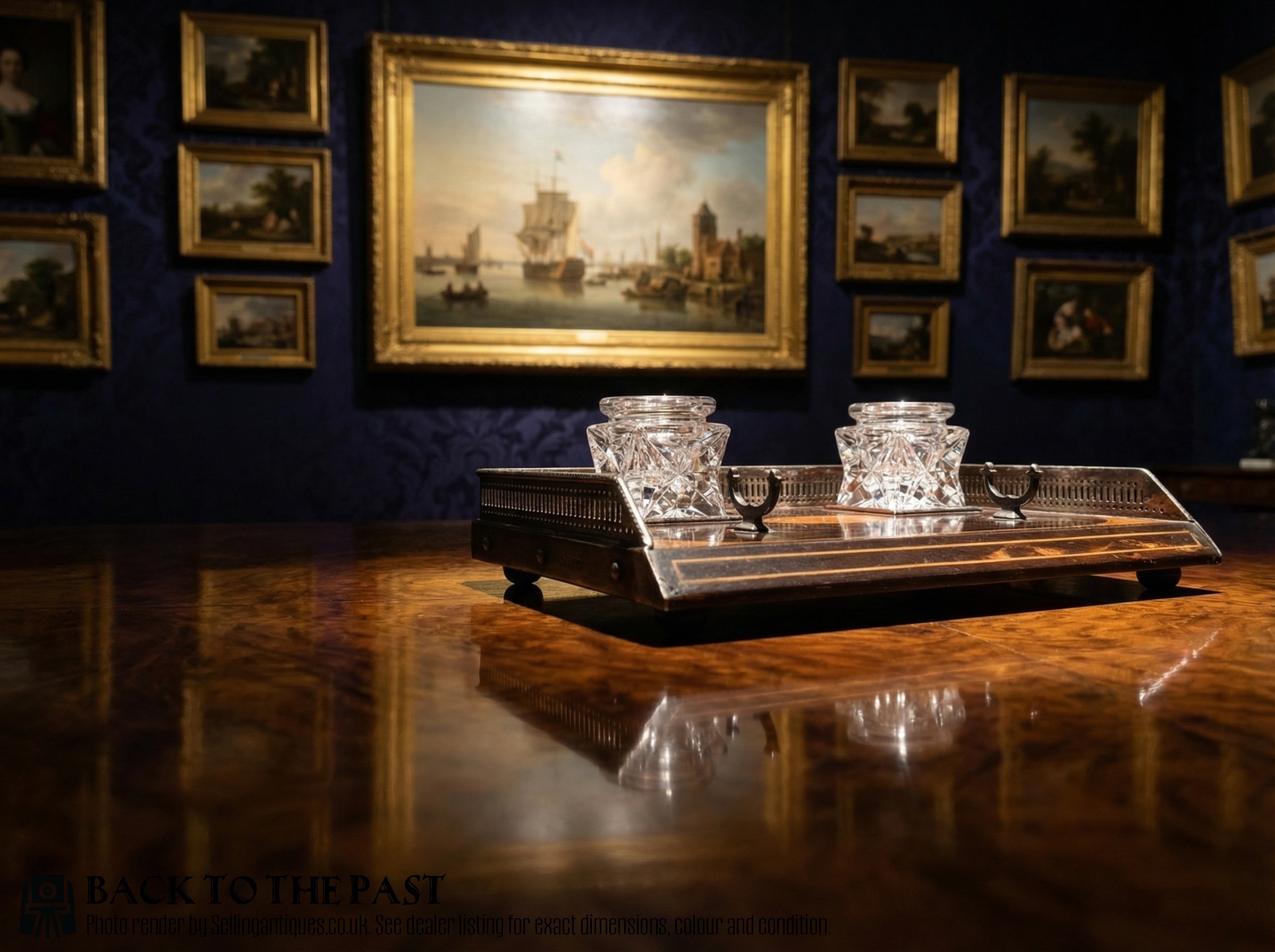
A silver mounted inkstand gathers writing implements upon a dedicated base, uniting metalwork with materials like glass, oak, and horn. These desk accessories range from simple single inkwells to elaborate arrangements featuring stationery boxes and pen trays.
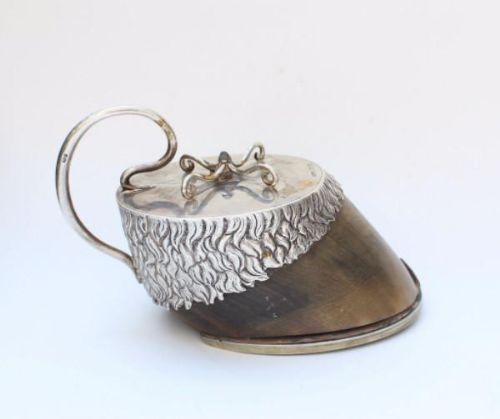
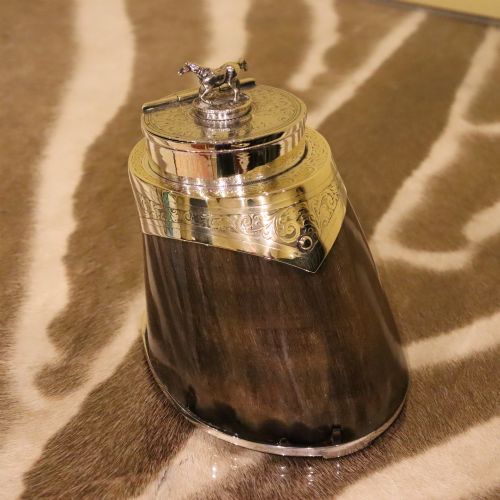
Victorian and Edwardian examples dominate the selection, spanning styles from Scottish Baronial and Gothic Revival to notable novelty pieces. Horse hoof and horn designs appear frequently, reflecting the Victorian taste for naturalia in everyday objects.
Buyers will most commonly encounter cut glass vessels secured with sterling silver or silver plate collars, often accompanied by matching pen stands or paired inkwells. Regional pieces from makers working in centres like Birmingham, Sheffield, and Inverness provide distinct local character.
Materials and construction
Glass and silver-plated or sterling silver mounts form the primary components of these inkstands, often supported by bases of seasoned oak, coromandel, or satinwood. Taxidermy elements such as horse hoof and animal horn are integrated with metal collars and hinged lids.
Silversmiths utilised cast and chased techniques to form decorative rims, hinges, and feet, securing them to glass reservoirs and wooden trays. Fitted mounts required precise metalworking to ensure the hinged lids closed securely over glass inserts.
Silver Mounted Inkstand Retail Price Guide 2026
Typical asking prices for silver mounted inkstand among the pieces listed under this phrase on Sellingantiques today, from the lower quarter to the upper quarter. They describe what is for sale here now, not the wider market.
Listings feature Victorian and Edwardian pieces, incorporating materials ranging from cut glass and sterling silver to horse hoof, horn, and oak.
Assessing craftsmanship and execution
Quality rests in the heaviness of the silver mounts, the clarity and weight of the glass reservoirs, and the stability of the wooden or natural material base. Substantial gauge metal and crisp chasing distinguish superior pieces from lighter, mass-produced alternatives.
The integration of materials determines distinction, particularly where taxidermy elements like hoof and horn meet metal collars without gaps. Maker attribution and documented provenance elevate specific items above unmarked domestic wares.
Tiffany and Co·Rupert Favell
The Silver Mounted Inkstand Glossary
- Inkstand
- A portable desk stand holding one or more inkwells alongside space for pens and sealing wax. These pieces formed standard desk furniture in private libraries and offices.
- Sterling silver
- A silver alloy containing 92.5 percent pure silver by mass, frequently hallmarked on the mounts of quality desk accessories. This standard guarantees the metallic composition.
- Cut glass
- Glass decorated by cutting facets or patterns into the surface using a wheel, adding brilliance and weight to inkwell reservoirs. This material resists the corrosive properties of historical writing inks.
- Silver plate
- A layer of silver fused or electroplated onto a base metal foundation, providing the appearance of solid silver at a different cost. Many nineteenth-century desk stands utilise this technique for larger structural trays.
- Taxidermy
- The art of preparing and mounting animal skins or parts, which in desk accessories manifests as horse hoof inkstands and horn inkwells. These items reflect period aesthetics linking the study of nature with functional objects.
Silver Mounted Inkstand: Frequently Asked Questions
How do I date a silver mounted inkstand?
Dating relies heavily on hallmarks stamped onto the silver mounts, which indicate the assay office and year of manufacture. Stylistic markers such as Victorian Gothic Revival or Edwardian simplicity further narrow the period of creation.
Secondary materials like oak, coromandel, or taxidermy elements also correspond to specific decades of popularity. Comparing the construction methods of the glass inserts and wooden trays provides additional chronological context.
Were these stands used for daily writing?
These pieces served as functional desk furniture in studies, libraries, and offices throughout the nineteenth and early twentieth centuries. They held the liquid ink necessary for dip pens before the widespread adoption of fountain pens.
Heavier models remained stationary on large partner desks, while smaller versions could be moved as needed. The inclusion of pen trays and stationery boxes ensured all writing requirements stayed organised in one location.
How should I clean the silver mounts?
Silver mounts require gentle cleaning with a specialised microfibre cloth to remove tarnish without disturbing surrounding glass or wood. Avoid liquid dips, as chemical solutions can seep into wooden bases or discolour taxidermy elements.
Careful maintenance preserves the original hallmarking and surface patination built up over decades of handling. Regular dusting prevents the accumulation of grime in the chased details of the metalwork.
What caused the variety in material choices?
Material selection shifted according to prevailing fashions and the specific function required of the desk accessory. Luxury pieces utilised exotic woods like coromandel and satinwood alongside precious metals to impress visitors in formal libraries.
Equestrian and novelty items employed natural materials such as horse hooves and horn to satisfy Victorian tastes for unusual decorative objects. Glass and silver remained constant for practical ink containment regardless of the surrounding base material.