






Double Inkwell Stand
A double inkwell stand brings paired glass reservoirs and pen rests together on a shared desk base, offering a neat station for Victorian and Edwardian correspondence.
Double Inkwell Stand
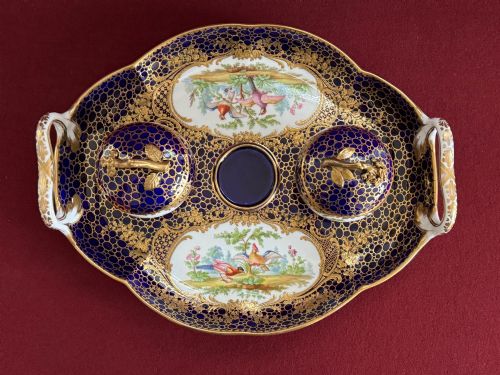
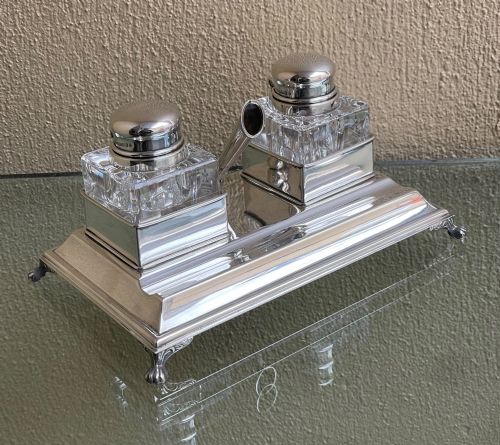
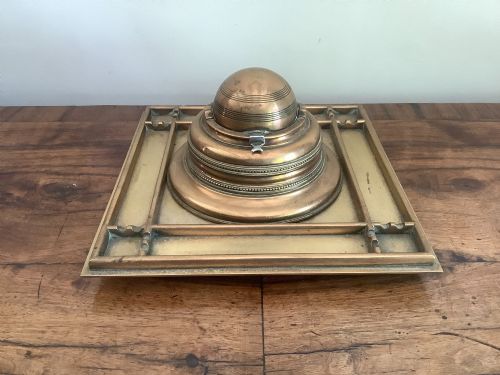
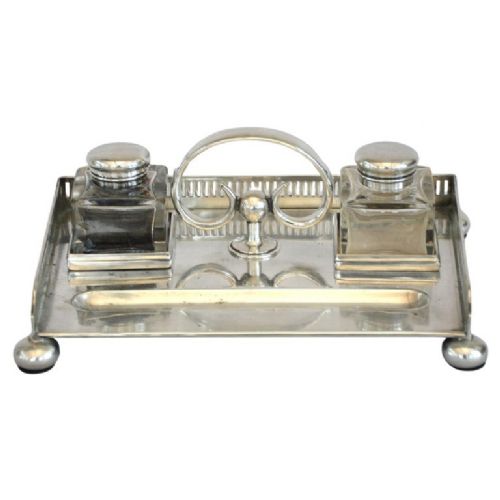
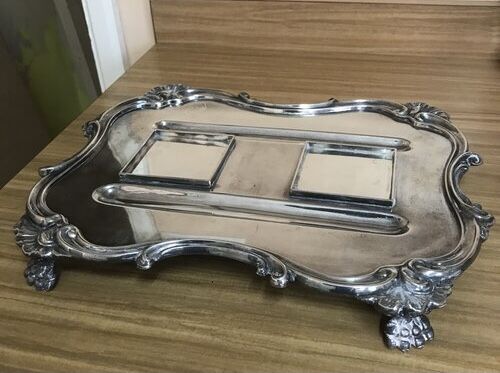
A double inkwell stand provides a dedicated desktop accessory designed to hold two ink reservoirs alongside dedicated space for pens. These pieces appear frequently across the Victorian and Edwardian eras, taking the form of substantial desk sets, tidy boxes, and freestanding trays.
Originating in domestic and professional settings where correspondence required multiple ink colours or simply a replenished supply, these stands reflect the varied aesthetic movements of the nineteenth and early twentieth centuries, spanning Rococo Revival, French Empire, and Art Nouveau styles.
Materials and technique
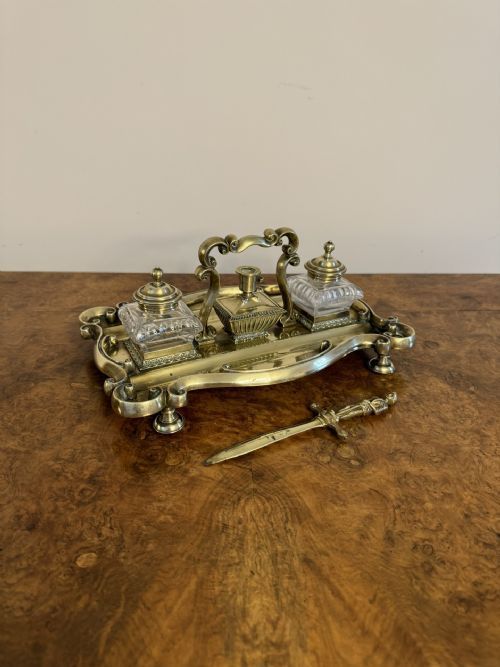
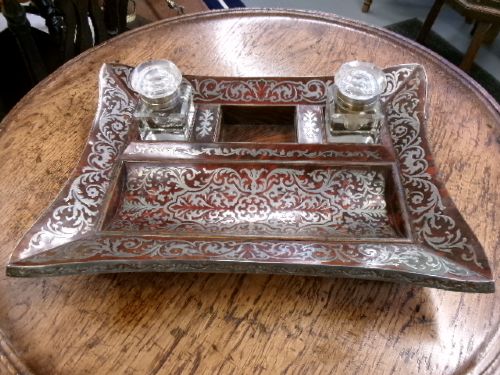
Makers constructed the bases of these stands from cast metals like brass and bronze, alongside turned and carved hardwoods such as walnut, mahogany, and ebony. Decorative treatments included silver plating, ormolu mounts, and intricate Boulle work inlay laid into timber surfaces.
The ink reservoirs themselves relied on heavy cut glass or moulded glass inserts, often paired with hinged metal lids to prevent the ink from drying out. Silver and Sheffield plate models utilised traditional smithing and hallmarking techniques, while specialised wooden pieces incorporated carved figures or horn elements.
Double Inkwell Stand Retail Price Guide 2026
Typical asking prices for double inkwell stand among the pieces listed under this phrase on Sellingantiques today, from the lower quarter to the upper quarter. They describe what is for sale here now, not the wider market.
Listings for double inkwell stands span the Victorian, Edwardian, and Art Nouveau periods, utilising materials from brass and silver plate to mahogany and glass.
What varies in quality
The standard of a double inkwell stand rests upon the crispness of its metal casting, the weight of its glass inserts, and the precision of any wood joinery or inlay. Finer examples display deeply chased bronze or brass mounts, substantial solid silver construction with clear hallmarks, and original matching glass bottles.
Design complexity also divides the range, distinguishing simple brass trays from elaborate architectural pieces featuring integrated drawers, pen rests, and figural ornaments. The integrity of the materials, from uncompromised burr walnut veneers to undamaged cut glass, separates standard utilitarian items from masterwork desk accessories.
James Cartland and Sons·Walker and Hall·Martin Hall·William Hutton·Maurice Dufrene·A. Marionnet
The Double Inkwell Stand Glossary
- Inkstand
- A complete desk accessory comprising one or more inkwells, pen rests, and a base tray for holding writing instruments. These pieces formed the centrepiece of nineteenth-century writing desks.
- Ormolu
- Gilded bronze applied as a decorative mount to furniture and desk sets, particularly prominent in French nineteenth-century decorative arts. The technique involves applying a mercury-gold amalgam to bronze.
- Boulle work
- An elaborate form of marquetry utilising brass and tortoiseshell inlaid in counterpoint patterns, frequently seen on French nineteenth-century desk stands. Named after the royal cabinetmaker André-Charles Boulle.
- Silver plate
- A base metal, such as copper or Britannia metal, coated with a thin layer of silver using processes like Sheffield plating or electroplating. This method provided the appearance of solid silver at a lower cost.
- Faience
- Tin-glazed earthenware, notably produced in traditions such as Dutch Delft, featuring hand-painted blue and white decoration on ceramic bodies.
Double Inkwell Stand: Frequently Asked Questions
What is a double inkwell stand used for?
These stands held two separate ink reservoirs to allow a writer to use different coloured inks, typically black and red, during correspondence. They kept the desktop organised by incorporating built-in trays or grooves for resting dip pens.
Beyond basic utility, they served as decorative centerpieces for writing desks in studies, libraries, and offices throughout the nineteenth and early twentieth centuries.
How do I date a brass or silver stand?
Dating relies on a combination of stylistic clues, manufacturing techniques, and official hallmarks found on silver or plated components. Victorian pieces often display heavy cast brass and ornate floral motifs, whereas Edwardian examples frequently feature cleaner lines or distinct Art Nouveau influences.
Maker's marks stamped into the metal provide a direct link to active registration years or company operating dates. Examining the construction of the base and the cut of the glass inserts also helps narrow down the period.
Are the glass ink bottles usually original?
Many surviving stands retain their original heavy cut glass or moulded glass inserts, which fit precisely into the designated collars of the metal or wooden base. Because glass bottles suffered accidental breakage over decades of use, replacements are sometimes found in older stands.
Matching the collar dimensions and glass wear patterns helps determine whether an insert belongs to the original piece. Original bottles often show minor base scratching consistent with resting inside the metal housing for generations.
How do I care for a wooden and brass desk set?
Maintenance involves keeping the pieces away from direct sunlight and extreme humidity to protect wooden veneers like walnut and mahogany from cracking. Dusting regularly with a soft, dry cloth preserves the finish without introducing moisture.
Metal components benefit from gentle cleaning rather than aggressive polishing, which can wear away original patinas or silver plating. Glass inserts can be removed and washed separately with mild soapy water when cleaning the inkwell interiors.