




Antique Glass Ink Pot
An antique glass ink pot brings heavy substance and bright refraction to a desk, holding ink safely while catching the window light.
Antique Glass Ink Pot
When you search for an antique glass ink pot, you look at desk accessories designed to hold liquid writing ink before the rise of the fountain pen. The examples on this page span the nineteenth century through the 1930s, taking the form of standalone pots, fitted inkstands, and novelty pieces.
You meet Victorian and Edwardian iterations most frequently, alongside later Art Deco designs. Materials combine heavy glass or cut crystal bodies with brass, sterling silver, silver mounts, vermeil, and guilloche enamel.
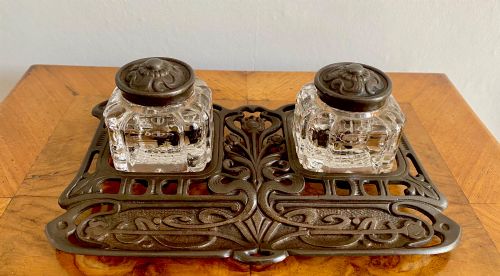
The objects range from simple utilitarian glass vessels with hinged metal lids to grand Victorian Gothic Revival stands and striking Art Nouveau pieces by makers such as Kralik or Loetz. Many retain their original ink bottles or pots within fitted wooden or metal trays.
How they were made
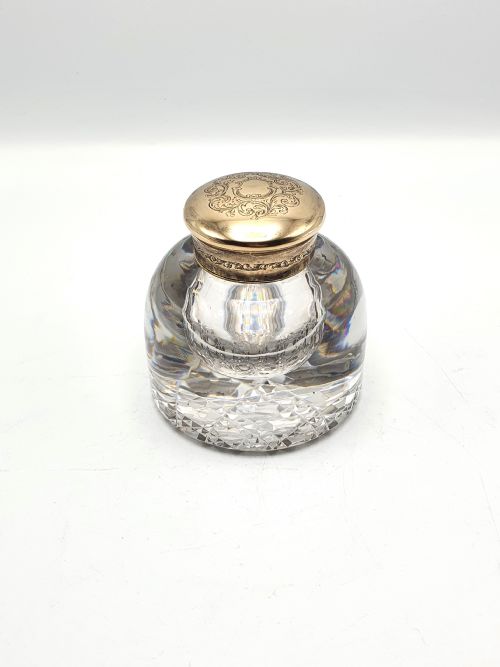
Makers shaped the glass bodies through heavy moulding or meticulous hand-cutting, producing deep facets and sharp prisms that caught the light on a nineteenth-century writing table. Heavy glass and cut crystal provided the mass necessary to keep the pot steady while a writer dipped a nib.
Metalsmiths mounted the glass vessels in sterling silver, brass, and vermeil, often adding hinged lids to keep the ink from drying too quickly. Enamel work and silver hallmarks provide precise dates for pieces originating from the Edwardian period and the 1930s.
Listings feature periods from 1880 through the 1930s, uniting glass, sterling silver, brass, and enamel.
What varies in quality
The quality of an antique glass ink pot rests on the clarity and weight of the glass, the depth of its facet cutting, and the substance of its metal mounts. Thick, heavy crystal with crisp edges separates superior desk wares from lighter, plainer vessels.
The integration of the metal lid with the glass body dictates overall execution. Solid sterling silver mounts, functioning hinges, original glass inserts, and well-preserved enamel or brass details elevate a desk accessory from a basic utility item to a finished piece of craftsmanship.
Tiffany & Co·Kralik·Loetz
The Antique Glass Ink Pot Glossary
- Inkwell
- A small container for holding writing ink on a desk. Most examples feature a hinged lid to prevent dust accumulation and slow evaporation.
- Inkstand
- A complete desk set comprising one or more ink pots, often with integrated trays for pens and stamps. These units anchored the nineteenth-century writing table.
- Guilloche enamel
- Decorative metalwork covered with translucent enamel over an engine-turned background. This technique appears on Victorian and later silver-mounted desk pieces.
- Vermeil
- Sterling silver plated with a thin layer of gold. It provides a rich warm tone alongside the clear glass bodies.
- Facet cut
- Geometric surface cutting on glass that creates multiple flat planes. This method maximises light refraction across heavy desk pieces.
Antique Glass Ink Pot: Frequently Asked Questions
What is an antique glass ink pot?
These pieces are heavy glass or crystal vessels designed to hold writing ink on a desk, frequently mounted with silver, brass, or enamel lids.
They date from the nineteenth century through the 1930s, encompassing Victorian, Edwardian, and Art Deco styles.
How were glass ink pots used?
Writers placed them on desks or fitted stands to dip steel nibs and quill pens into liquid ink during the correspondence of the period.
The heavy glass body kept the pot anchored while the hinged lid protected the ink from dust and rapid drying.
How do I date an ink pot?
Silver components often carry hallmarks that reveal the exact year of assay, while stylistic clues point to Victorian, Edwardian, or Art Deco eras.
Materials like guilloche enamel and iridescent glass align with specific manufacturing periods between 1880 and the 1930s.
What styles are common for inkstands?
Surviving examples show Victorian Gothic Revival forms, organic Art Nouveau curves, and geometric Art Deco lines alongside novelty animal designs.
Some incorporate oak bases or brass trays to hold multiple original glass ink bottles together.