


Victorian Inkwell Stand
When you search for a victorian inkwell stand, you find desk accessories combining metal, glass, and timber to hold writing equipment.
Victorian Inkwell Stand
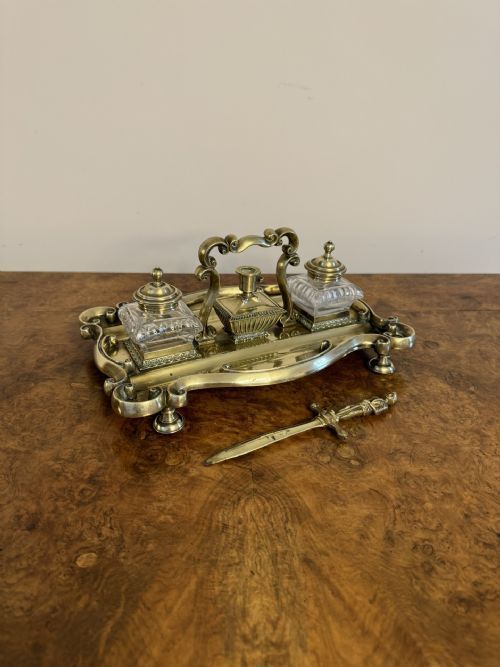
A victorian inkwell stand is a desk accessory designed to hold one or more inkwells alongside pen rests, stamps, and occasionally taper sticks or sanders. These pieces served as the centrepiece of the nineteenth-century writing table, organising the tools needed for correspondence before the adoption of fountain pens and ballpoints.
The selections available include simple wooden trays fitted with glass inserts as well as elaborate mounted pieces incorporating brass, marble, tortoiseshell, and silver. Most examples date from the Victorian and Edwardian periods, reflecting the heavy correspondence culture of the nineteenth and early twentieth centuries.
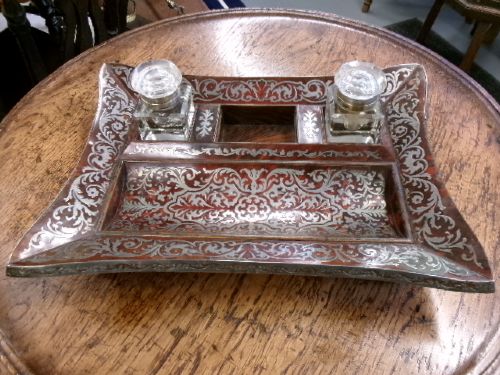
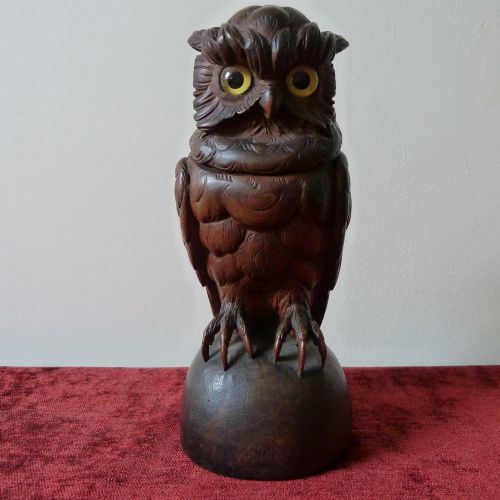
Makers produced these stands in various formats, ranging from compact single-inkwell designs for personal correspondence to substantial double-inkwell models intended for office desks. Stylistic influences span from plain oak and walnut constructions to ornate French Napoleon III boulle work, Art Nouveau bronzes, and Black Forest carvings.
How they were made
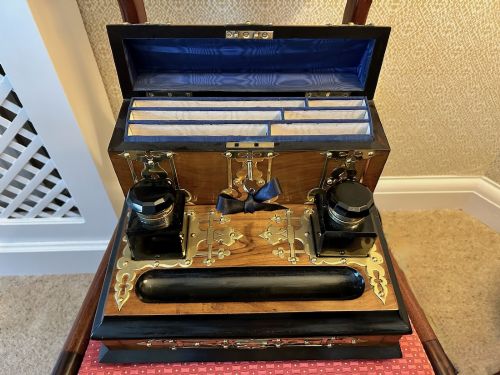
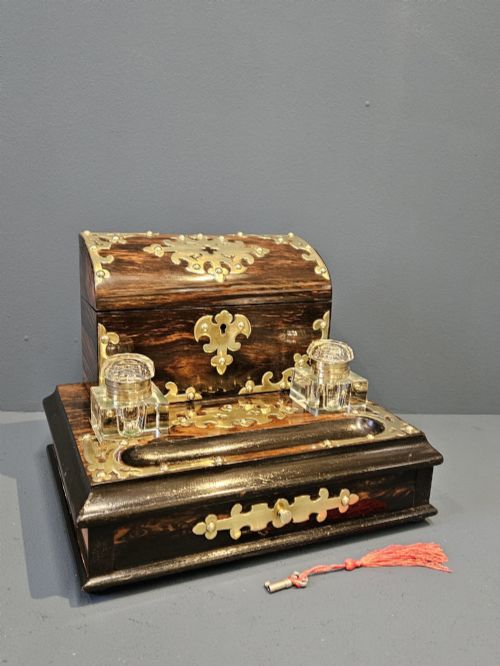
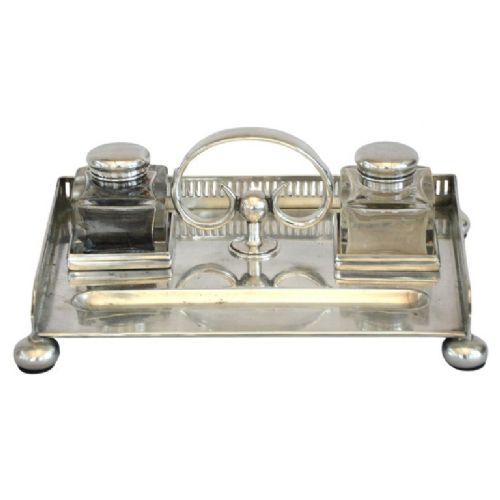
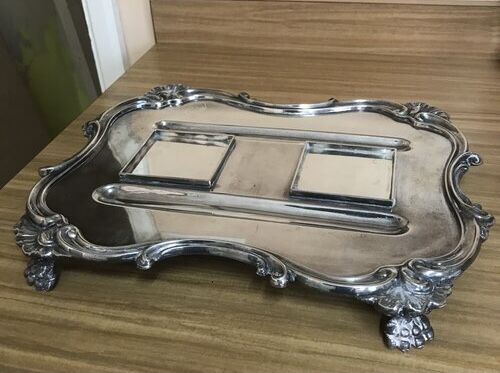
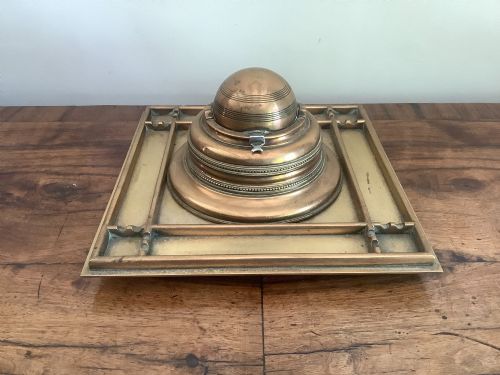
The construction of a victorian inkwell stand typically relied on a timber base of walnut, coromandel, oak, or mahogany, often enhanced with brass strapwork, mother-of-pearl inlay, or tortoiseshell panels. Metal components were cast in brass, bronze, or silver plate, utilising techniques like ormolu gilding and detailed chasing to define decorative borders.
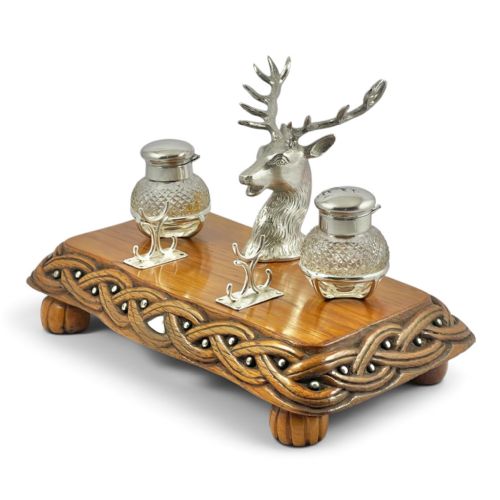
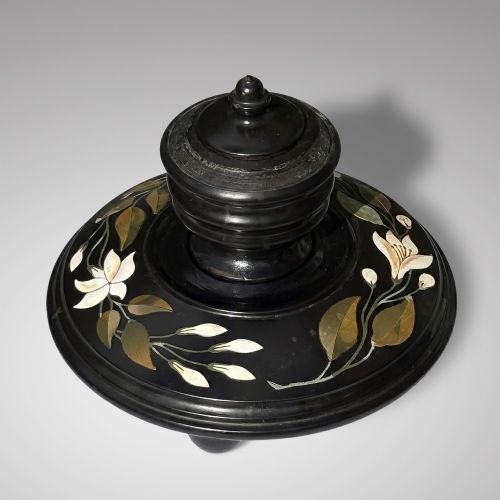
Fitted glass containers formed the internal reservoirs for ink, sometimes cut with deep facets or mounted with hinged sterling silver lids. Craftspeople also incorporated alternative materials such as carved marble, horn, faience, and porcelain, securing them to the base with threaded mounts and pins.
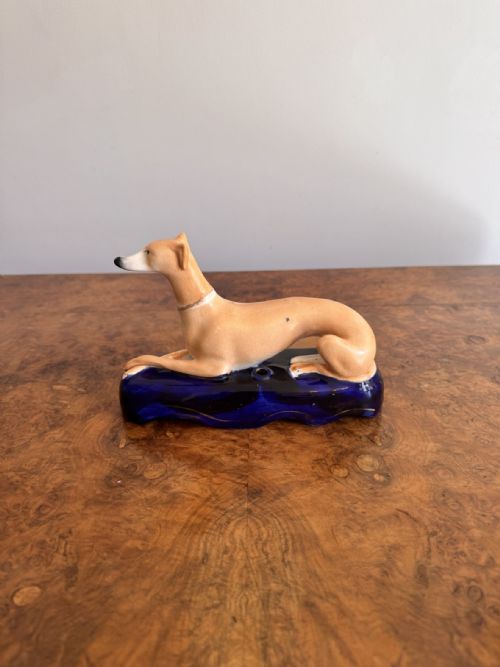
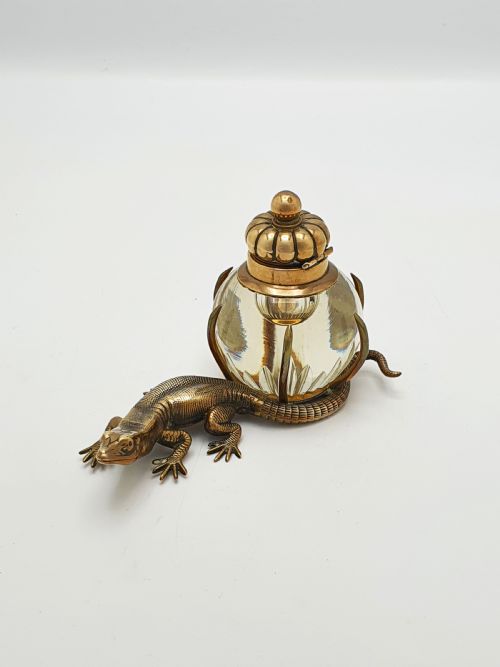
Desk accessories occasionally took whimsical animal forms, turning practical writing duties into encounters with carved wooden owls and solid silver horse hooves.
What varies in quality
Quality in a victorian inkwell stand is determined by the weight and grade of the materials used, such as solid hardwoods and thick-gauge metals rather than thin veneering or hollow stampings. Superior examples feature well-integrated mounts, precise joinery in the timber trays, and heavy cut glass inserts with undamaged rims.
The distinction between standard commercial pieces and finer workshop productions also lies in the detail of the surface ornamentation, such as hand-chased bronze work, intricate marquetry, or fully hallmarked silver mounts. Complete sets retain their original matching inkwells and lids, showing uniform wear and proper alignment across the stand.
Walker And Hall·Robert Garrard·George Fox·Grinsell And Sons·Hukin And Heath·Martin Hall And Co·Henry Lias·Rupert Favell
The Victorian Inkwell Stand Glossary
- Inkstand
- A tray or stand designed to hold inkwells, pens, and other writing implements. These desk accessories formed standard equipment for nineteenth-century writing desks.
- Standish
- An alternative term for an inkstand, often denoting a more formal or portable version with feet and fitted compartments. They frequently incorporate bell pulls or taper sticks.
- Boulle work
- A form of marquetry utilising brass and tortoiseshell inlaid in elaborate scroll patterns. This technique appeared frequently on mid-nineteenth-century French-influenced desk sets.
- Ormolu
- Gilded bronze used for mounts and decorative trim on nineteenth-century desk furniture. The process involved applying a gold amalgam to a bronze base.
- Animalier
- A nineteenth-century artistic style depicting animals with naturalistic detail. This treatment appeared on novelty inkwells shaped as owls, lizards, and horses.
Victorian Inkwell Stand: Frequently Asked Questions
What is the difference between an inkstand and an inkwell?
An inkstand is the complete tray or desk stand that holds the various writing implements together in one place. The inkwell is the specific glass or ceramic vessel fitted inside that stand to hold the liquid ink.
Many stands contain one or two removable inkwells alongside dedicated channels for resting pens, compartments for nibs, and sometimes a small chamberstick or bell.
How do I clean the metal mounts safely?
Cleaning depends entirely on the specific metal, as silver, brass, and gilt bronze require different approaches. Silver mounts often benefit from standard gentle polishing, whereas gilt bronze and ormolu should only be dusted with a soft cloth to avoid stripping the historical gold finish.
Moisture must be kept away from wooden bases and tortoiseshell panels during any cleaning process to prevent warping or lifting of the delicate inlays.
Can I still use these inkwells for writing?
While these pieces remain functional objects, many collectors choose to display them rather than fill them with modern ink. Historic glass inserts can develop micro-cracks over time, and metal collars may stain or corrode if exposed to modern chemical inks for long periods.
If you do choose to use one, check the glass liner for leaks first and clean the vessel thoroughly after use to preserve the interior.
How do I date a Victorian desk stand?
Dating relies on a combination of material choices, stylistic movements, and maker's marks or hallmarks on silver components. Silver mounts often carry assay office marks and date letters that pinpoint the exact year of production.
Stylistic shifts, such as the transition from heavy rococo revival brass work to cleaner Edwardian designs or Art Nouveau curves, provide a reliable chronological framework when hallmarks are absent.