






Double Glass Inkwell
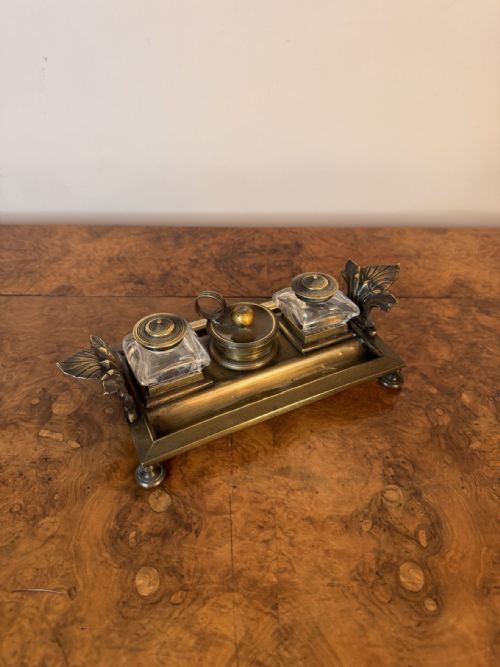
A double glass inkwell sits on a desktop as a heavy, practical centrepiece, holding two ink reservoirs for correspondence.
Double Glass Inkwell
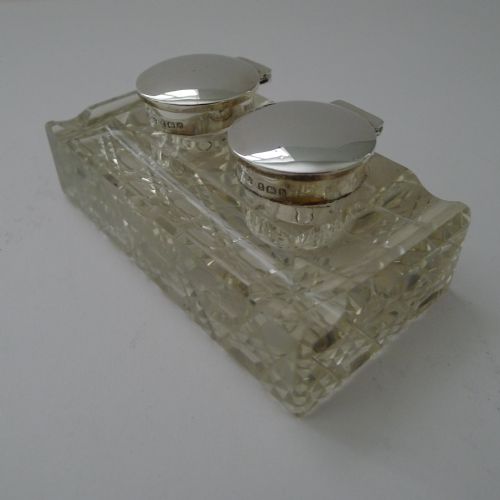
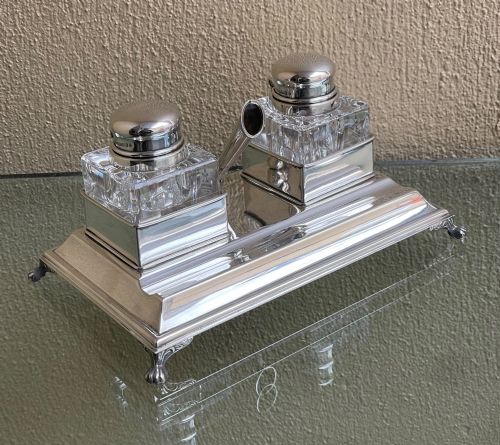
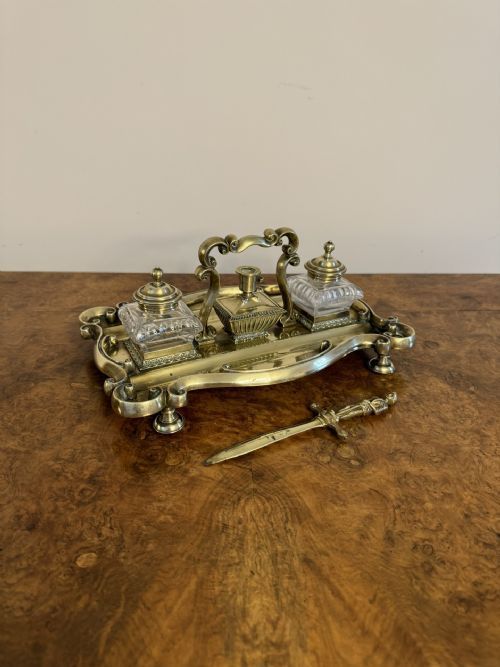
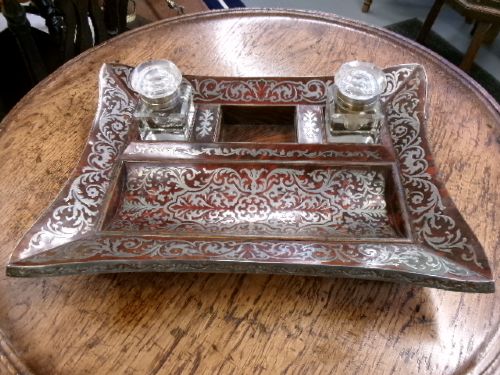
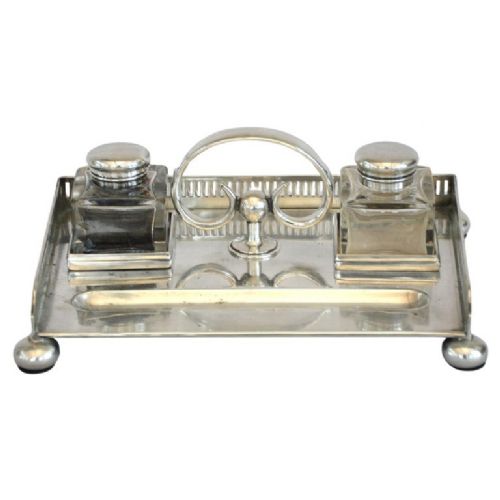
When you search for a double glass inkwell, you are looking at desk accessories and inkstands primarily originating from the Victorian, Edwardian, and nineteenth-century periods. These pieces combine a foundational tray or stand made from brass, silver plate, sterling silver, or wood with matching glass ink receptacles.
Origins span English, French, and German workshops, ranging from simple oak tidies to elaborate Boulle work and Black Forest carved wooden stands. They served as functional writing furniture before fountain pens and ballpoints removed the need for daily ink dipping.
How they were made
Makers shaped heavy glass vessels through mould-blowing and hand-cutting, producing facets that caught the light on a writing desk. These glass inserts sat securely within fitted apertures on stands cast from brass, ormolu, and bronze, or formed from plated metals like Sheffield plate and silver plate.
Wooden stands relied on timber carpentry, using solid or veneered oak, walnut, mahogany, ebony, and carved Black Forest wood. Metal mounts, hinges, and collars were secured to the wooden bases with small brass screws, often alongside inlaid brass stringing or tortoiseshell in Boulle work pieces.
Double Glass Inkwell Retail Price Guide 2026
Typical asking prices for double glass inkwell among the pieces listed under this phrase on Sellingantiques today, from the lower quarter to the upper quarter. They describe what is for sale here now, not the wider market.
A carving of a Black Forest bear keeps watch over the ink.
What varies in quality
Quality rests in the weight and clarity of the glass, the crispness of the cutting, and the substance of the metal or timber chassis. Finer pieces use heavy cut glass bottles paired with solid sterling silver mounts or finely cast ormolu and brass rather than light gauge sheet metal.
The presence of original matching glass ink pots with undamaged collars and stoppers elevates an inkstand. Integration of extra functions, such as working desk clocks, secret drawers, or chambersticks, marks out more ambitious desk sets from basic utilitarian models.
Walker And Hall·James Cartland And Sons·Daniel Holy Of Sheffield·William Hutton
The Double Glass Inkwell Glossary
- Standish
- A portable desk stand or tray fitted with inkwells, pen holders, and sometimes a sander or wafer box. It was designed to keep writing materials together in one place.
- Cut glass
- Glass decorated by grinding facets or patterns into the surface using a rotating wheel. This technique creates sharp geometric edges that refract light.
- Boulle work
- A form of marquetry using brass and tortoiseshell inlaid in intricate scroll patterns. It is named after French cabinetmaker Charles Boulle.
- Silver plate
- A layer of silver fused to a base metal such as copper or Britannia metal. Sheffield plate is an early form produced by thermal fusion.
- Ormolu
- Gilded bronze or brass used for decorative mounts and furniture ornaments. The technique involves applying a gold amalgam to the metal base.
Double Glass Inkwell: Frequently Asked Questions
What is a double glass inkwell?
A double glass inkwell is a desk accessory featuring two separate glass reservoirs designed to hold ink for writing with dip pens. They are typically mounted together on a shared tray or stand made of metal or wood.
These double receptacles allowed a writer to keep two different coloured inks, such as black and red, ready for use on the same desk.
How were inkstands used?
Inkstands sat on writing desks and library tables as central stations for correspondence and administrative work. The two inkwells held the ink supply while surrounding depressions caught stray pen nibs.
Many stands included matching trays for pens, compartments for stamps or sealing wax, and sometimes chambersticks for lighting candles while writing after dark.
How do I date an antique inkstand?
Dating relies on material combinations, manufacturing techniques, and any accompanying hallmarks on silver or plated components. Victorian pieces often feature heavy brass mounts and cut glass, while Edwardian examples can be lighter and refined.
Design styles also point to eras, such as Art Nouveau curves from the late nineteenth century or Georgian simplicity in eighteenth-century brass stands.
How do I clean an antique inkstand?
Cleaning requires treating the materials separately, using gentle methods on glass inserts and appropriate metal polishes sparingly on brass or silver. Wooden bases should be wiped with a dry or slightly damp cloth to preserve the finish.
Harsh chemical immersion should be avoided to protect original patinas, fabric linings, and delicate wooden veneers.