
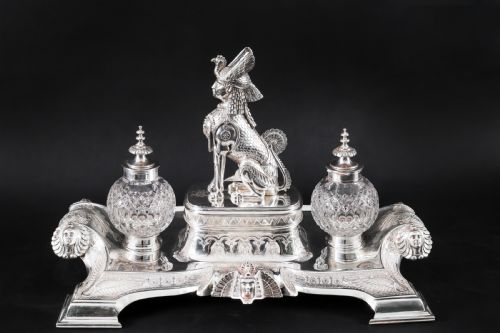
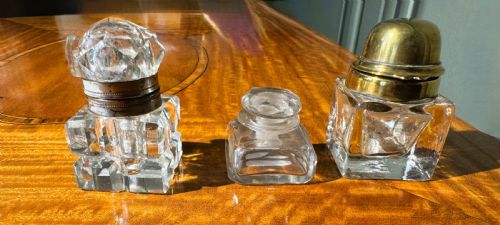
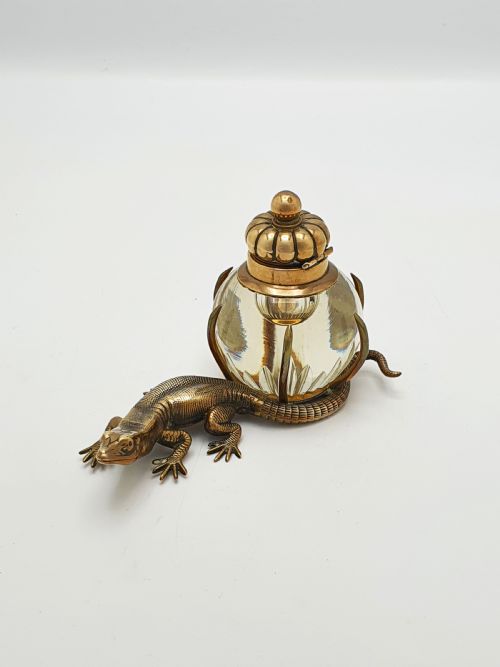


Cut Glass Inkstand
A cut glass inkstand anchors a desk with weight and brilliance, holding ink through decades of correspondence.
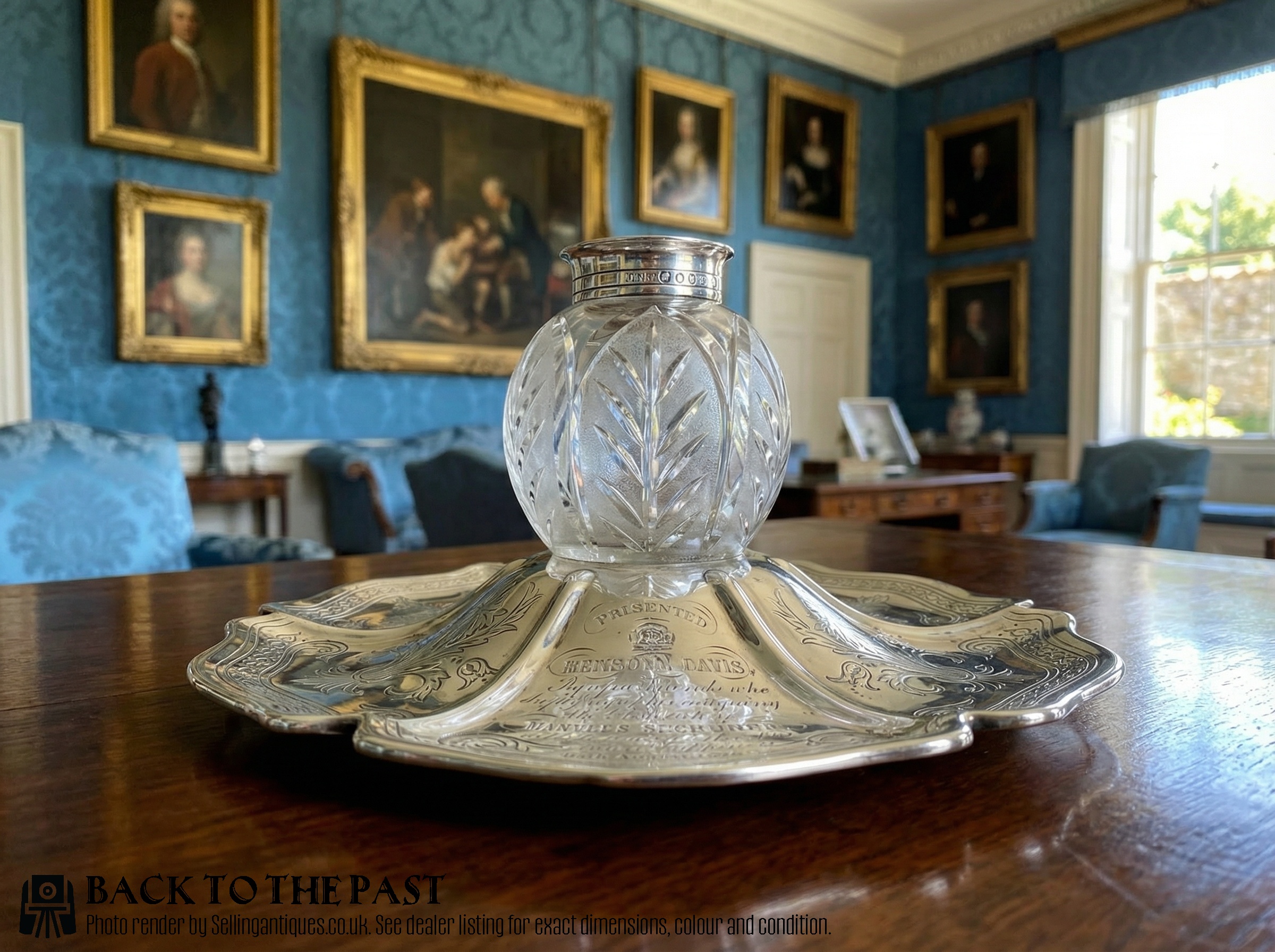
Cut Glass Inkstand
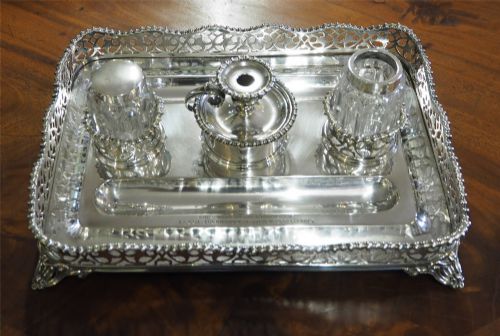
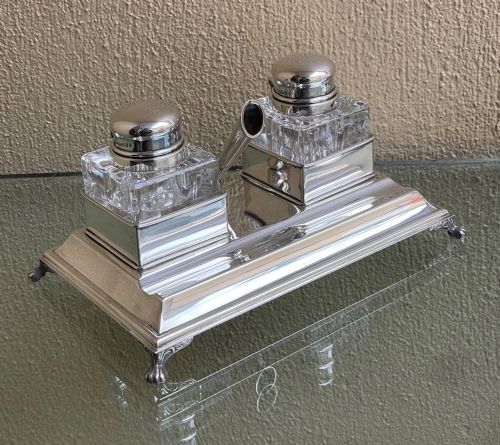
A cut glass inkstand combines heavy, faceted crystal or glass reservoirs with fitted trays of silver, brass, or timber to serve a writing desk. These desk accessories appear most frequently in Victorian and Edwardian iterations, ranging from single heavy pots to double inkstands equipped with hinged metal lids.
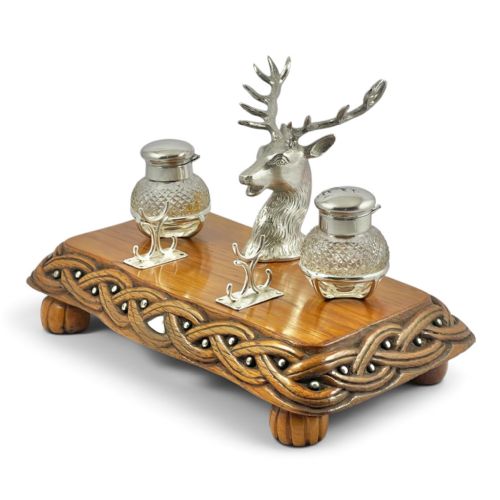
The form spans straightforward square glass wells mounted in silver-plated trays to elaborate stands housing pen rests, stamp boxes, and tapersticks. Georgian and Regency examples lean towards solid silver frameworks and refined boat-shaped trays, whereas late nineteenth-century versions often incorporate brass, oak, coromandel, or tortoiseshell.
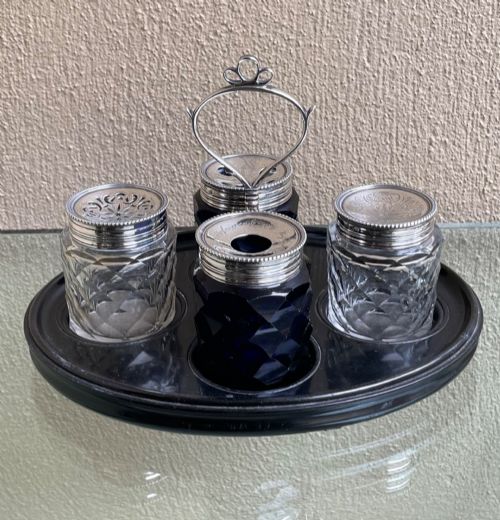
Buyers seeking a cut glass inkstand will encounter pieces designed to sit permanently on a library table alongside more compact travelling inkwells intended for portmanteaus. The glass vessels themselves rely on deep wheel-cutting or moulding to catch the light, paired with collars and lids cast in sterling silver or plated metal.
How they were made
Glass reservoirs were heavily cut on a wheel to produce sharp facets, flutes, or star bottoms, creating thick walls designed to prevent tipping under the pressure of a dipping quill or steel nib. These vessels were then fitted with cast or spun metal collars, secured with cork or plaster linings to seal the ink.
Trays and stands combine cabinet woods such as oak, mahogany, coromandel, and walnut with metal mounts of sterling silver, Sheffield plate, or brass. Silver-mounted components carry hallmarks indicating assay offices in London, Birmingham, or Sheffield, whilst wooden bases often feature brass inlay, mother-of-pearl, or turned feet.
What varies in quality
The distinction between standard desk furniture and superior pieces lies in the crispness of the glass cutting and the weight of the metal mounts. Thick, heavy crystal with sharp, well-defined facets and substantial sterling silver lids represents the upper tier of production.
Construction details dictate longevity, such as whether wooden trays utilise dovetail joints and whether brass hinges remain tight and true. Finer makers applied cast decorative borders, secure silver collars, and matched glass inserts rather than generic replacement bottles.
Elkington·Wilkinson & Co·Tiffany & Co·James Cartland & Sons·W M F·Rupert Favell·Daniel Holy·J Dixon·Peter Henderson Deere·Frederik Haberling
The Cut Glass Inkstand Glossary
- Standish
- A portable desk stand or tray holding inkwells, pounce pots, and sometimes a bell or taperstick. This term appears frequently in Georgian and early Victorian inventories.
- Collar
- The metal rim fixed around the neck of a glass inkwell to hold the hinged lid. Collars are commonly made of sterling silver or silver plate.
- Pounce pot
- A small container with a perforated lid used to sprinkle resin powder over parchment to dry wet ink before blotting paper became common. They often accompany inkwells in desk sets.
- Sheffield plate
- A composite material made by fusing a thin sheet of silver to a thicker copper base before rolling them together. This technique predates modern electroplating.
- Cut crystal
- High-clarity glass containing lead oxide, cut and polished on a wheel to refract light. It provides the heavy base required for stable inkwells.
Cut Glass Inkstand: Frequently Asked Questions
How do I date a cut glass inkstand?
Dating relies on a combination of silver hallmarks, glass manufacturing techniques, and the secondary materials used in the tray. Hallmarks on silver mounts provide precise years and assay office marks.
Style also indicates age, with Georgian stands showing neoclassical lines, Victorian pieces offering ornate revival designs, and Edwardian versions favoring cleaner proportions.
Are the glass inkwells original to the stands?
Many inkstands survive with their original fitted glass bottles, identifiable by matching wear patterns on the base and correct sizing within the metal collars. Replacements do occur due to breakage over the centuries.
Checking whether the glass sits flush and matches the age of the tray helps determine originality.
Can I still use an antique inkstand for writing?
These pieces function adequately for modern fountain pens or dip pens provided the glass reservoirs are cleaned thoroughly and inspected for cracks. Cork or rubber seals inside the lids may require replacement to prevent leaks.
Care should be taken with ferrous inks, which can stain old crystal if left to dry inside the vessel.
What is the difference between a desk set and an inkstand?
An inkstand specifically focuses on the inkwells and their immediate tray, whereas a desk set often incorporates broader stationery items such as blotters, letter racks, and paper knives. Both terms overlap frequently in historical records.
Many desk sets utilise the same cut glass inkwells mounted centrally within larger wooden or leather-backed frames.