





Crystal Glass Inkwell
A crystal glass inkwell is a heavy glass or crystal reservoir mounted with metal or silver, designed to hold ink on a desk.
Crystal Glass Inkwell
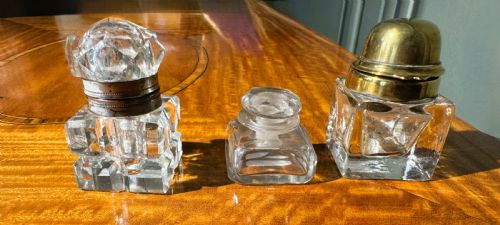
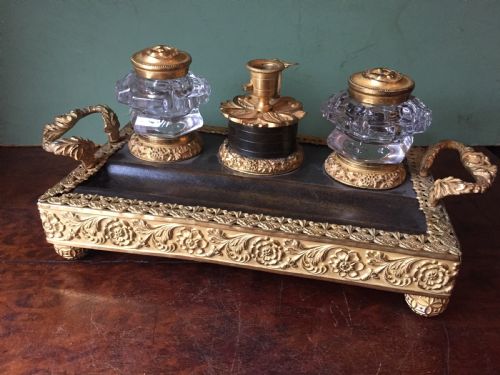
When you search for a crystal glass inkwell, you find desk accessories spanning the Victorian, Edwardian, and Art Deco periods, alongside French Empire designs. These pieces range from single cut glass ink pots to substantial silver lidded wells and paired inkstands.
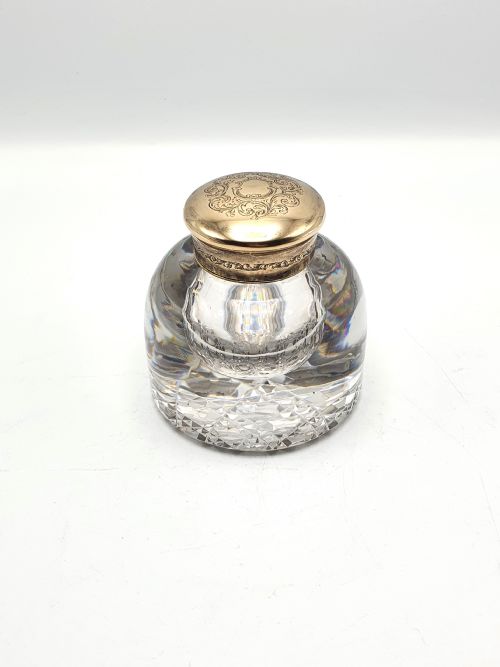
The versions you meet most frequently on this page combine cut crystal or glass bodies with sterling silver mounts, brass, or ormolu. They appear as standalone desktop accessories or integrated into larger inkstands designed for nineteenth and early twentieth century writing desks.
How they were made
Makers utilised heavy-gauge glass and crystal, shaping the bodies through deep facet cutting to catch the light on a desktop. These thick walls protected the glass from the daily wear of dipping metal pen nibs.
Metal mounts in sterling silver, brass, or ormolu were fitted securely to the glass collars and hinged lids. Silver mounts typically carried hallmarks for London, Birmingham, or specific makers, while decorative touches included guilloche enamel and figural cast gilded bronze elements.
Crystal Glass Inkwell Retail Price Guide 2026
Typical asking prices for crystal glass inkwell among the pieces listed under this phrase on Sellingantiques today, from the lower quarter to the upper quarter. They describe what is for sale here now, not the wider market.
Some Art Deco inkwells feature figural gilded bronze chicks with glass eyes keeping watch over the ink.
What varies in quality
The weight and depth of the glass cutting separate standard desk pieces from finer examples. Sharp, crisp facets and heavy, clear crystal indicate superior craftsmanship in the manufacture of the reservoir.
The quality of the metal mount and its fastening to the glass determine the standing of the piece. Substantial sterling silver lids, secure hinges, and detailed cast bronze figures or enamel work elevate a utilitarian desk accessory into a high-status object.
Tiffany and Co·Asprey
The Crystal Glass Inkwell Glossary
- Crystal glass
- High-purity glass containing lead oxide, which increases brilliance and weight. It allows for deep, sharp facets that refract light more brightly than standard window or bottle glass.
- Guilloche enamel
- A decorative technique where a precise, repetitive pattern is mechanically engraved into metal beneath a translucent enamel layer. It adds colourful, patterned depth to silver mounts.
- Ormolu
- Gilded bronze, produced by applying a mercury and gold amalgam to a bronze casting and heating it. It provides a rich, durable golden finish found on French Empire and later desk stands.
- Hallmark
- A stamp or series of marks applied to precious metals indicating purity, the assay office, and the year of testing. These marks help date the silver or gold mounts on desk accessories.
- Inkstand
- A complete desk tray or stand incorporating one or more inkwells alongside holders for pens, stamps, and sand. They formed the central writing equipment on a nineteenth century desk.
Crystal Glass Inkwell: Frequently Asked Questions
What is a crystal glass inkwell?
A crystal glass inkwell is a small, heavy container made to hold liquid ink for writing with a dip pen or fountain pen. The glass body keeps the ink visible and stable on a desk.
Most examples feature a protective metal or sterling silver lid to slow evaporation and prevent spills. They range from simple faceted glass blocks to elaborate desk sets with multiple ink pots.
How do I date an inkwell?
Dating relies on hallmarks stamped into the silver mounts, the cutting style of the glass, and the overall design period. Victorian pieces often feature heavy cutting and ornate silver, while Art Deco items show geometric lines.
Matching the design style with any present maker marks or assay letters narrows the manufacture down to a specific decade. Comparing the weight and construction methods also points toward the nineteenth or early twentieth century.
Where were these inkwells used?
These inkwells sat on writing desks, secretaries, and library tables in homes and offices where correspondence and record-keeping required daily writing. They formed part of the necessary equipment for private studies and commercial counting houses.
Paired sets and larger inkstands were kept in prominent reception rooms or offices to project status and order. Portable versions also existed for travel within fitted dressing cases.
How do I clean a glass inkwell?
Cleaning requires gentle rinsing with warm water and a soft cloth to remove dried ink residue from the glass interior. Harsh abrasives should be avoided to protect both the clarity of the crystal and any antique silver mounts.
Silver parts benefit from careful polishing separate from the glass, ensuring cleaning compounds do not seep into historic joints or hinges. Keeping the interior dry prevents moisture buildup beneath the collar.