


Victorian Glass Inkwell
A victorian glass inkwell brings tactile weight and nineteenth-century craftsmanship to any desk, holding ink securely beneath hinged metal lids.
Victorian Glass Inkwell
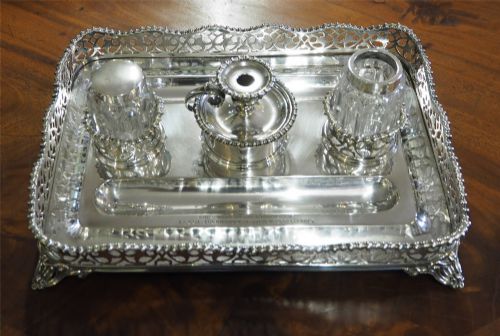
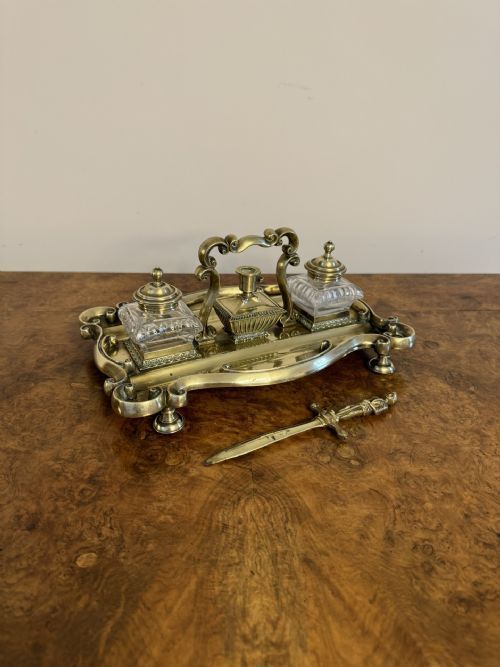
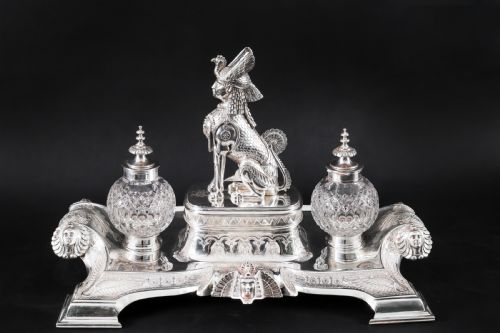
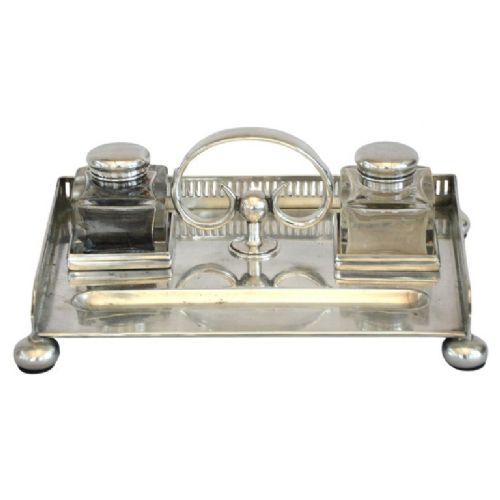
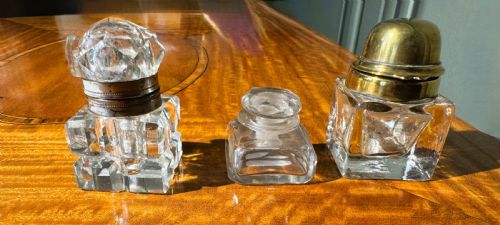
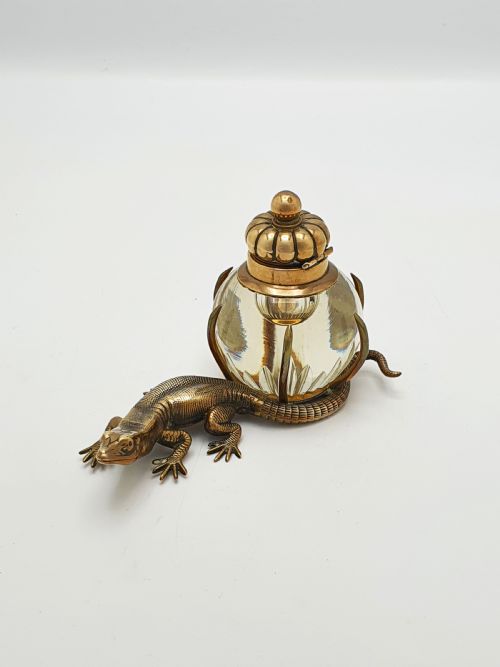
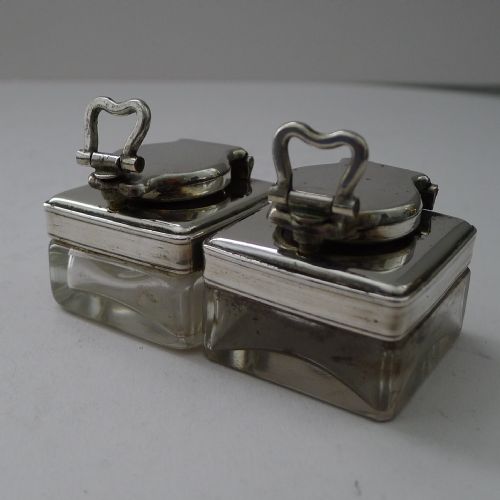
A victorian glass inkwell typically consists of a heavy glass reservoir fitted with a hinged silver, silver-plated, or brass collar and lid, designed to sit upon a writing desk or travel safely in a carriage. These useful desk accessories range from simple standalone glass blocks and dump weights to elaborate multi-piece inkstands housing cut glass bottles alongside pen trays and taper sticks.
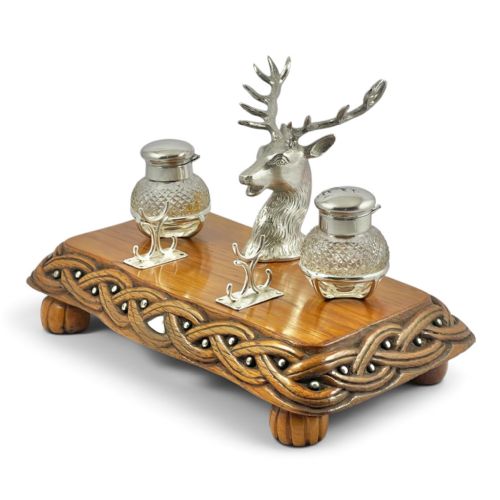
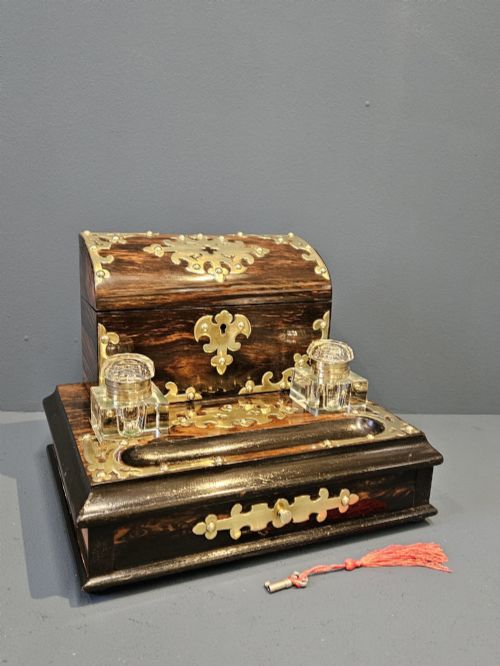
The versions most commonly met on this page span the mid to late nineteenth century, predominantly showcasing clear cut glass or coloured glass bodies mounted with sterling silver or brass. They appear both as single desktop ink pots and as components of larger desk sets incorporating wooden trays made of walnut, coromandel, or oak.
How they were made
Makers utilised heavy-walled glass, often formed by mould-blowing or deep wheel-cutting to create facets that catch the light and add substantial weight to prevent tipping during use. These glass bodies were combined with metalwork cast in brass, pewter, or fashioned from sheet silver, secured to the glass using cork or plaster collars beneath hinged metal lids.
Mounts and stands frequently incorporated decorative techniques such as silver plating, engraving, guilloche enamel, or mixed-media applications including tortoiseshell, mother-of-pearl, and carved wood in styles ranging from Gothic Revival to French Napoleon III.
Victorian Glass Inkwell Retail Price Guide 2026
Typical asking prices for victorian glass inkwell among the pieces listed under this phrase on Sellingantiques today, from the lower quarter to the upper quarter. They describe what is for sale here now, not the wider market.
Some nineteenth-century desk ornaments disguised ink pots inside carved wooden owls with wide glass eyes glaring across the blotter.
What varies in quality
The distinction between ordinary desk accessories and superior pieces lies in the crispness of the glass cutting, the thickness and clarity of the metal mounts, and the integration of the materials. Premium examples display deeply ground facets on heavy crystal glass paired with solid sterling silver collars bearing clear hallmarks rather than thin silver plate over base metals.
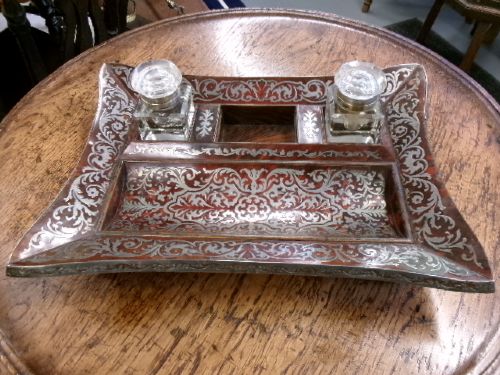
Design ambition and structural complexity also elevate certain pieces, such as those featuring mechanical lids, novelty forms like animals, or matched multi-bottle inkstands housed on fitted wooden bases with intricate marquetry and Boulle work.
Elkington·Wilkinson and Co·Walker And Hall·James Cartland and Sons·J Grinsell·John Grinsell and Sons·A and J Zimmerman
The Victorian Glass Inkwell Glossary
- Inkstand
- A complete desk accessory comprising an inkwell or multiple inkwells, a pen tray, and often additional items like a sander or stamp box mounted on a shared tray or base.
- Standish
- An alternative traditional term for a portable desk stand or inkstand, frequently equipped with feet and handles for moving between rooms.
- Cut Glass
- Glass shaped and patterned by holding it against a rotating abrasive wheel, producing sharp geometric facets and deep prismatic reflections.
- Guilloche
- A decorative engineering technique where a precise, intricate repeating pattern is mechanically engraved into a metal surface beneath translucent enamel.
- Boulle
- An elaborate form of marquetry inlay utilising brass and tortoiseshell developed in seventeenth-century France and revived during the nineteenth century.
Victorian Glass Inkwell: Frequently Asked Questions
How do I clean an old inkwell?
Dried ink residue inside glass reservoirs dissolves safely using warm water and mild dish soap with a soft bottle brush. Avoid soaking metal collars or silver mounts in harsh chemical solutions to preserve the original finish.
Dry the interior thoroughly before replacing any original cork or paper liners. Gentle polishing with a microfiber cloth keeps the exterior metal mounts bright without removing historical patina.
Were these used for travel?
Many smaller glass inkwells and matched pairs were designed for travel within fitted leather cases or writing boxes. Screw-down metal collars and tight-fitting stoppers prevented ink from spilling during carriage journeys.
Larger desk stands with open glass wells remained stationary on library tables. Portable versions prioritised secure, heavy-duty lids to protect the desk contents from accidents.
How do I date an inkwell?
Hallmarks on silver collars provide the most reliable dating evidence, corresponding to specific assay office marks and active years for makers like John Grinsell or A and J Zimmerman. Style markers such as Gothic Revival or Napoleon III influences also point to specific mid to late nineteenth-century decades.
Weight, pontil marks on the base of the glass, and the type of metal plating offer further clues. Hand-cut facets and heavy cast brass mounts typically indicate earlier Victorian production.
What is a glass dump?
A glass dump is a heavy, solid glass paperweight or inkwell base created from excess molten glass at the end of a working day in nineteenth-century glasshouses. Artisans often incorporated trapped air bubbles or coloured glass floral motifs inside the clear mass.
These pieces combine decorative appeal with practical weight, serving both as stable ink reservoirs and desk ornaments. Their rustic manufacturing origin gives each piece unique internal patterns.