




Vintage Ink Stand
A vintage ink stand organises the desktop with a vessel for ink and a rest for pens, carrying the weight of correspondence from earlier centuries.
Vintage Ink Stand
A vintage ink stand serves as the focal point of a period desk, combining a secure well for liquid ink with fitted channels for pens and trays for small accessories. These pieces span the nineteenth century and the early decades of the twentieth century, emerging from periods when handwritten letters formed the daily medium of communication.
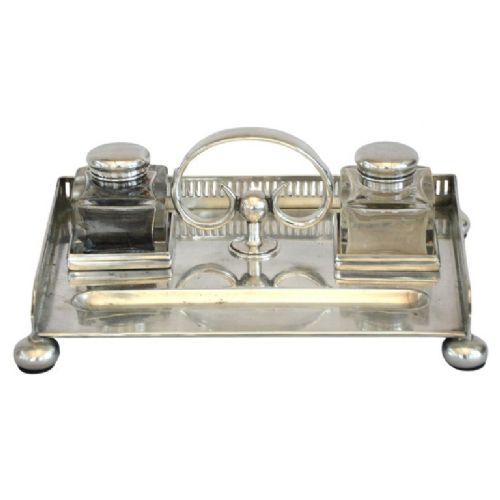
The specimens seen here range from simple oak trays fitted with single glass wells to ornate affairs of solid silver, brass, and porcelain. Victorian and Edwardian examples predominate, accompanied by continental European works and occasional novelty designs.
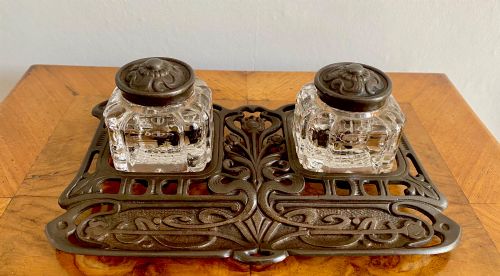
Buyers encounter everything from compact capstan inkwells to substantial desk tidies that incorporate clocks, bell mechanisms, or dual glass reservoirs. Each piece reflects the material tastes and writing habits of its specific decade, from heavy rococo brass to fluid art nouveau bronze.
Materials and construction methods
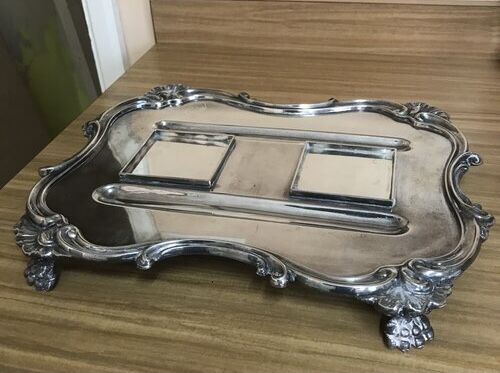
Metalworking forms the backbone of these pieces, utilising cast brass, silver plate, and solid sterling silver shaped into frames, collars, and hinged lids. Silver items often bear hallmarks indicating assay offices in Birmingham, Sheffield, or London, while bronze and copper versions showcase the flowing lines typical of turn-of-the-century metalcraft.
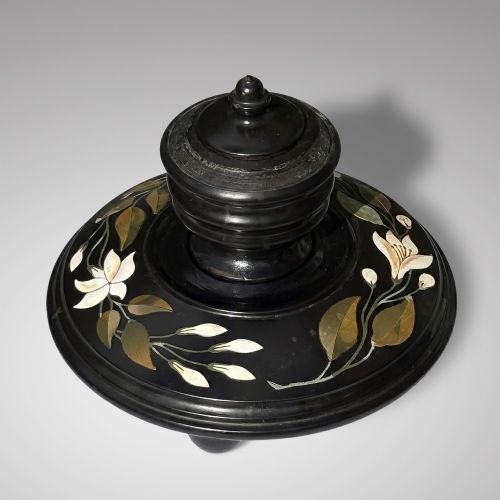
Glass and ceramics provide the contrasting reservoirs for the ink itself, featuring cut glass bottles, porcelain bodies, and blue-and-white ceramic containers mounted within metal or stone bases. Stoneware, marble, onyx, lapis lazuli, and carved Ashford marble supply heavy, stable platforms that prevent the stand from tipping during use.
Organic materials also appear in select pieces, including solid oak desk bodies, papier-mâché finished with hand-painted details, and combinations of wood and precious metals. Glass inserts remain removable for washing out dried sediment.
Assessing craftsmanship and proportion
Quality rests in the heaviness of the materials and the precision of the assembly, where solid metals and thick cut glass outlast plated base metals and thin stamped components. Superior examples maintain balanced proportions between the tray, the pen rests, and the ink reservoirs, ensuring the piece looks intentional rather than cobbled together from disparate parts.
The finish of the surface work distinguishes standard utilitarian pieces from high-end commissions, visible in crisp chased bronze, finely painted ceramic details, and securely fitted silver mounts. Original components, such as matching glass ink bottles with their correct silver or brass lids, elevate the integrity of a desk stand significantly.
Walker And Hall·James Cartland And Sons·Maurice Dufrene·Elkington
The Vintage Ink Stand Glossary
- Capstan inkwell
- A low, wide ink reservoir shaped like the nautical winch used for hoisting anchors on ships. This silhouette provides a stable, low-centre-of-gravity base that resists overturning on a busy writing desk.
- Desk tidy
- An expanded form of ink stand that incorporates additional compartments for stamps, sealing wax, envelopes, and pen nibs. These pieces offer a complete station for managing correspondence.
- Champlevé enamel
- A technique where troughs are dug into a metal surface and filled with vitreous enamel powder before firing. It creates vibrant, colourful patterns across brass or bronze desk stands.
- Silver plate
- A manufacturing method where a thin layer of sterling silver is fused over a base metal such as copper or nickel silver. It gave middle-class Victorian buyers the appearance of solid silver at a lower cost.
- Pen rest
- A depressed channel, bridge, or groove integrated into the stand to hold dipping pens flat when not in use. This keeps stray ink from staining the desktop surface.
Vintage Ink Stand: Frequently Asked Questions
Were these made for home or office use?
Most surviving stands served in domestic libraries, drawing rooms, or private studies where personal letters and household accounts were written. Larger oak and brass examples with multiple wells often saw service in commercial offices or public hotels.
Portable travel versions also existed, featuring secure screw-top lids to prevent spills inside leather writing boxes.
How do I date an antique ink stand?
Hallmarks on silver components provide the most precise dating evidence, linking the piece to specific assay office years and makers. Stylistic clues, such as the sinuous lines of art nouveau or the heavy ornamentation of rococo revival, narrow down the decade.
The materials themselves offer context, as materials like champlevé enamel or specific ceramic bodies correlate with the manufacturing fashions of the nineteenth century.
Can I still use a vintage ink stand today?
These stands accommodate modern fountain pens or traditional dip nibs perfectly well, adding ritual to the act of writing letters. Glass inserts hold modern ink securely as long as the internal seals and lids fit tightly.
Many collectors prefer to display them as decorative desk sculptures rather than exposing antique materials to wet ink on a daily basis.