

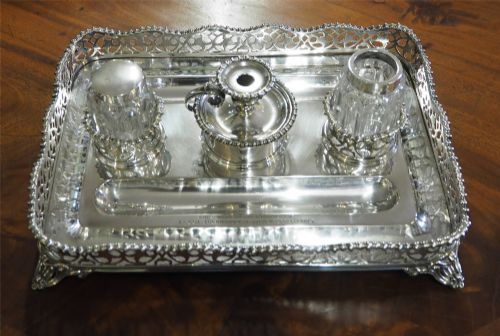
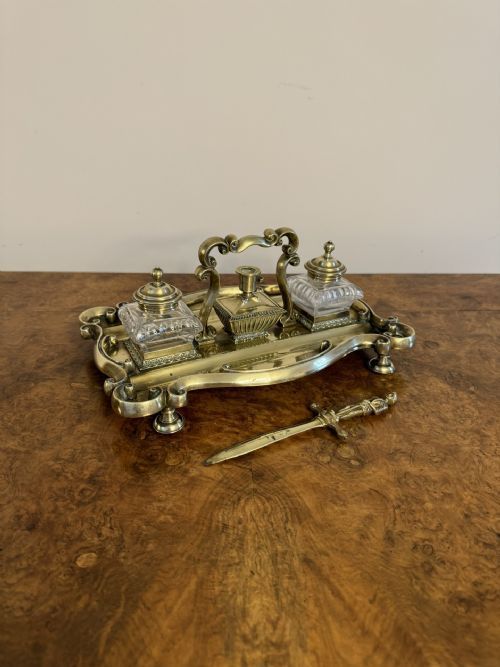
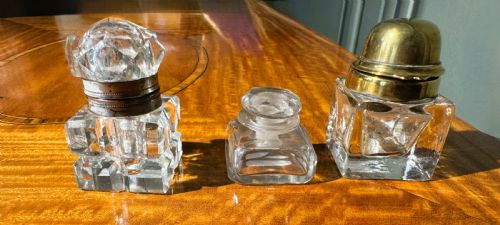


Traditional Desk Inkwell
These traditional desk inkwell pieces bring tactile weight and history to a writing space, featuring brass, oak, and cut glass from Victorian makers.
Traditional Desk Inkwell
A traditional desk inkwell serves as a functional centrepiece for the writing desk, housing liquid ink in glass or ceramic inserts held within sturdy stands. Buyers searching for this phrase encounter various forms, including desk sets, inkstands, and tidy stands designed to keep writing implements organised.
The pieces on this page originate predominantly from the Victorian period, spanning the late nineteenth century around eighteen eighty and eighteen seventy. Alongside standard domestic designs, regional styles such as Dutch Delft, Anglo-Indian, and Black Forest carvings appear across the selection.
Common materials include oak, mahogany, and brass, often paired with cut glass or tin-glazed earthenware inserts. These desk accessories range from simple single inkwells to substantial stands equipped with multiple wells and pen trays.
How traditional desk inkwell examples were made
Craftsmen utilised seasoned timbers like oak and mahogany to form the heavy wooden bases of these stands, frequently incorporating turned brass mounts and hinges. Glass and ceramic components were shaped using traditional moulding and glazing techniques, seen in the cut glass wells and blue and white faience.
Traditional Desk Inkwell Retail Price Guide 2026
Typical asking prices for traditional desk inkwell among the pieces listed under this phrase on Sellingantiques today, from the lower quarter to the upper quarter. They describe what is for sale here now, not the wider market.
Periods represented include the Victorian era alongside specific nineteenth-century dates.
What varies in quality
Quality in a traditional desk inkwell depends on the integration of materials and the crispness of execution. Substantial hardwood bases combined with thick cut glass or well-fired tin-glazed earthenware represent higher standards of production.
The refinement of decorative elements sets individual pieces apart, from hand-carved wooden details to substantial silver-plated mounts. The presence of matching sets with intact glass inserts indicates a higher degree of original preservation.
Elkington
The Traditional Desk Inkwell Glossary
- Inkstand
- A complete desk accessory comprising one or more inkwells alongside spaces for pens and sealing wax. It forms a portable or stationary writing station.
- Standish
- A traditional term for a raised stand holding writing materials including inkwells, sanders, and penholders. These were placed centrally on writing tables.
- Faience
- Tin-glazed earthenware decorated with opaque metallic glazes, commonly associated with Dutch Delft production. It offers a smooth white surface for painted blue motifs.
- Desk Tidy
- A compartmented wooden stand designed to hold stationery, letters, and writing implements alongside inkwells. They keep desktop surfaces orderly.
- Cut Glass
- Glass shaped and patterned through abrasive cutting and polishing wheels, creating faceted surfaces that catch the light on nineteenth-century inkwells.
Traditional Desk Inkwell: Frequently Asked Questions
What is a traditional desk inkwell?
A traditional desk inkwell is a container designed to hold writing ink securely on a desktop, often integrated into a larger wooden or metal stand. These accessories provided a stable reservoir for dipping quill or steel nib pens.
Most examples date from the nineteenth century and incorporate materials like brass, oak, and cut glass to suit the formal writing desks of the period.
How were inkstands used on Victorian desks?
Victorian writers used inkstands as central stations for correspondence, keeping ink, pens, and blotting sand within arm's reach. The heavier stands remained stationary on large library desks, while smaller versions could be moved.
Multiple wells on a single stand allowed writers to keep different coloured inks ready for drafting and signing documents.
What materials are common in these desk pieces?
Common materials include hardwoods such as oak and mahogany, paired with metal components in brass or silver plate. Glass and ceramic elements form the actual ink reservoirs.
Decorative styles range from plain polished timber to hand-carved wooden figures and blue and white tin-glazed earthenware.
How do I tell Victorian pieces apart?
Victorian desk accessories display distinct regional and stylistic traits, from the heavy brass and oak of late nineteenth-century British stands to hand-carved Black Forest animal motifs. Dating relies on material combinations, construction methods, and stylistic markers typical of the era.
Examining the type of glass inserts and metal casting quality helps distinguish standard domestic production from specialist regional craft.
Can I still use an antique inkwell?
Using an antique inkwell requires care, particularly with glass and ceramic inserts that may have small manufacturing flaws or age-related wear. Many collectors prefer to display them as decorative objects rather than filling them with modern fountain pen ink.
Checking that inserts fit securely within their wooden or metal bases ensures the stand remains stable during handling.