


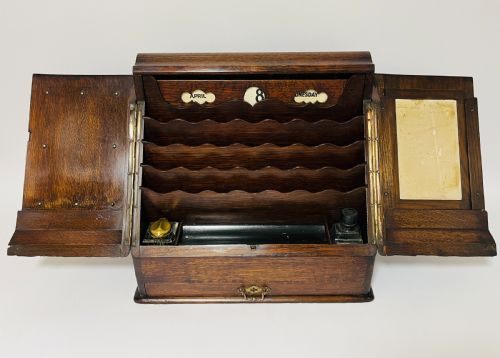


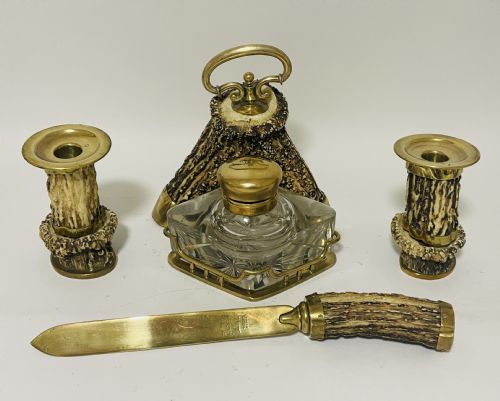


Brass Mounted Inkwell
A brass mounted inkwell brings tactile nineteenth-century weight and polished metal detail directly to the writing desk.
Brass Mounted Inkwell
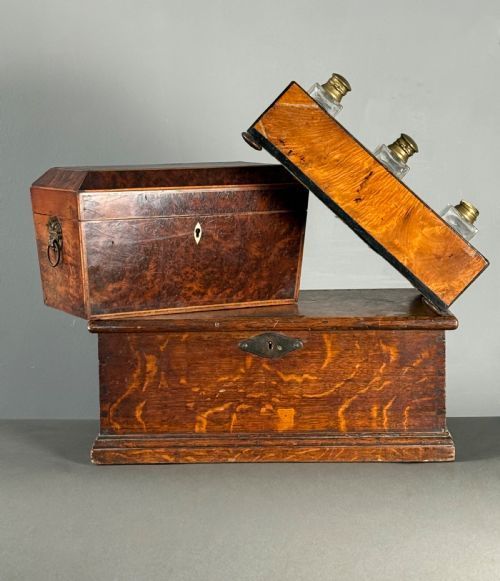
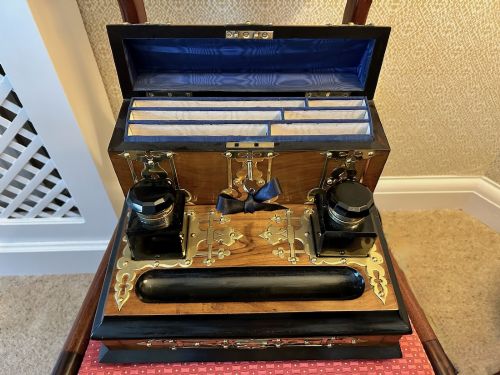
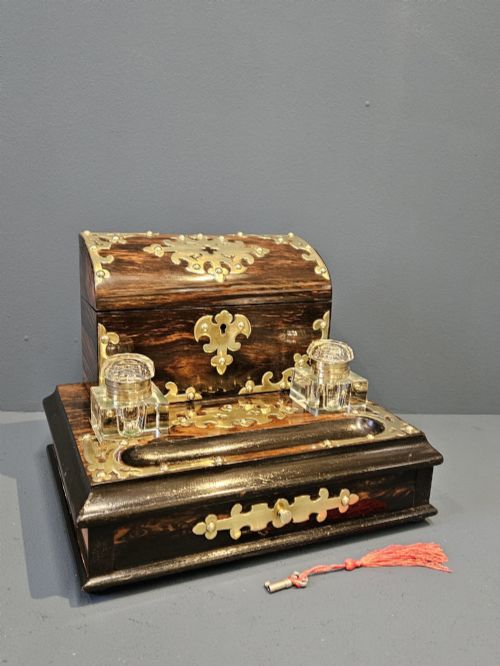
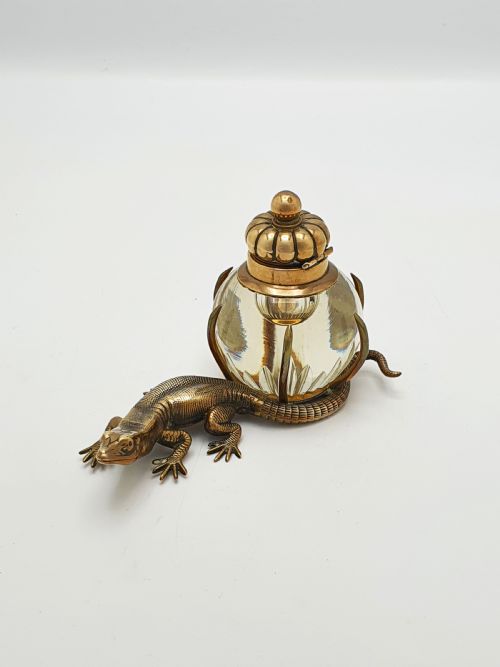
A brass mounted inkwell combines heavy timber, glass or marble foundations with bright metal mounts to hold writing fluids securely. When exploring a brass mounted inkwell on this page, collectors encounter forms ranging from single lidded vessels to elaborate desk stands housing multiple glass inserts and pen trays.
The objects span eighteenth-century Georgian origins through Victorian Gothic Revival and French Empire aesthetics, with nineteenth-century walnut, coromandel and oak examples appearing most frequently. These pieces served practical writing duties in studies and libraries before evolving into decorative desk accessories.
Materials and construction methods
Cabinetmakers constructed the foundational bodies using dense hardwoods like walnut, oak and coromandel, often embellished with tortoiseshell, mother of pearl or inlaid brass stringing. Cut glass and heavy moulded glass formed the internal reservoirs designed to contain liquid ink safely.
Foundries supplied the cast brass, ormolu and silver mounts that framed the glass inserts, hinged the lids and protected the corners of the wooden stands. Specialised pieces incorporated unusual natural elements such as boars' feet, antlers and horses' hooves alongside carved vert marble.
Listings feature eighteenth-century pieces alongside Victorian oak, walnut and coromandel examples from eighteen sixty to nineteen hundred.
Assessing quality and execution
Quality rests upon the precision of the cabinetwork and the crispness of the metal casting. Superior examples display tightly fitted wooden joints, substantial brass gauge, and heavy cut glass reservoirs that sit flush within their designated wells.
The distinction between standard desk accessories and exceptional pieces lies in the integration of materials, such as finely chased ormolu mounts on exotic coromandel wood or complex multi-piece stationery cabinets.
The Brass Mounted Inkwell Glossary
- Coromandel wood
- A dense, heavily figured timber imported from Asia, prized for its dark brown grain and contrasting yellowish stripes.
- Ormolu
- Gilded bronze produced by applying a mercury-gilding process to cast brass or bronze, common in French Empire and Napoleon III designs.
- Inkstand
- A comprehensive desk tray or stand incorporating one or more inkwells alongside compartments for pens, stamps and sealing wax.
- Cut glass
- Glassware shaped and patterned through abrasive wheel cutting, utilised for the heavy interior reservoirs of better desk stands.
Brass Mounted Inkwell: Frequently Asked Questions
How do I date a brass mounted inkwell?
Dating relies on examining the timber species, manufacturing techniques, and stylistic markers such as Victorian Gothic Revival or French Empire motifs. Cabinet construction methods and the composition of the glass inserts also provide clear chronological indicators.
Secondary clues include the type of metal mounts used and whether the piece forms part of a larger matched desk set or stationery cabinet.
What wood types are most common?
Walnut, oak and coromandel appear most frequently among nineteenth-century pieces, often paired with brass inlay or mounts. Earlier eighteenth-century examples occasionally utilise alternative decorative woods.
Exotic timbers were selected for their rich grain patterns, which provided a dark, elegant contrast against polished brass fittings.
Were these pieces used daily?
These items were utilitarian desk accessories engineered for the daily writing tasks of Victorian and Georgian households. They held the necessary fluids and quill or steel pens within reach of the writer.
Over time, many transitioned from working desk tools into decorative display pieces within studies and libraries.
What is the difference between an inkstand and an inkwell?
An inkwell refers specifically to the single vessel that holds the ink, whereas an inkstand is a broader desk stand that typically incorporates one or more inkwells alongside pen rests and storage compartments.
Larger stands often include space for wafers, stamps or sealing wax as part of a unified desk set.