



Silver Pen Stand
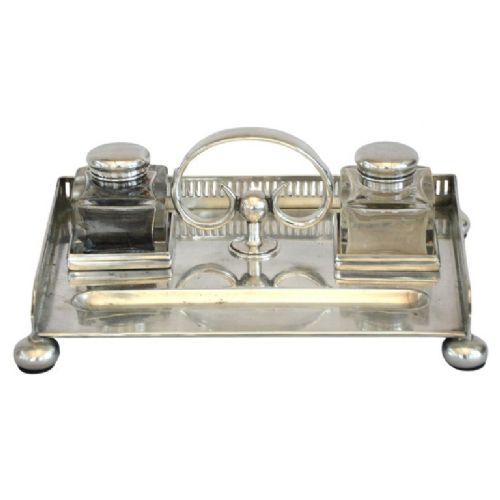
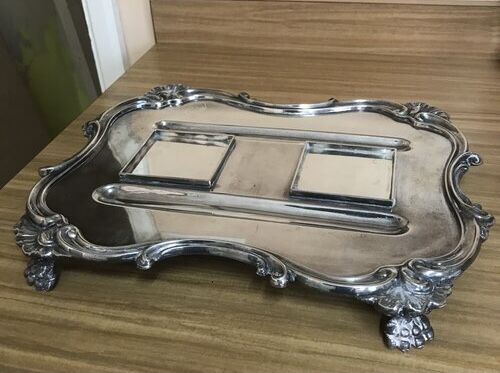
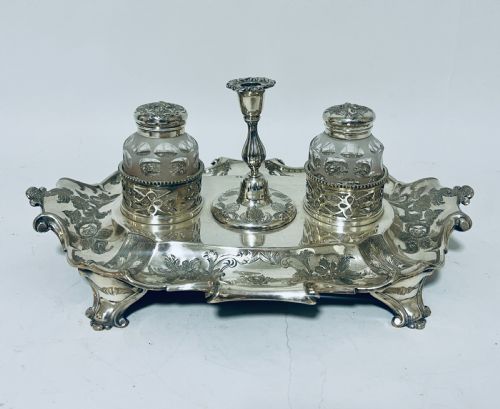
A silver pen stand anchors the writing desk, combining a secure resting place for nibs with inkwells or trays.
Silver Pen Stand
A silver pen stand serves as a desk accessory designed to hold writing instruments alongside inkwells and trays. The pieces meeting this description span Georgian, Victorian, Edwardian, and later twentieth-century periods.
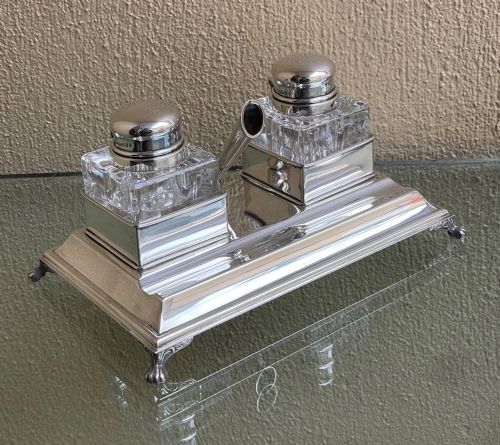
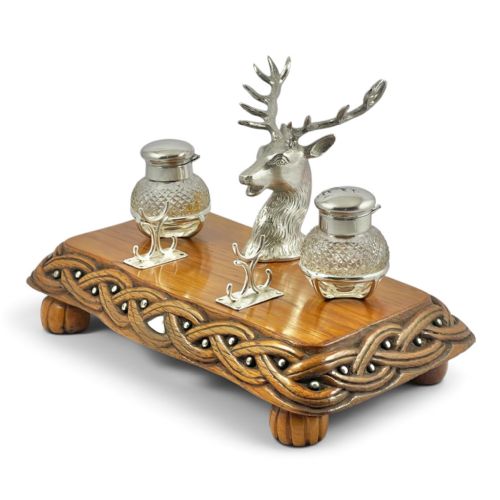
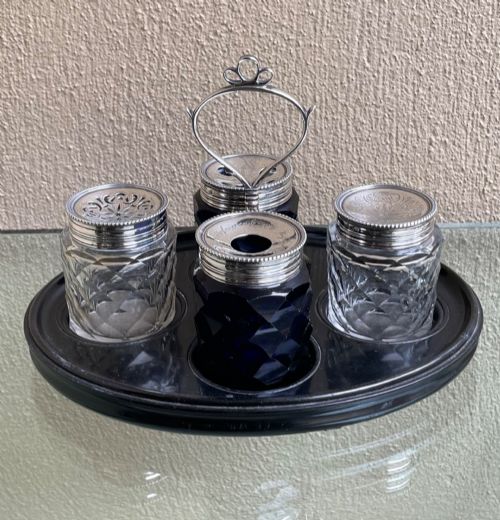
Most examples function as complete desk stands, inkstands, or tidy trays incorporating designated rests for pens. Materials range from solid sterling silver and silver plate to combinations involving oak, cut glass, horn, and pewter.
Originating largely from British workshops, these items reflect the writing habits of past eras where correspondence required dedicated desk furniture. The forms vary from simple capstan inkwells to elaborate double inkstands with chambersticks.
Materials and Construction
Silversmiths utilised sterling silver and silver plate over copper or base metals, shaping them through casting, spinning, and hand-raising techniques. Mounts and galleries were often soldered to heavy timber bases made from oak, coromandel, or satinwood.
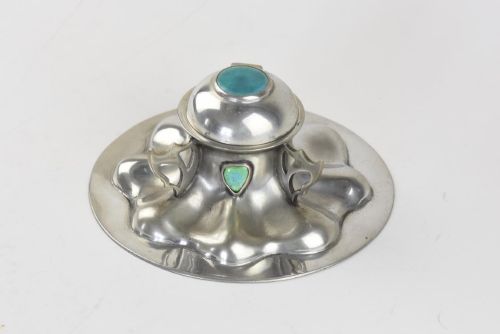
Glass components, including cut crystal bottles and inkwells, were mouth-blown and wheel-cut to fit precisely into silver collars. Pewter and brass also appear in specific Arts and Crafts and novelty pieces, paired with ceramic cabochons or horn.
Victorian desk accessories occasionally repurposed a horse's hoof into a novelty inkwell complete with silver mounts.
Factors of Quality
Quality rests upon the weight of the metal and the crispness of the chasing, engraving, and cast decorative mounts. Substantial gauge silver and tightly fitted mounts separate standard utilitarian pieces from high-end workshop productions.
The integration of diverse materials, such as lapis lazuli, onyx, or enamel, denotes superior craftsmanship. Makers who paid attention to the underside, secure feet, and well-balanced pen rests achieve a higher standard of execution.
William Hutton·Walker And Hall·Peter and Anne Bateman·Robert Garrard·Rupert Favell·Maurice Dufrene·Adie Brothers·Horace Woodward And Co Ltd·John Collard Vickery
The Silver Pen Stand Glossary
- Inkstand
- A fitted tray or stand holding one or more inkwells, pen rests, and sometimes a sander or bell. These pieces formed the centrepiece of a nineteenth-century writing desk.
- Capstan inkwell
- An inkwell shaped like a ship's capstan, featuring a wide circular base tapering upwards towards a hinged lid. This form provides exceptional stability on a busy desktop.
- Pen wipe
- A small desk accessory containing stacked fabric leaves used to clean surplus ink from steel nibs. They frequently accompanied silver pen stands in Edwardian sets.
- Sheffield plate
- An early fused metal technique where a thin sheet of sterling silver was melted onto a thicker copper base. It predates electroplating and appears on eighteenth and nineteenth-century pieces.
- Hallmark
- A series of official stamps struck into precious metal indicating the standard of purity, the assay office, the maker, and the year of manufacture. These marks provide precise dating for British silver.
Silver Pen Stand: Frequently Asked Questions
How do I clean a silver pen stand?
Use a soft cloth and a reputable silver polish, avoiding abrasive pads that can wear down hallmarks or thin plating. Take extra care around fitted glass, wood, or ceramic elements to prevent moisture damage.
Store the stand in a dry environment to slow down tarnishing. Regular, gentle dusting is preferable to frequent heavy polishing.
What is the difference between a desk tidy and an inkstand?
An inkstand specifically incorporates dedicated wells for liquid ink alongside pen rests, while a desk tidy serves as a broader catch-all tray for various stationery items. Both forms frequently overlap in antique terminology.
Desk tidies often feature compartments for stamps, envelopes, and paperclips rather than heavy glass ink bottles.
How can I date an unmarked silver plated stand?
Dating relies on stylistic clues, manufacturing techniques, and registration numbers stamped into the base. Arts and Crafts and Art Nouveau designs point towards the turn of the twentieth century, while Regency styles indicate earlier nineteenth-century manufacture.
Heavy Sheffield plate usually suggests an origin prior to the invention of electroplating in the mid-nineteenth century.