






Cut Glass Inkpot
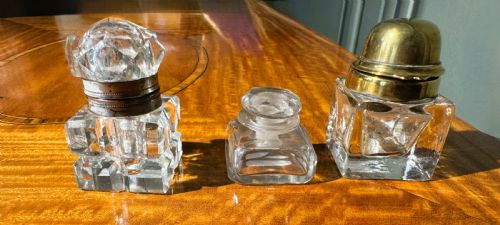
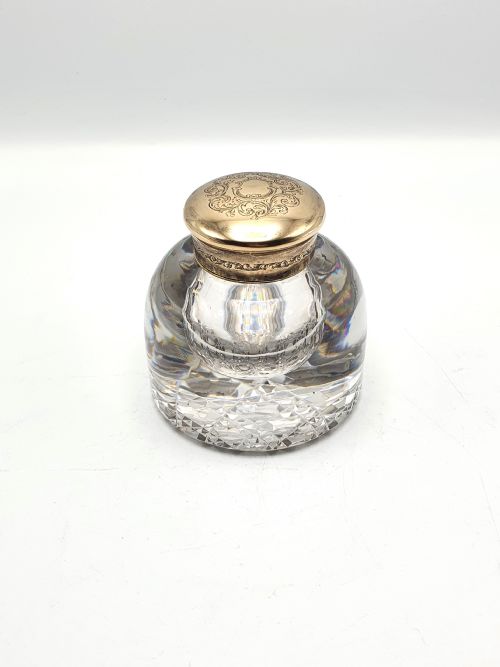
A cut glass inkpot brings heavy weight and sharp reflection to a desk, catching the ink-stained daylight of a proper study.
Cut Glass Inkpot
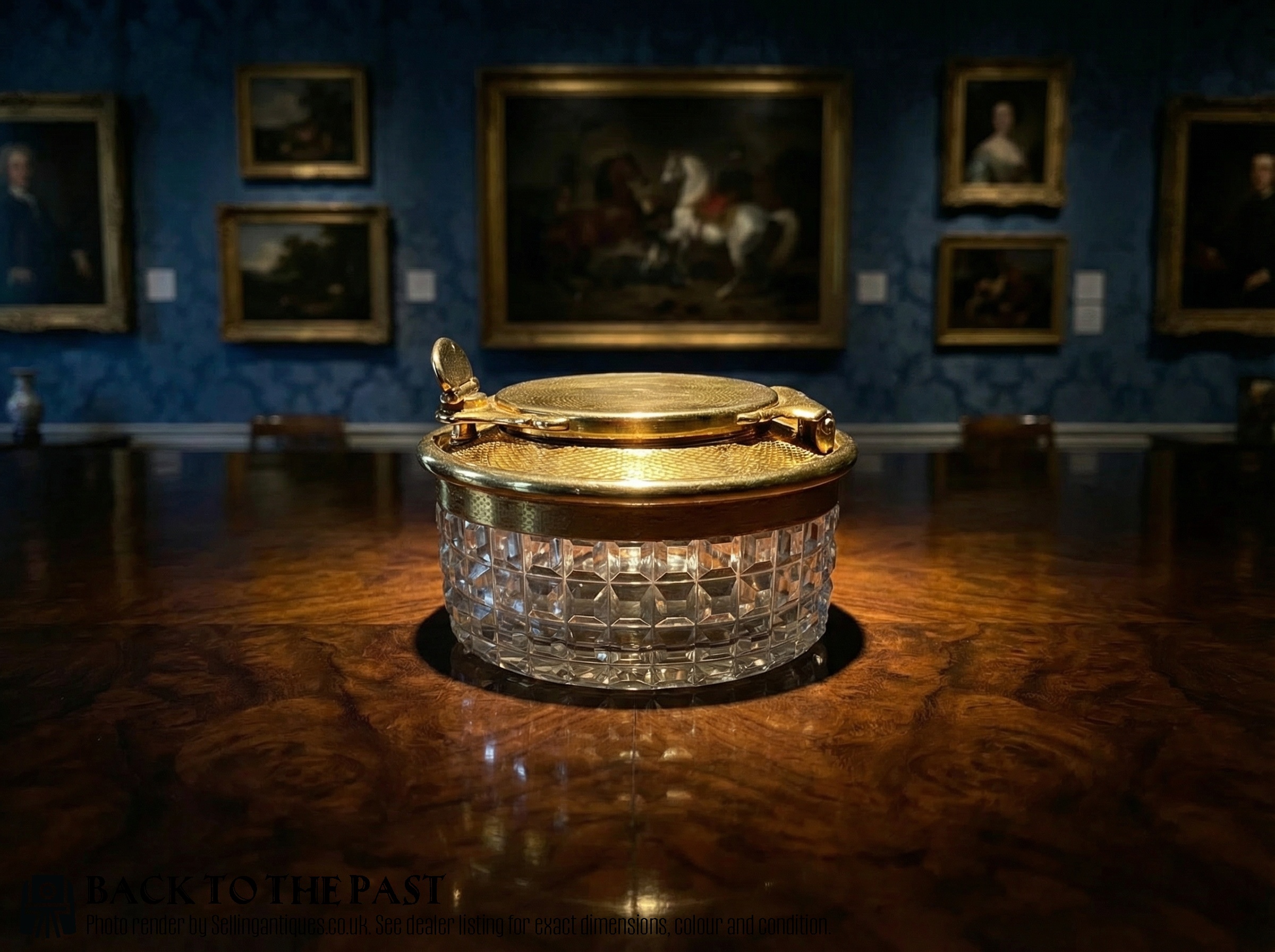
When you search for a cut glass inkpot, you are looking at utilitarian vessels designed for desktop use that combine faceted glass bodies with metal mounts. The examples you are most likely to meet on this page date from the Georgian, Victorian, and Edwardian periods, appearing either as single pots or fitted within larger desk stands.
Many of these pieces serve as standalone inkwells or form part of matching desk sets and dressing table accessories. They range from simple heavy-faceted crystal blocks to elaborate double inkstands paired with silver-plated or brass frames.
How they were made
The body of a cut glass inkpot starts with heavy-walled glass or crystal that is deeply ground and polished on wheels to create sharp facets and geometric patterns. This heavy cutting gives the glass its characteristic prismatic sparkle and substantial weight on the desktop.
Metal components, including sterling silver lids, silver-plated mounts, and cast brass collars, are fitted directly to the glass neck or hinged to a metal base. Makers also integrated specialised materials like gilded bronze, horn, and silver gilt to finish the mounts and decorative fittings.
Cut Glass Inkpot Retail Price Guide 2026
Typical asking prices for cut glass inkpot among the pieces listed under this phrase on Sellingantiques today, from the lower quarter to the upper quarter. They describe what is for sale here now, not the wider market.
Some desk stands take the form of a cornucopia horn of plenty, ensuring your ink flows from a mythical bounty.
What varies in quality
Quality in a cut glass inkpot depends heavily on the crispness and depth of the glass cutting, where sharper facets and clearer crystal create a superior visual weight. The thickness of the glass and the precision of the facet edges distinguish standard production from finer workmanship.
The metalwork provides the other major distinction, ranging from simple brass collars to heavy sterling silver lids with clear hallmarks or figural cast bronze elements. Well-fitted lids that close securely and retain their original hallmarks or maker marks elevate the piece considerably.
Tiffany & Co·Daniel Holy of Sheffield
The Cut Glass Inkpot Glossary
- Inkwell
- A small container for holding writing ink, usually featuring a secure lid to prevent evaporation and spills. They sit upon a desk either alone or fitted into a larger stand.
- Facet cut
- A decorative technique where flat planes are ground and polished into the surface of the glass. This catches the light and reveals the clarity of the material.
- Inkstand
- A tray or stand holding one or more inkpots alongside accessories like pen holders and stamp boxes. These were standard desk furniture in offices and libraries.
- Silver plate
- A layer of silver fused over a base metal such as copper or Britannia metal. It offers the appearance of solid silver at a different tier of manufacture.
Cut Glass Inkpot: Frequently Asked Questions
How were these inkpots used on the desk?
These inkpots sat directly on writing surfaces or within heavy desk stands to supply liquid ink for dip pens. Writers dipped their nibs through the hinged or fitted metal lids into the glass reservoir below.
Because glass is heavy and non-porous, it kept the ink contained safely away from important papers while providing a stable, weighty base that stayed put during vigorous writing.
How do I tell Victorian from Edwardian pieces?
Victorian pieces often display heavier brass mounts, Grand Tour styling, or ornate silver plating alongside deep, chunky glass cutting. Edwardian examples tend to lean towards sleeker sterling silver mounts and cleaner facet-cut crystal designs.
Hallmarks on the silver lids provide the most reliable dating evidence, giving exact assay office years for the metal mounts.
Can I still use an antique inkpot for writing?
You can fill them with modern fountain pen ink, provided the glass reservoir is free from internal cracks. Many collectors prefer to use them simply as desktop ornaments or paperweights rather than risking stains.
If you do use one, wash the glass carefully with warm water and avoid harsh abrasives that might scratch the interior facets.
What is the difference between glass and crystal?
Crystal refers to glass containing lead oxide, which increases the weight, refractive index, and softness of the material for deeper cutting. Plain glass is lighter and harder, resulting in a slightly different ring and brilliance when struck or polished.
Both materials appear frequently across these desk accessories depending on the manufacturing period and the maker's workshop.