




Antique Glass Inkpot
An antique glass inkpot brings heavy, tactile weight to a desk, holding ink in thick, brilliant vessels designed to outlast the pen itself.
Antique Glass Inkpot
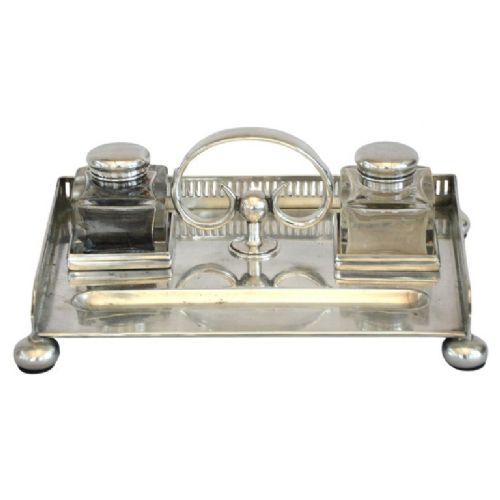
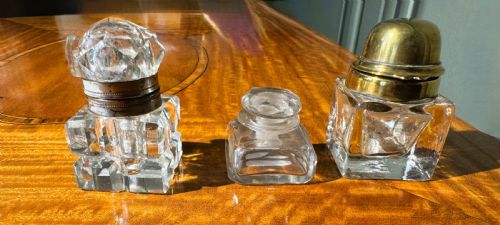
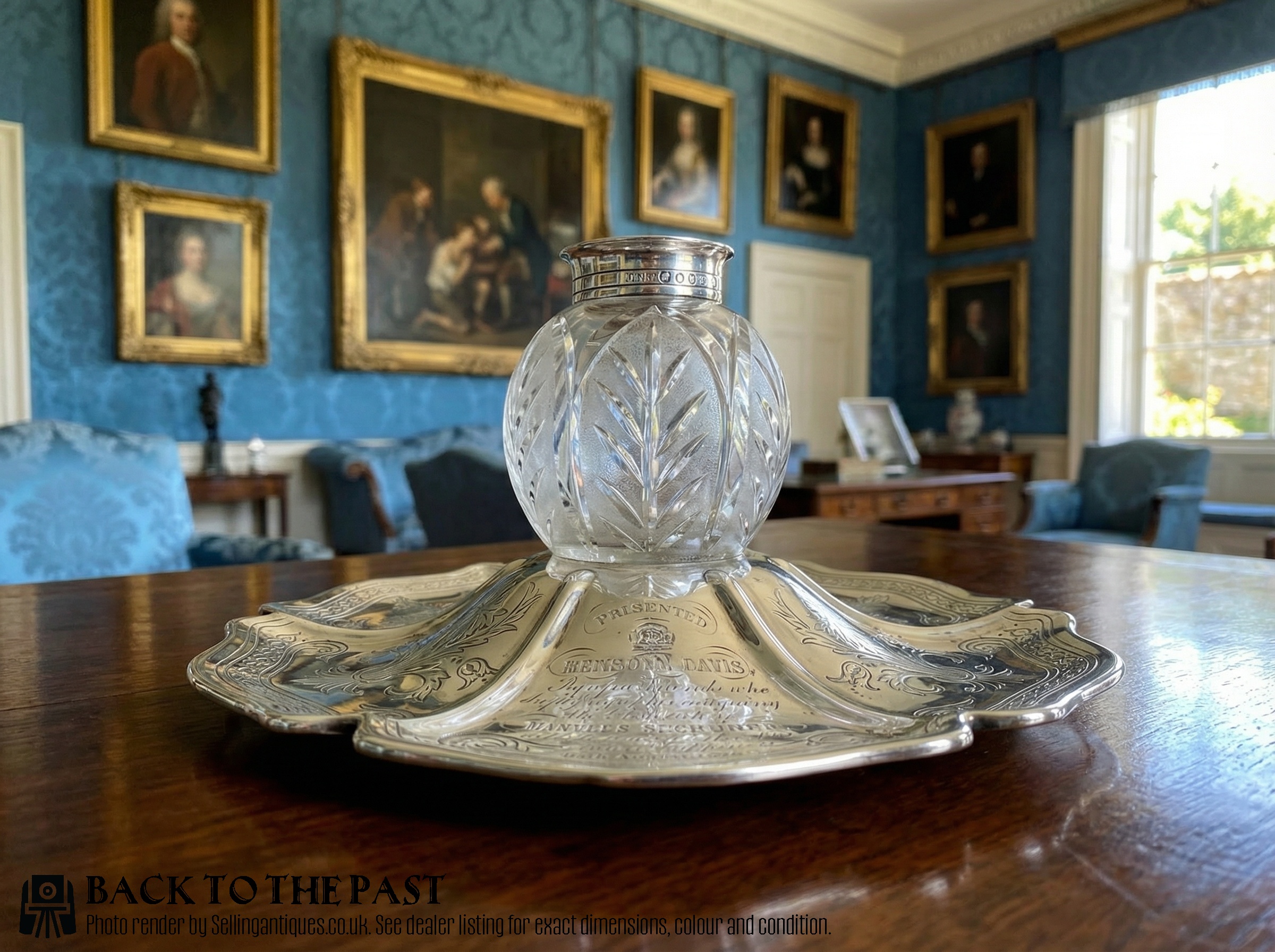
The antique glass inkpot appears across domestic desks and grand libraries in various forms, from simple utilitarian pots to elaborate double inkstands framed in metal. When searching for an antique glass inkpot, a buyer encounters heavy domestic vessels originating from the Georgian, Victorian, Edwardian, and later twentieth-century periods.
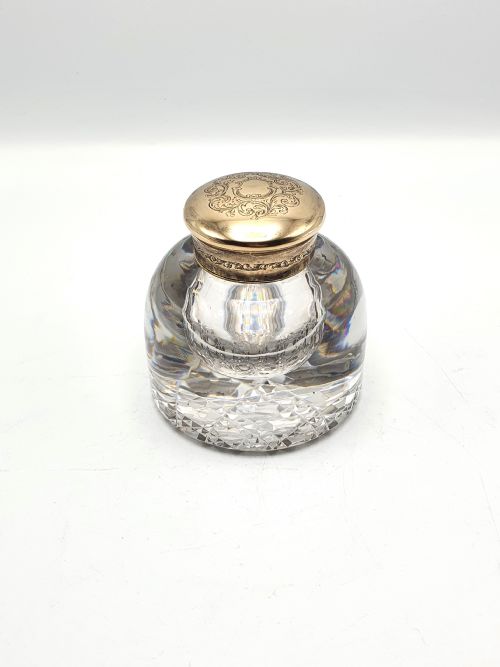
Most examples combine a robust glass body with metal mounts, hinges, or lids cast in brass, sterling silver, or silver plate. These desk accessories range from single faceted ink pots to large multi-piece desk sets designed to hold writing instruments securely.
Makers produced these functional items to sit permanently upon writing surfaces or to travel safely within luggage, utilising secure screw-top lids or hinged collars. The forms vary from squat, bulbous reservoirs to geometric crystal blocks cut to catch the light.
Materials and construction
Makers shaped the glass bodies through heavy moulding, blowing, or deep facet-cutting to create thick walls capable of resisting the daily knocks of metal dip pens. Cut crystal and pressed glass provide the transparency and weight necessary to anchor the inkpot firmly to the writing desk.
Metal components, including sterling silver, silver plate, brass, and gilded bronze, were securely mounted to the glass collars and hinged lids to seal the reservoir. Artisans also incorporated organic materials such as horn and mahogany into the wider desk stands and mounts.
Several Victorian novelty inkpots feature glass-eyed owls and cast bronze chicks staring steadfastly across the writing desk.
Judging quality and craftsmanship
Superior quality in an antique glass inkpot is evident in the crispness of the glass faceting, the clarity of the metal hallmarks, and the precision with which the metal collar fits the glass neck. Higher-grade pieces often integrate decorative figural elements, such as cast bronze chicks or glass-eyed owls, executed with distinct sculptural detail.
The density and weight of the glass itself separate finer specimens from standard utility pieces, alongside the presence of original, matching ink pots within multi-piece desk stands. Well-preserved makers' marks on the silver mounts or distinct iridescent art glass surfaces elevate the piece from simple stationery to a sophisticated desk ornament.
Walker And Hall·Tiffany And Co·Kralik·Loetz·Daniel Holy Of Sheffield
The Antique Glass Inkpot Glossary
- Inkstand
- A complete desk set holding one or more ink pots alongside pen trays and sometimes sanders or bell fixtures.
- Cut crystal
- High-clarity glass with lead content, deeply faceted by a grinding wheel to refract light across the desk.
- Sterling silver
- A silver alloy containing 92.5 percent pure silver, commonly stamped with hallmarked dates on inkpot lids.
- Sheffield plated
- An early method of fusing a thin sheet of silver to a copper base, visible on older desk stands.
- Iridescent glass
- Glass treated with metallic vapours during cooling to produce a shimmering, multicoloured surface sheen popular in Art Nouveau design.
Antique Glass Inkpot: Frequently Asked Questions
How do I clean an antique glass inkpot?
Warm water and a soft bottle brush safely remove dried ink residue from the interior without damaging the glass. Harsh chemical cleaners risk stripping the original patina from adjacent silver or brass mounts.
Care must be taken around hinged metal collars to prevent moisture from weakening historic adhesives or organic components like mahogany bases.
Are antique inkpots still usable for writing?
Many glass inkpots retain functional lids and secure collars that hold modern fountain pen ink effectively. Checking the interior for chips along the rim ensures the seal remains intact.
Collectors often test the hinges gently to confirm the lid closes tightly before adding fresh ink to the reservoir.
What is the difference between an inkpot and an inkstand?
An inkpot is a single vessel designed solely to hold ink, whereas an inkstand incorporates a tray with space for pens, blotting accessories, and sometimes multiple pots.
Stand designs range from simple silver-plated trays to elaborate mahogany blocks fitted with silver mounts and crystal reservoirs.
How can I date an antique glass inkpot?
Hallmarks stamped on silver lids or collars provide precise London or provincial assay office dates for metal-mounted pieces. Glass cutting styles and mounting materials further help place the piece within Georgian, Victorian, or Edwardian periods.