






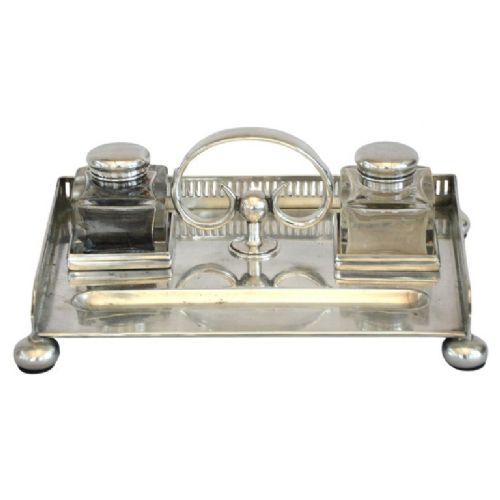


Glass Writing Inkwell
These glass writing inkwell pieces are desktop vessels for holding liquid ink, sought after by collectors for their utilitarian history and tactile appeal.
Glass Writing Inkwell
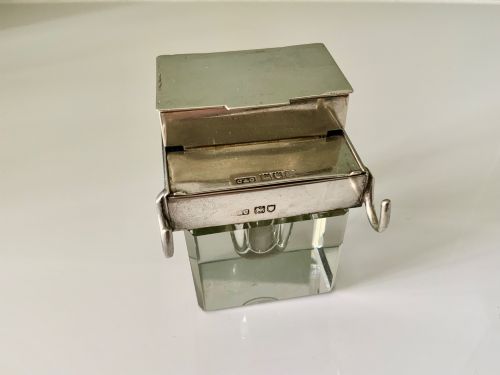
A glass writing inkwell is a desk accessory designed to hold liquid ink for a quill or dip pen. You will regularly encounter Victorian and Edwardian examples on this page, alongside earlier Georgian and 19th Century iterations.
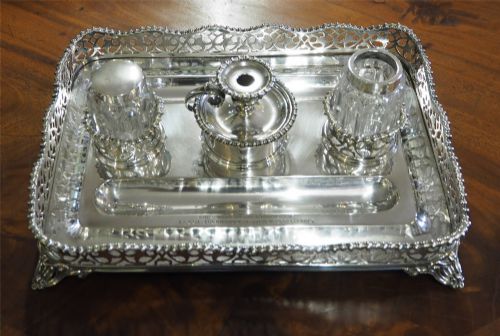
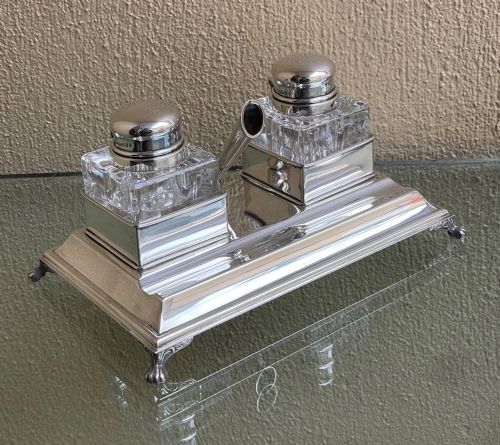
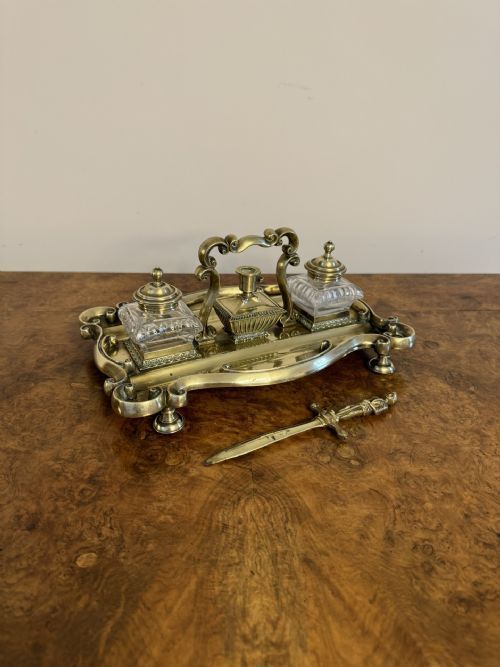
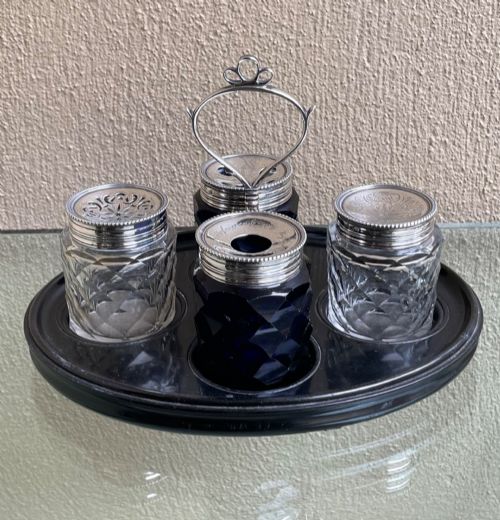
The selections span simple standalone glass pots to elaborate doubles paired with pen trays, stamp compartments, and chambersticks. Styles stretch from Gothic Revival and Art Nouveau to French Napoleon III and Egyptian Revival.
How They Were Made
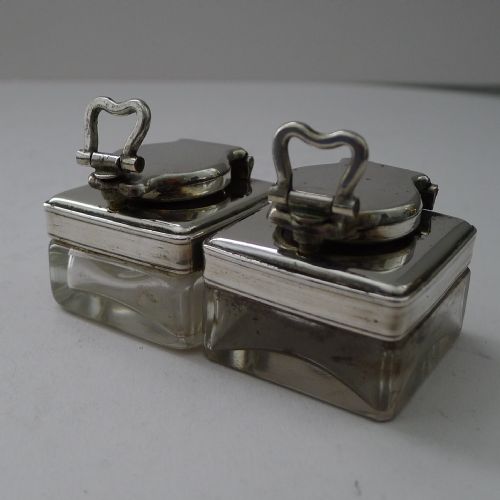
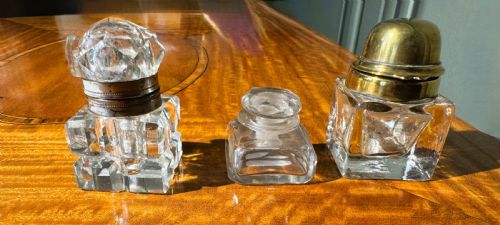
Makers produced the primary reservoirs using moulded or cut glass, frequently pairing them with metal collars and hinged lids in sterling silver, silver plate, or brass. Heavier vessels utilised lead glass to prevent tipping during use.
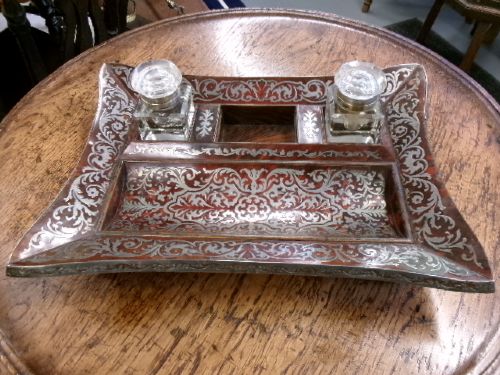
Desk stands and companion boxes combined structural timbers like oak, mahogany, and burr walnut with decorative veneers such as tortoiseshell, mother of pearl, and brass boulle work.
Glass Writing Inkwell Retail Price Guide 2026
Typical asking prices for glass writing inkwell among the pieces listed under this phrase on Sellingantiques today, from the lower quarter to the upper quarter. They describe what is for sale here now, not the wider market.
An owl carved from Irish oak hides a functional desk inkstand beneath its feathers.
What Varies in Quality
Quality rests upon the crispness of the glass cutting, the weight of the metal mounts, and the precision of any fitted cabinetwork. Heavier cut glass displays sharper facets and better light refraction than pressed alternatives.
Superior examples retain their original matching glass liners, lids, and associated dip pens. The integration of mounts - whether silver, ormolu, or pewter - shows the maker's hand through secure seating and clean solder or screw fixings.
Elkington·Wilkinson And Co·Walker And Hall·James Cartland And Sons·Rupert Favell·Moser
The Glass Writing Inkwell Glossary
- Standish
- A portable desk stand fitted with inkwells, pen holders, and sometimes sanders for blotting. These pieces formed the central writing equipment on a library table.
- Boulle work
- Marquetry technique utilising tortoiseshell and brass inlay, popular in French-influenced desk sets. This decoration creates contrasting amber and metallic patterns.
- Cut glass
- Glassware shaped by grinding and polishing facets onto the surface to catch the light. This method adds weight and brilliance to ink reservoirs.
- Silver plate
- A base metal, such as copper or Britannia metal, coated with a thin layer of silver. Manufacturers utilised this process to achieve the appearance of solid silver at a lower cost.
Glass Writing Inkwell: Frequently Asked Questions
How do I clean an old inkwell?
Warm water and a soft bottle brush remove dried ink residue safely from glass interiors. Avoid soaking wooden bases or exposing mounted metal parts to harsh chemical solvents.
Dry all components thoroughly before reassembly to prevent moisture damage to internal linings and metal hinges.
What is the difference between an inkstand and an inkwell?
An inkwell is the single vessel or bottle that holds the liquid ink. An inkstand is a larger desk tray that holds one or more inkwells alongside pens and stamps.
Many inkstands also include sanders, taper sticks, or small drawers for stationery supplies.
Are travel inkwells leakproof?
Period travel versions relied on threaded screw tops, tight collars, or hinged brass caps with internal washers. While designed for transit, older seals degrade over time and may not hold liquid securely.
Collectors generally test these with water before filling them with ink for actual use.
How do I date an antique glass inkwell?
Dating relies on manufacturing techniques, hallmarks on silver mounts, and the overall style of the housing stand. Georgian and early 19th-century pieces often feature thick, hand-blown glass with pontil marks, while later Victorian examples show machine moulding.
Maker marks and registration numbers stamped on metal collars provide precise production years.