



Cut Glass Inkwell Set
A cut glass inkwell set brings heavy crystal and bright metal together on the desktop, offering a practical writing centre that holds both ink and pens.

Cut Glass Inkwell Set
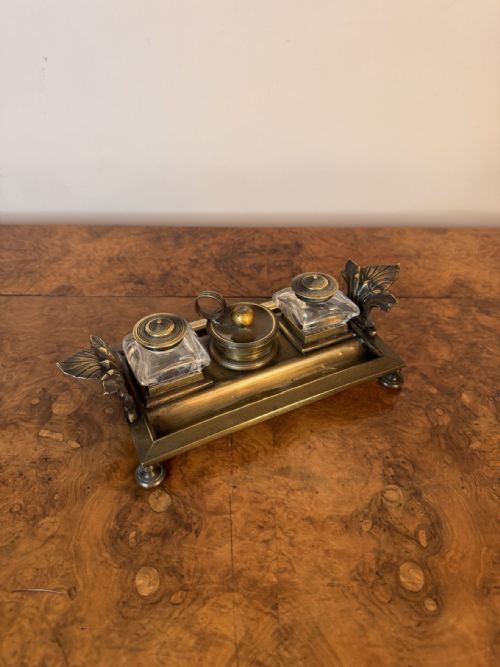
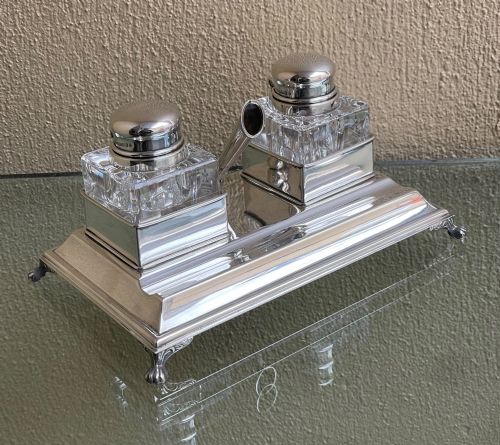
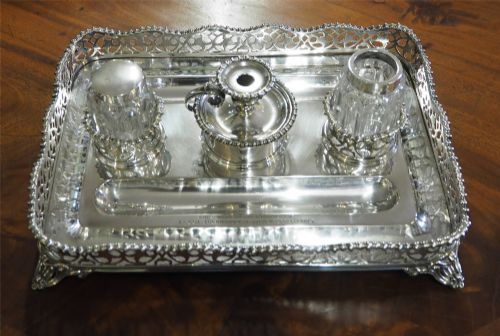
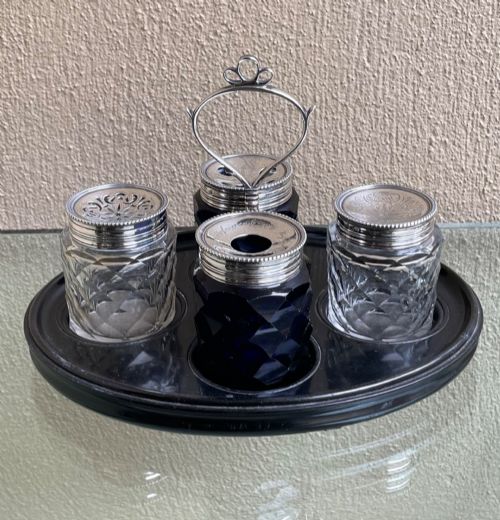
A cut glass inkwell set typically comprises a fitted tray holding one or more heavy glass bottles alongside spaces for pens and stamps. These desk accessories appear in various formats, from simple wooden stands to grand silver-mounted arrangements.
The pieces on this page span the Georgian, Victorian, and Edwardian periods, reflecting changing desk habits across the nineteenth and twentieth centuries. Buyers will find both standalone inkwells and complete desk stands featuring integrated glass bottles.
Materials range from oak, mahogany, and coromandel wood bases to silver, brass, and plated metal mounts that frame the heavy glass vessels. The cut glass itself provides weight and brilliance, catching the light on a writing table.
How they were made
Glassmakers produced the heavy bottles by blowing molten metal into moulds before cutting deep geometric patterns into the surface on a wheel. This heavy cut glass was then fitted with metal collars, hinged lids, and sometimes sterling silver or silver-plated mounts.
Woodworkers constructed the stands from dense timbers like oak, walnut, coromandel, and mahogany, frequently incorporating brass inlay, tortoiseshell, or mother of pearl. Metal founders cast and chased brass, bronze, and ormolu mounts to secure the glass vessels and pen trays.
Cut Glass Inkwell Set Retail Price Guide 2026
Typical asking prices for cut glass inkwell set among the pieces listed under this phrase on Sellingantiques today, from the lower quarter to the upper quarter. They describe what is for sale here now, not the wider market.
Some desk accessories cleverly double as timepieces, housing clock faces directly alongside the inkwells.
What varies in quality
Quality rests primarily on the depth and crispness of the glass cutting, alongside the weight and substance of the metal mounts. Thick, clear glass with sharp facet lines and heavy silver or brass fittings separates finer sets from simpler commercial productions.
The choice of base materials also distinguishes the range, with solid exotic timbers like coromandel and fully hallmarked sterling silver mounts marking out the more ambitious desk stands. Precision in the joinery of the wooden tray and the secure fitting of the hinged lids complete the picture.
Wilkinson & Co·James Cartland & Sons·Rupert Favell·Daniel Holy of Sheffield
The Cut Glass Inkwell Set Glossary
- Cut Glass
- Glass shaped and patterned by holding it against a rotating abrasive wheel. The process creates sharp-edged facets that refract light.
- Inkstand
- A complete desk accessory comprising a tray or stand holding inkwells, pen holders, and sometimes stamp boxes or sanders.
- Ormolu
- Gilded bronze used for decorative mounts and feet on nineteenth-century desk stands. It provides a bright gold-coloured finish to metal parts.
- Standish
- An alternative term for a portable desk stand or inkstand, often fitted with compartments for writing materials.
Cut Glass Inkwell Set: Frequently Asked Questions
What is a cut glass inkwell set?
A cut glass inkwell set is a desk accessory that combines heavy, faceted glass ink bottles with a fitted base or tray made from wood, brass, or silver.
These sets were designed to sit on a writing table to hold liquid ink securely while offering a designated place for dip pens.
How do I date an inkstand?
Dating relies on the style of the base, the hallmarks on any silver mounts, and the manufacturing techniques used for the glass.
Georgian pieces often feature neoclassical lines and Sheffield plate, while Victorian and Edwardian examples incorporate heavier glass cutting and diverse timber veneers.
Were these sets used for daily writing?
These sets served as the primary writing apparatus for letters and business documents before the invention of the fountain pen.
Owners dipped steel or quill pens directly into the glass wells, keeping the ink covered between uses to prevent evaporation.
How should I clean the glass?
Cleaning requires warm soapy water and a soft bottle brush to remove dried ink residue from the interior of the glass vessels.
Harsh abrasives should be avoided to protect the polished facets of the cut glass and any delicate metal collars.