


Silver Top Inkwell
A silver top inkwell combines functional writing utility with precious metal craftsmanship, making it a desirable desk accessory.
Silver Top Inkwell
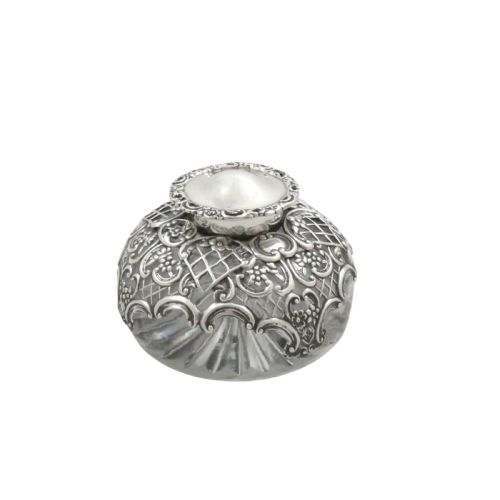
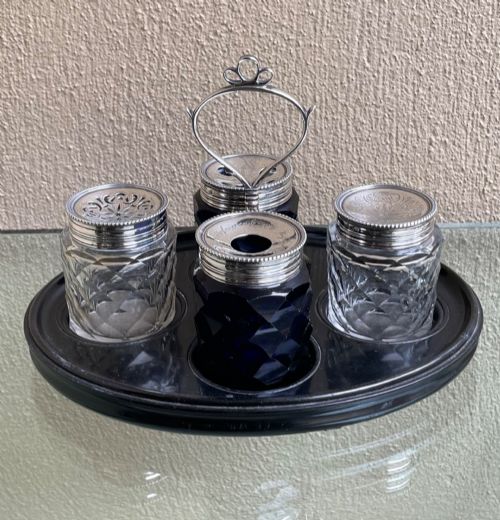
A silver top inkwell consists of a glass, crystal, or occasionally wooden or horn vessel fitted with a hallmarked silver lid or mount, designed for desktop use. These pieces appear across Georgian, Victorian, Edwardian, and Art Deco periods, manifesting as standalone desktop items, travelling versions, or components of larger inkstands.
The most common variety encountered on this page is the cut glass or crystal bottle crowned with a sterling silver cap, though novelty forms and paired desk stands also surface. They originate largely from British workshops and date from the nineteenth and early twentieth centuries, reflecting the serious correspondence habits of past eras.
Materials and construction
Makers combined heavy-blown and facet-cut glass or crystal reservoirs with sterling silver hinged lids, securing them with internal collars or threaded mounts. Other iterations incorporate organic materials such as Scottish oak, horn, tortoiseshell, ebony, and enamel directly into the body or lid.
Silversmiths utilised stamping, chasing, and guilloche techniques to decorate the metal caps, often incorporating hallmarks that record the assay office and year of production. The glass vessels were typically heavy enough to prevent tipping during the vigorous dipping of a quill or steel nib.
Listings feature inkwells made across the Georgian, Victorian, and Edwardian periods, utilising sterling silver, cut glass, tortoiseshell, and oak.
Assessing quality in desk pieces
Quality rests upon the weight and clarity of the glass vessel, the thickness of the silver lid, and the crispness of any decorative chasing or enamel work. Finer examples display deep facet cutting, crisp hallmarks, and tightly sealing silver caps that align properly with the collar.
The presence of integrated secondary functions, such as pocket watches, barometers, or matched pen stands, elevates the ambition of the piece. Superior items maintain their original matching components and undamaged glass reservoirs without chips or replacement parts.
Asprey·Hukin & Heath
The Silver Top Inkwell Glossary
- Standish
- A complete desk stand holding inkwells, pen trays, and sometimes sanders or bell components. These portable writing cabinets or trays gathered all necessary desk equipment into one unified tray.
- Guilloche
- A decorative engine-turning technique producing precise, intricate geometric patterns etched into metal. This patterned surface was frequently covered with translucent enamel on Edwardian pieces.
- Capstan inkwell
- A desk vessel shaped like a nautical capstan, featuring a wide base that tapers upward to a silver top. This form provided exceptional stability against tipping.
- Hallmark
- An official stamp applied by an assay office indicating the purity of the silver, the maker, and the year of manufacture. British silver typically displays a standard mark, a town mark, and a date letter.
- Silver gilt
- Sterling silver that has been coated with a thin layer of gold, providing a rich yellow lustre. This treatment protected the interior metal from corrosive ink acids.
Silver Top Inkwell: Frequently Asked Questions
What is a silver top inkwell?
A silver top inkwell is a desk container designed to hold liquid ink, featuring a heavy glass or crystal body fitted with a hinged sterling silver lid. They were essential desk accessories for writing letters and documents before the invention of the fountain pen.
These pieces range from simple portable ink pots to grand desktop items integrated into elaborate stands with pen trays and stamps.
How do I date an antique inkwell?
Dating relies primarily on the silver hallmarks stamped on the lid or mount, which indicate the specific assay office and year of production. Stylistic clues such as Art Deco geometric lines or Victorian chased decoration also help narrow the period.
The cut of the glass and the materials used for the base body provide additional context regarding whether a piece originates from the Georgian, Victorian, or Edwardian eras.
Were these used for travel?
Many smaller versions were built specifically for travel, featuring screw-down silver lids or internal stoppers to prevent ink from spilling inside luggage. Travellers required secure vessels that could withstand movement while accompanying a writing case.
Desk inkwells intended for stationary use at home or in an office were heavier and lacked the locking mechanisms found on travelling examples.
How should I clean the glass?
The glass reservoir can be washed gently with warm water and mild soap, taking care to avoid submerging fragile silver hinges or enamel sections. Cotton buds help reach the interior corners where dried ink residue accumulates over decades.
Harsh chemical cleaners should be kept away from the silver mounts and any organic elements like tortoiseshell or leather found on associated stands.