

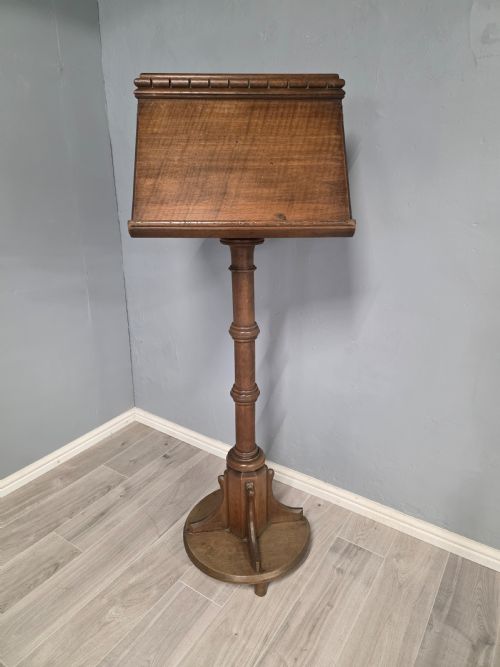


Carved Oak Desk Stand
A carved oak desk stand brings tangible weight to a workspace, housing writing materials or holding books with solid timber character.
Carved Oak Desk Stand
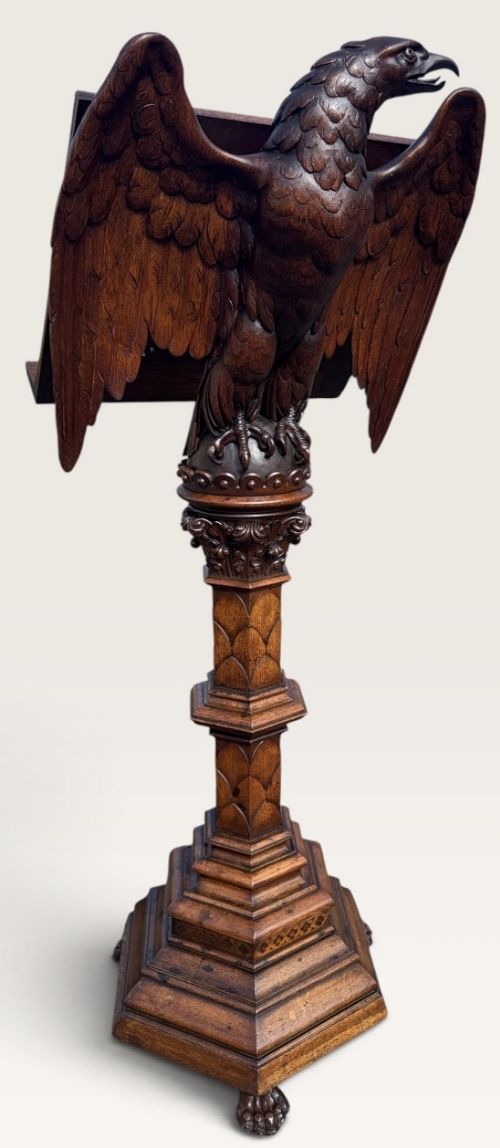
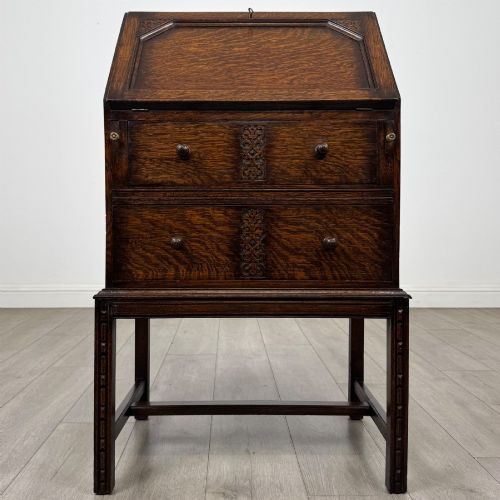
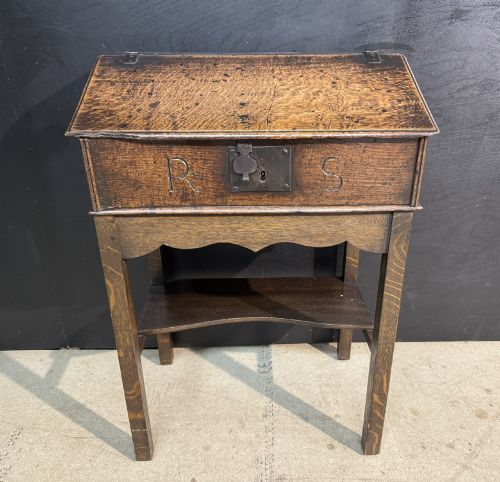
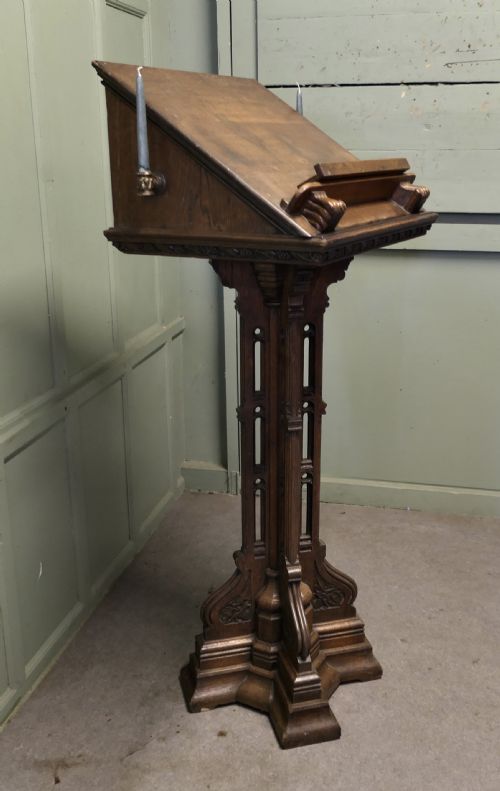
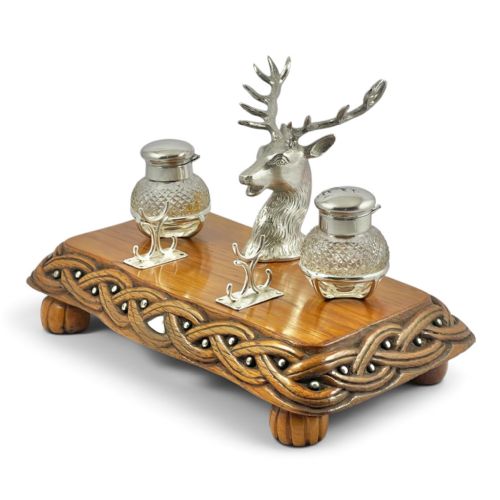
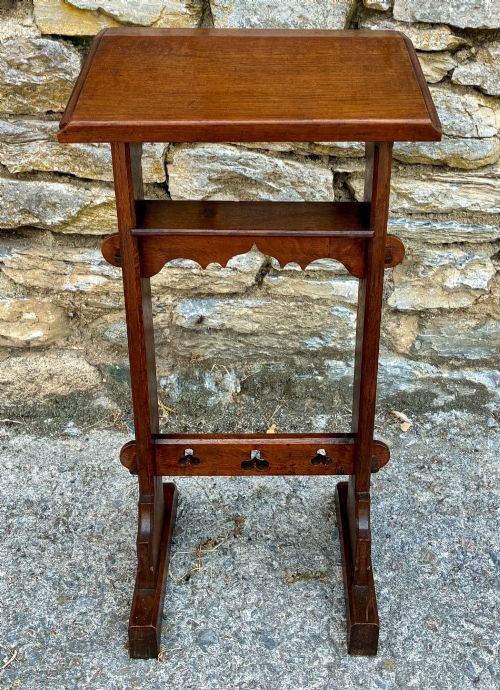
When you search for a carved oak desk stand, you look at items designed for the surface of a desk, table, or reading station, spanning forms from simple inkstands and letter racks to reading podiums, book stands, and writing boxes on stands. The pieces you meet most often on this page date from the nineteenth and early twentieth centuries, drawing heavily on Victorian and Edwardian periods.
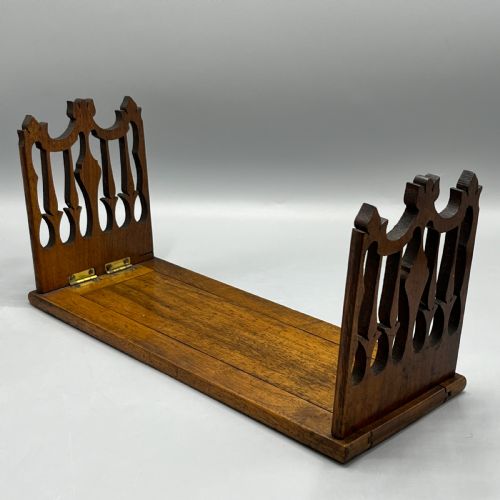
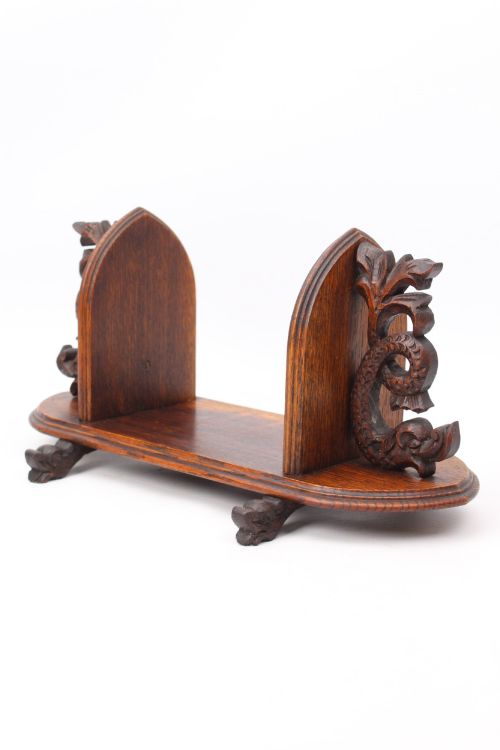
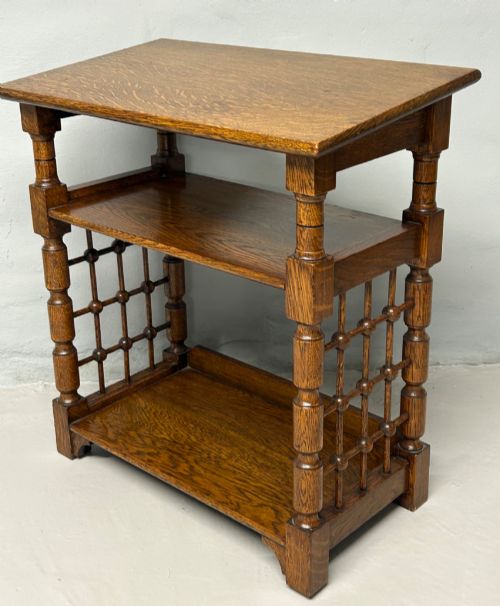
Makers and craftsmen of these eras produced utilitarian items for libraries, studies, and ecclesiastical settings, incorporating architectural motifs such as Gothic Revival arches alongside cleaner Arts and Crafts lines. Alongside standard desk stands and inkwells, the selection includes related library furniture like book troughs, revolving bookcases, and slope boxes.
Origins stretch from English workshops to Scottish and continental makers, utilising timber framed centuries ago as well as later periods. Whether serving as a church lectern or a domestic writing bureau, each piece holds timber shaped for reading, writing, and correspondence.
Materials and Construction
Construction relies primarily on solid oak, selected for its density and prominent grain, frequently paired with secondary woods like fruitwood or linden wood for detailed carving. Workshops employed traditional joinery techniques to house panels and support sloping writing surfaces or heavy book rests.
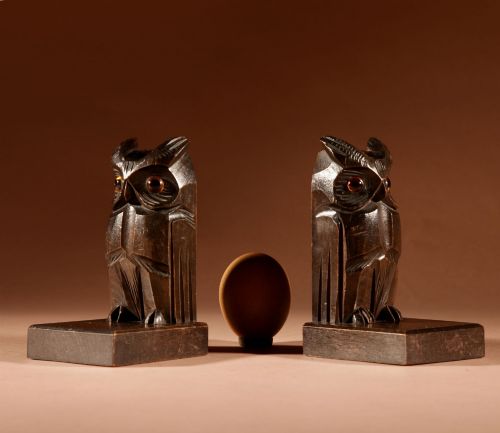
Metal components appear widely alongside the timber, utilising brass for hinges, galleries, and mounts, alongside iron fittings and occasionally silver or horn details. Glass inserts serve as inkwells within the stands, while carved ornamentation ranges from geometric relief to figurative elements like owls, lions, and eagles.
Materials extend beyond plain timber, incorporating brass, iron, silver, horn, and glass elements alongside the primary oak.
Evaluating the Pieces
Quality rests upon the crispness of the hand-carved detail and the integrity of the timber selection, where deeply articulated motifs distinguish standard production items from master-carved works. The harmony between the oak base and any auxiliary materials, such as fitted brasswork or original glass inkwells, determines the completeness of an object.
Construction methods dictate longevity; pieces joined with tight, precise housing and stable timber movement sit at the upper end of the range. Original surfaces, retainers, and labelled makers' marks elevate historical interest above later alterations or heavily refinished examples.
Arthur Simpson
The Carved Oak Desk Stand Glossary
- Lectern
- A slanted stand designed to hold a book or notes at an ergonomic angle for reading. These often feature carved oak panels and appear in domestic libraries or ecclesiastical settings.
- Inkstand
- A desk accessory incorporating fitted holders for inkwells, frequently accompanied by channels for pens. They combine timber bases with glass and brass elements.
- Writing Slope
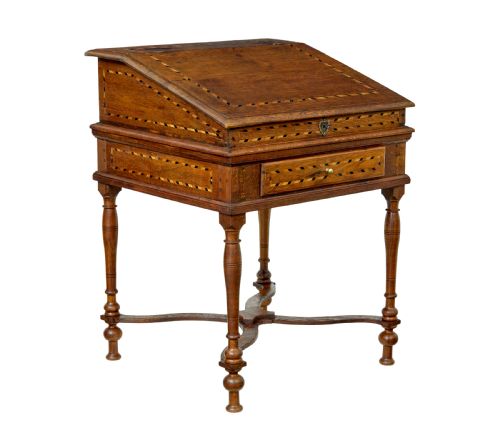
- A portable box with a hinged, slanted lid that opens to reveal a writing surface and storage compartments for paper and stationery. Early examples often rest on dedicated frames or stands.
- Gothic Revival
- A nineteenth-century design style mimicking medieval architecture, characterised by pointed arches, tracery, and heavy carved oak ornamentation. It dominates much of the ecclesiastical and library furniture on this page.
- Arts and Crafts
- A design movement valuing hand craftsmanship, simple construction, and visible material qualities over mass production. Pieces from this tradition avoid excessive ornamentation in favour of honest joinery.
Carved Oak Desk Stand: Frequently Asked Questions
What is a carved oak desk stand used for?
These pieces served practical roles in organising writing materials, holding inkwells, or supporting heavy volumes for reading.
In studies, offices, and churches, they provided a dedicated, stable surface for correspondence and study.
How do I date a carved oak piece?
Dating relies on identifying stylistic markers such as Gothic Revival tracery, Arts and Crafts simplicity, or Victorian proportions.
Construction methods, tool marks, and the presence of original brass or glass components also help establish the period.
Are these stands suitable for modern desks?
Their compact footprints make them practical for organising modern workspaces or displaying books.
They bring tactile timber grain and historical utility into contemporary rooms without requiring large floor areas.