


Scottish Desk Accessories
Scottish desk accessories bring character to a workspace, combining traditional materials like horn and oak with distinctive regional motifs.
Scottish Desk Accessories
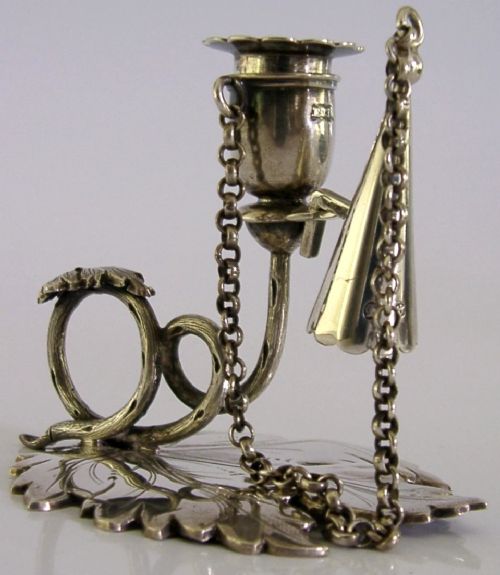
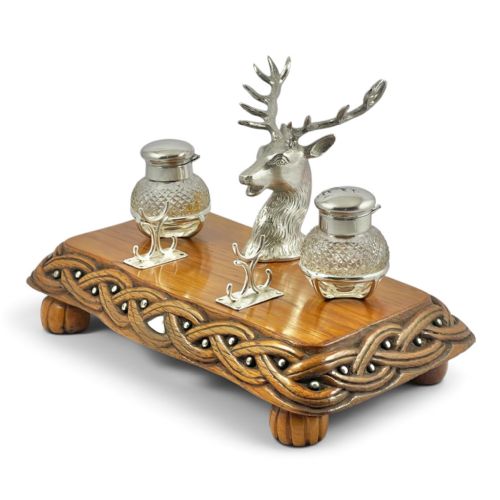
Scottish desk accessories encompass functional items for the writing table, ranging from inkstands and bookends to letter openers and page turners. These objects date across the nineteenth and twentieth centuries, taking influence from Victorian styles, Arts and Crafts movements, and Scottish Baronial traditions.
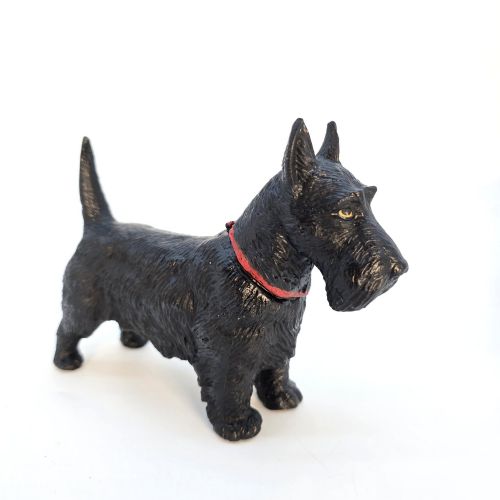
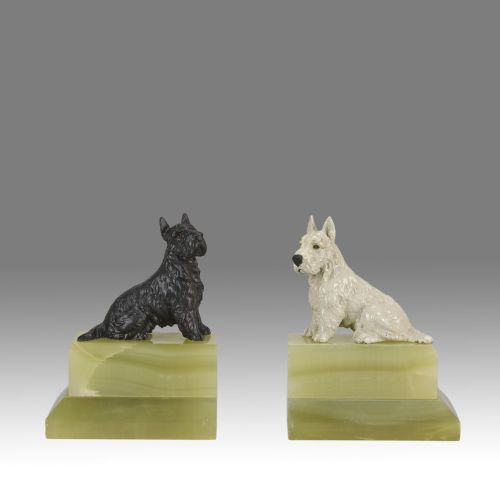
Visitors to this selection are most likely to encounter practical items fashioned from local materials such as horn and oak, often accented with sterling silver. Animal motifs, particularly Scottish terriers and Westies, appear frequently in the cast metal and bronze pieces from the early decades of the twentieth century.
Regional provincial centres such as Inverness and Glasgow contribute specific maker marks and assay office details to silver-mounted pieces. Buyers find both utilitarian desk stands and decorative novelties like bookmarks shaped as trowels or small snuff mulls adapted for desk use.
Materials and construction
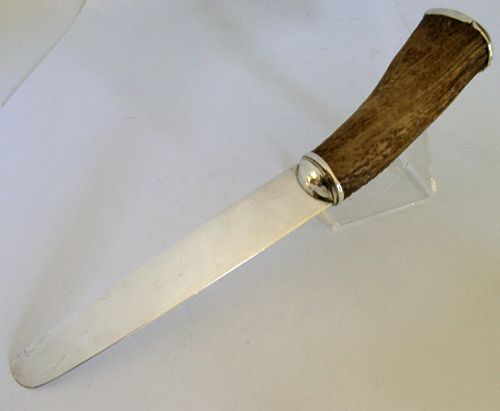
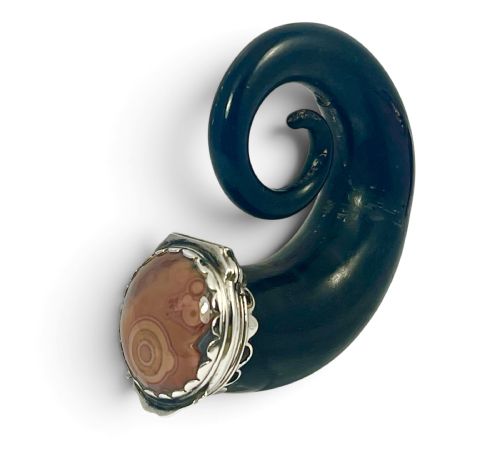
Natural horn forms the basis of many traditional pieces, shaped into page turners and snuff mulls often paired with sterling silver mounts. Oak and other native timbers provide sturdy foundations for inkstands and nib boxes, utilising straightforward cabinet-making techniques.
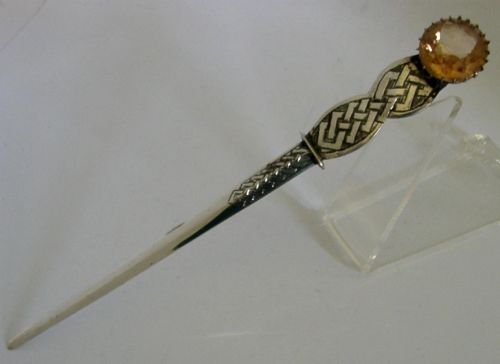
Metalwork spans cast brass and cold-painted bronze for figural bookends and lighters, alongside assayed sterling silver applied to letter openers and bookmarks. Hand-painted details appear on specific figural pieces, adding colour and texture to the finished objects.
Several fierce terriers stand ready to guard your correspondence from stray drafts.
Assessing quality and craftsmanship
Quality reveals itself in the crispness of the casting on bronze and metal figures, and in the careful joining of silver mounts to horn or timber. Superior pieces display thoughtful proportions and harmonious integration of natural materials with metalwork.
Makers' marks and provincial hallmarks provide clear indications of origin and standard, adding tangible historical context to silver-mounted accessories. The retention of original hand-painted details on cold-painted bronzes and cast metal items elevates the desirability of surviving examples.
The Scottish Desk Accessories Glossary
- Assay
- The official testing of precious metal purity, resulting in hallmarks that indicate the metal standard, origin, and year. This process protects buyers by verifying the authenticity of silver components on desk items.
- Provincial
- Refers to items made outside the capital city, often bearing marks from regional assay offices such as Glasgow or Inverness. These pieces reflect local craftsmanship distinct from London production.
- Snuff mull
- A small container used for holding snuff, often fashioned from ram horn with silver mounts in Scottish pieces. Desk examples adapted these traditional pocket items for stationary use.
- Page turner
- A long, flat implement made of horn, ivory, or silver designed to separate uncut book pages. They often feature decorative silver handles and regional hallmarks.
- Cold-painted bronze
- Bronze sculptures painted with oil-based colours rather than fired in a kiln, a technique popular in Vienna and imported for novelty desk items.
Scottish Desk Accessories: Frequently Asked Questions
What items count as Scottish desk accessories?
These items include functional and decorative desk pieces such as inkstands, letter openers, page turners, bookends, and nib boxes. They incorporate traditional regional materials like horn, oak, and sterling silver.
Many pieces feature distinct Scottish motifs, including animal figures and provincial hallmarks from assay offices in cities like Glasgow and Inverness.
How were horn and silver combined?
Craftsmen shaped natural horn through heating and pressure, then fitted silver rims, collars, and mounts to reinforce and decorate the objects. These combinations appear frequently on page turners and small containers.
The contrast between the organic texture of the horn and the polished sterling silver defines the appearance of these regional pieces.
What periods do these pieces represent?
The available items span from the nineteenth century through the mid-twentieth century, capturing several distinct design movements. Victorian examples often display Celtic Revival or traditional horn work.
Later pieces from the Edwardian era and the 1920s and 1930s introduce Arts and Crafts influences, along with novelty cast metal items featuring terriers.
How do I care for horn and silver accessories?
Horn benefits from occasional light conditioning to prevent dryness, avoiding excessive moisture or direct heat sources. Silver components require gentle cleaning with a suitable cloth to maintain their lustre without damaging adjacent natural materials.
Keeping these items in stable environmental conditions protects both the organic elements and the metal mounts from premature wear.