
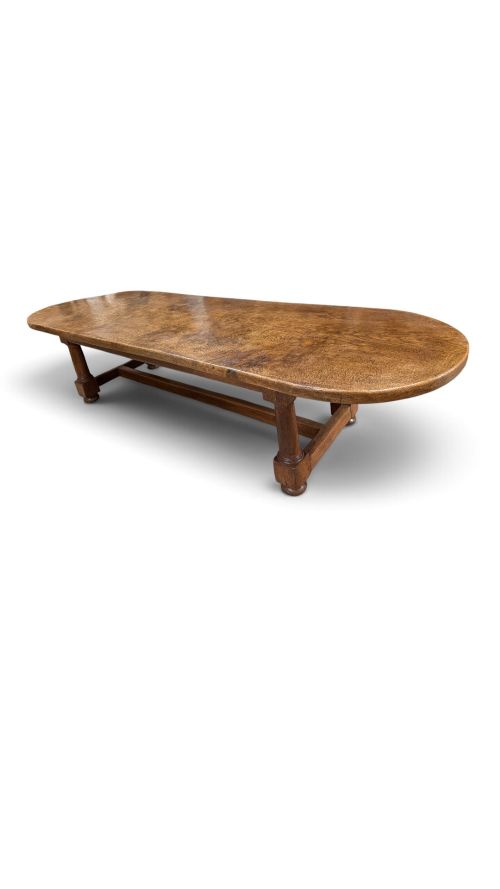
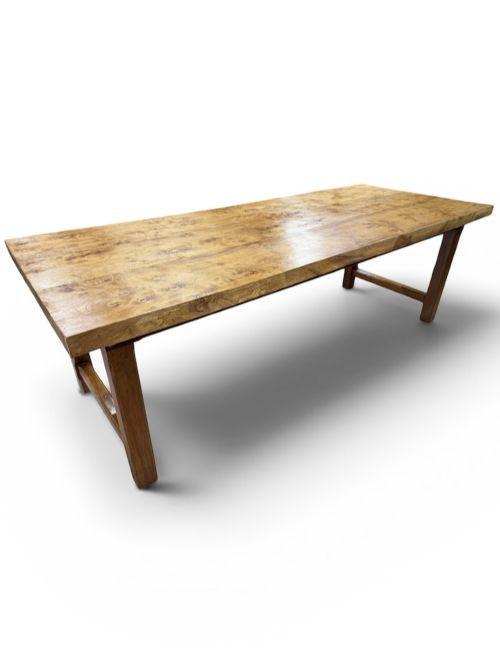
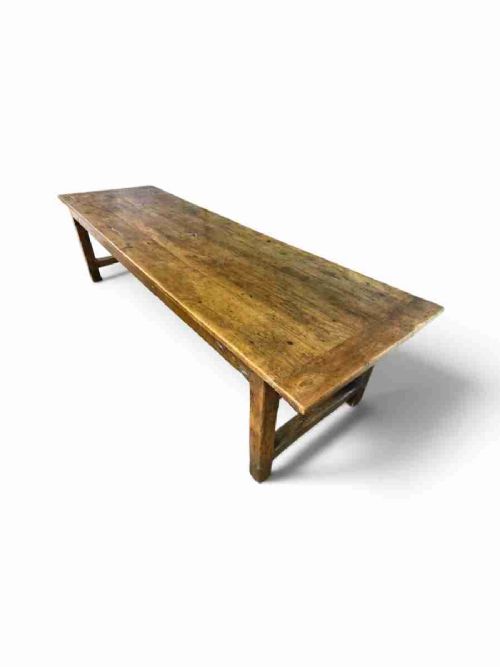
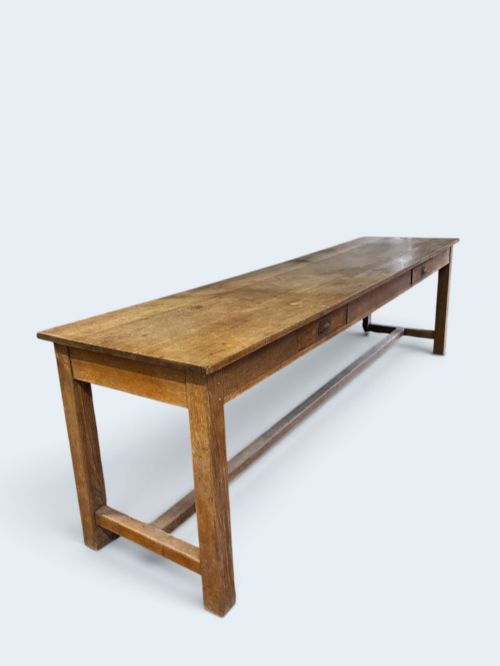
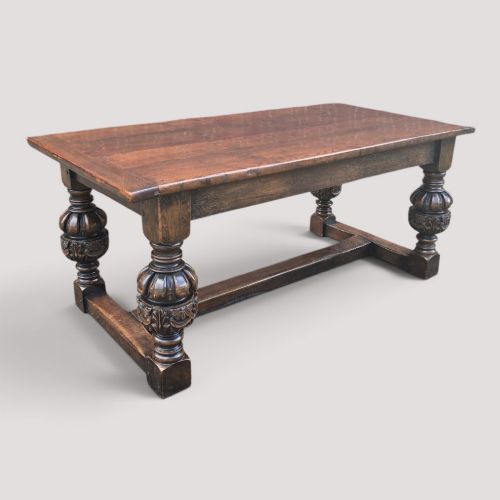
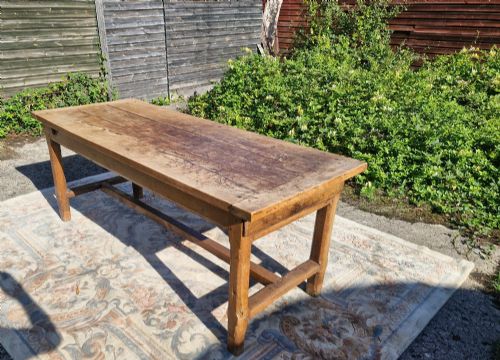
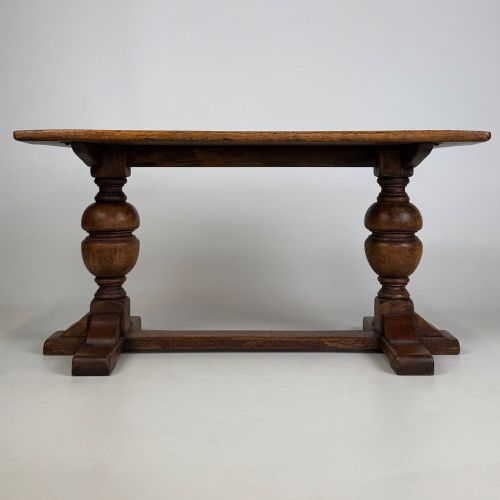
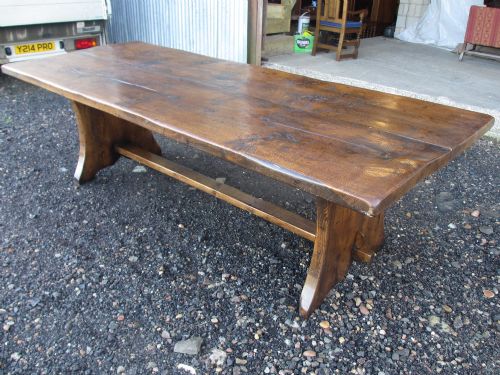
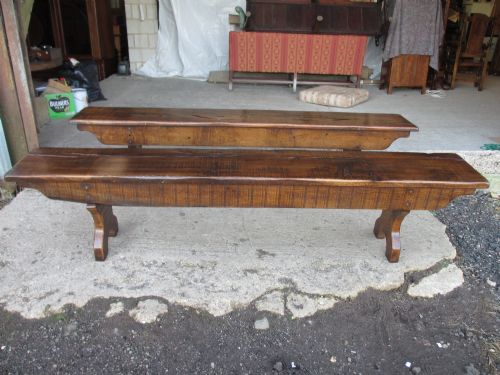
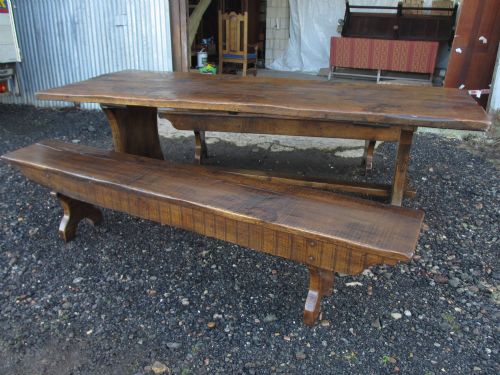
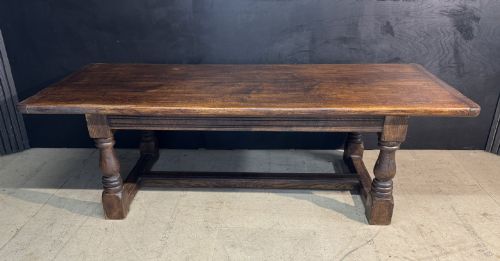
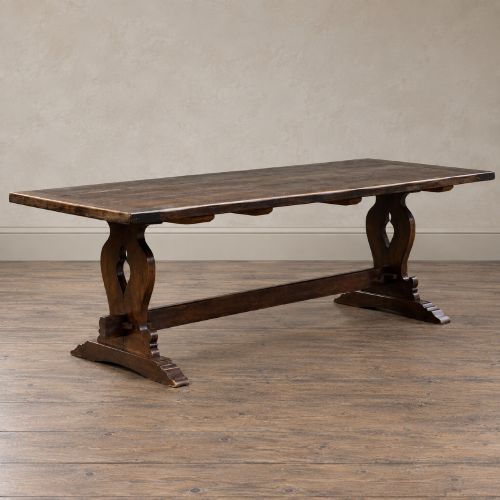
Rustic Trestle Table
A rustic trestle table brings immediate architectural presence and honest utility to a room through sturdy timber construction and simple lines.
Defining the rustic trestle table
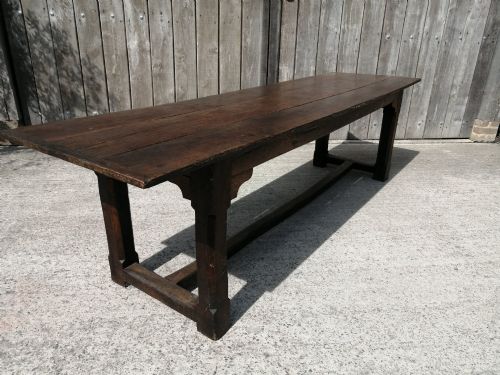
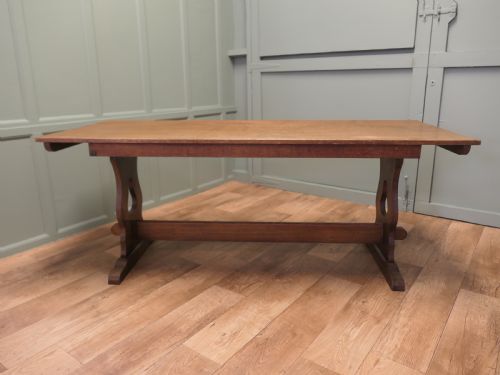
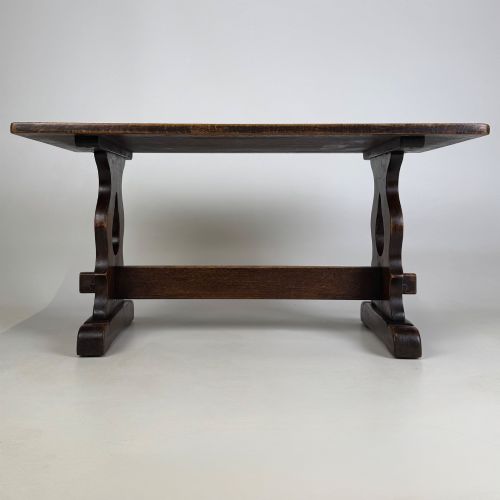
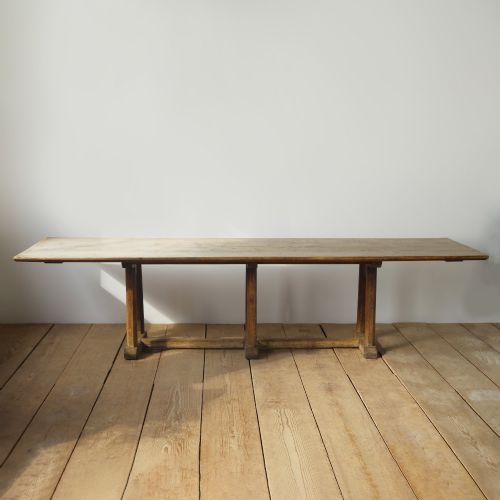
A rustic trestle table combines enduring practicality with architectural simplicity, featuring a top supported by upright legs connected to a central stretcher. These pieces serve primarily as dining tables, tavern tables, console tables, and coffee tables within domestic spaces.
The selection here draws from multiple eras, ranging from seventeenth century oak examples to nineteenth century pine and sycamore pieces. French provincial and primitive country styles dominate the forms, reflecting utilitarian origins in farmhouses, laundries, and taverns.
Buyers frequently encounter nineteenth century French scrubbed pine and oak variants alongside earlier seventeenth century oak pieces. These forms adapt easily to contemporary dining rooms and kitchens while retaining their historical character.
Materials and construction
Construction relies upon solid timber including oak, pine, softwood, sycamore, and fruitwood, occasionally incorporating iron elements for structural reinforcement. Surfaces often appear scrubbed or weathered through years of service, revealing the natural grain and texture of the wood.
Joinery techniques reflect traditional workshop methods appropriate for utilitarian furniture built to withstand heavy daily use. Timbers are selected for durability, resulting in dense oak or softer pine surfaces that acquire deep patinas over centuries.
Retail Price Guide 2026
Typical UK retail prices for rustic trestle table, calculated from the Sellingantiques database of over a million retail prices indexed since 2003. This retail price guide relies exclusively on Sellingantiques data; no external sources or auction records are used, so the figures do not describe the wider market.
The listings span from the seventeenth century to the twentieth century, utilising oak, pine, sycamore, fruitwood, and iron.
Distinctions in quality
Quality rests upon the integrity of the timber, the depth of the natural patina, and the proportion of the trestle supports. Tables featuring earlier seventeenth century oak construction command attention for their survival and structural honesty compared to later nineteenth century pine counterparts.
The character of the surface finish dictates visual success, where a fine, untouched patina elevates a simple softwood board. Subtle tool marks and honest wear distinguish a genuine working table from later interpretations.
The Rustic Trestle Table Glossary
- Trestle table
- A board resting on upright supports or feet connected by a longitudinal beam. This ancient form provides maximum legroom along the length of the top.
- Patina
- The surface sheen and colour developed by wood through age, use, and waxing. It reveals the history of the material.
- Scrubbed pine
- Softwood surfaces cleaned repeatedly with water and scrubbing brushes, resulting in a pale, clean timber texture. This finish is typical of French laundry and farmhouse tables.
- Stretcher
- A horizontal timber connecting the legs of a table to provide lateral stability. It often shows wear from the feet of diners resting upon it.
- Primitive country
- A style of furniture making defined by direct construction methods and minimal ornamentation. These pieces prioritise function over academic design.
Frequently Asked Questions
How do I date a trestle table?
Dating relies on observing construction marks, timber species, and joint types. Earlier pieces from the seventeenth century utilise heavy oak and pegged joints.
Later nineteenth century examples often employ pine or softwood with simpler fixings. Examining the natural wear patterns helps confirm the age of the timber.
Can I use these for daily dining?
These tables were originally built for heavy daily work in farmhouses and taverns. Their robust construction makes them well-suited for modern family dining.
Care should be taken with untreated timber surfaces regarding moisture and heat. Using placemats helps protect the historical patina from accidental stains.
What is a scrubbed finish?
A scrubbed finish results from years of vigorous cleaning with water and stiff brushes to maintain hygiene on kitchen and laundry tables. This process removes old dark finishes and exposes the pale grain of the pine.
Collectors prize this appearance for its clean, tactile quality. It provides a lighter aesthetic in contemporary interior schemes.
How do I care for weathered timber?
Weathered timber benefits from gentle dusting and occasional waxing with a traditional beeswax. Avoid harsh chemical cleaners that strip the natural oils and dry out the grain.
Allowing the wood to breathe preserves the historical surface. Minor spills should be wiped promptly to prevent ring marks.