
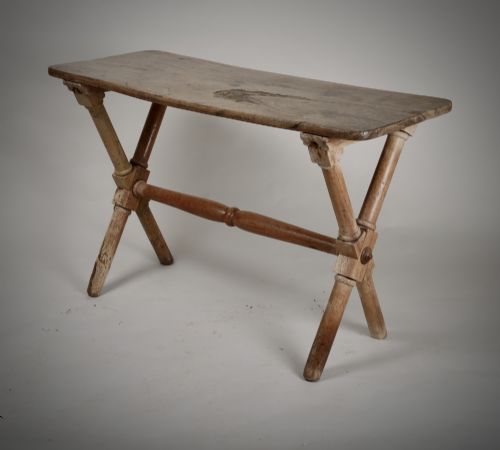


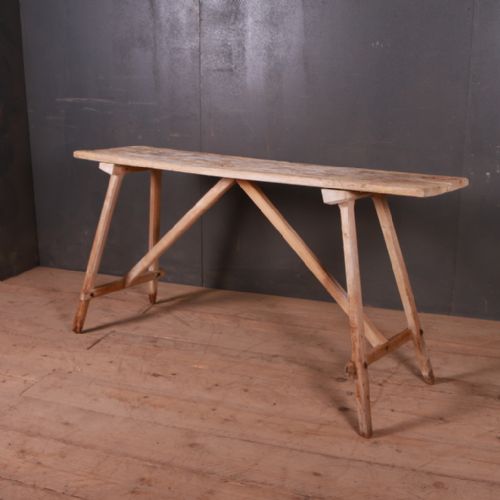

Pale Timber Trestle Table
A pale timber trestle table brings structural honesty and a washed light to a room, offering enduring utility for daily gatherings.
Pale Timber Trestle Table
When you search for a pale timber trestle table, you encounter robust utility surfaces shaped by domestic and provincial traditions. These forms include dining tables, refectory tables, tavern tables, console tables, and preparation tables designed for practical service.
The versions you meet most frequently on this page originate from the nineteenth century, spanning decades such as 1880, 1890, 1910, and 1920. French country and provincial aesthetics dominate, alongside English country house and Scandinavian country examples.
Configurations rely on the traditional trestle architecture, pairing substantial plank tops with supportive end bases or trestle supports. The character stems from utilitarian roots where timber surfaces endure generations of domestic or preparation work.
How they were made
Construction relies on solid hardwoods and softwoods selected for functional strength, utilising oak, pine, elm, sycamore, poplar, and painted wood. Timber is joined to form thick plank tops that sit securely upon sturdy trestle bases.
Surfaces often show the evidence of historical scrubbing, bleaching, or stripping to reveal the pale grain of the underlying timber. This treatment removes dark historical finishes to highlight the natural texture of the scrubbed sycamore, elm, oak, or poplar.
Listings feature periods spanning the nineteenth century alongside dates from 1880, 1890, 1910, and 1920.
What varies in quality
Quality rests in the integrity of the timber selection and the harmony between the top boards and the trestle base. Superior examples display mature grain patterns in woods like elm and oak, joined with structural clarity.
The depth of the scrubbed or bleached finish dictates visual appeal, where balanced patination elevates the piece without masking the natural material.
The Pale Timber Trestle Table Glossary
- Trestle table
- A table consisting of a horizontal top supported by two vertical legs or frames at each end. This design provides maximum legroom and structural stability.
- Scrubbed finish
- A surface repeatedly washed with water and scrubbing agents over generations to remove dark wax or dirt. This process leaves the timber pale and clean.
- Refectory table
- A long, narrow dining table historically used in monastic or communal dining halls. These surfaces emphasise length and sturdy baseline construction.
- Preparation table
- A heavy utilitarian table used in domestic kitchens or dairies for food work. They prioritize robust tops able to withstand daily domestic tasks.
Pale Timber Trestle Table: Frequently Asked Questions
What defines a trestle table?
A trestle table uses a distinct base where two or more vertical supports hold up a horizontal top. This architecture dispenses with traditional corner legs.
Such a configuration allows uninterrupted seating along the length of the table, making these pieces practical for dining and daily gatherings.
Where were these tables made?
The pieces originate from various European domestic traditions, notably French provincial workshops, English country houses, and Scandinavian interiors. Makers utilised local timbers available in their specific regions.
Regional preferences influenced whether builders chose oak, elm, sycamore, or poplar for the construction of the tops and trestle bases.
How should I care for pale timber?
Pale timber surfaces benefit from gentle cleaning using dry or barely damp cloths to preserve the natural grain. Avoid harsh chemical polishes that darken the wood.
Maintaining the dry, scrubbed texture relies on protecting the top from excessive moisture while allowing the natural patina to develop over time.
How do I date a nineteenth-century table?
Dating relies on observing construction methods, tool marks, timber shrinkage, and the wear patterns on the trestle supports. Nineteenth-century examples often display hand-planed surfaces and traditional joinery.
Comparing the specific wood species and finish style against regional furniture traditions helps narrow the period of origin within the century.