


Country House Trestle Table
A country house trestle table brings sturdy timber and honest utility to a dining room, combining historical weight with practical dining space.
Country House Trestle Table
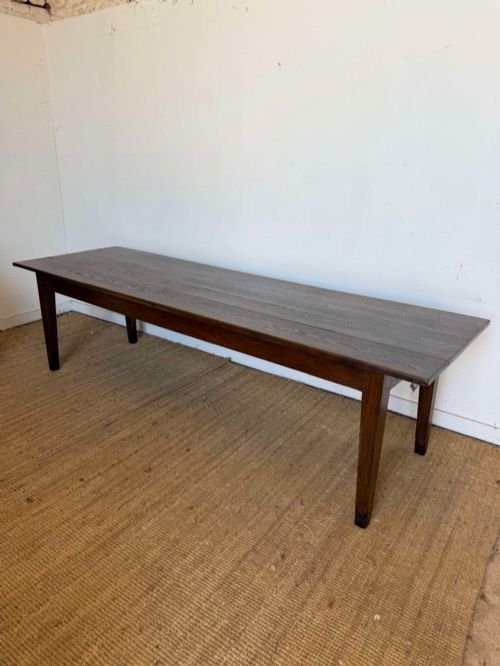
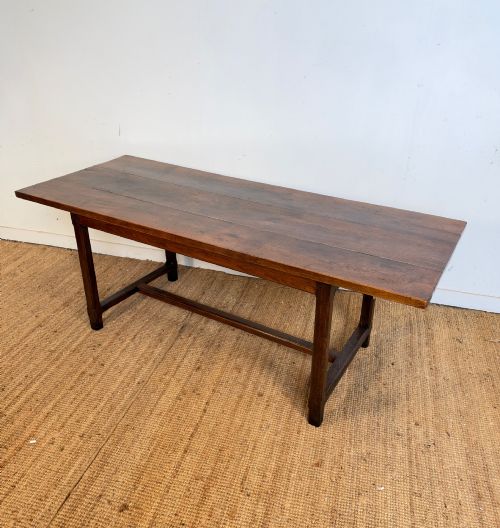
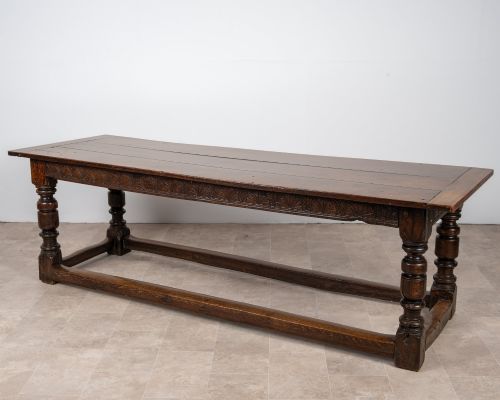
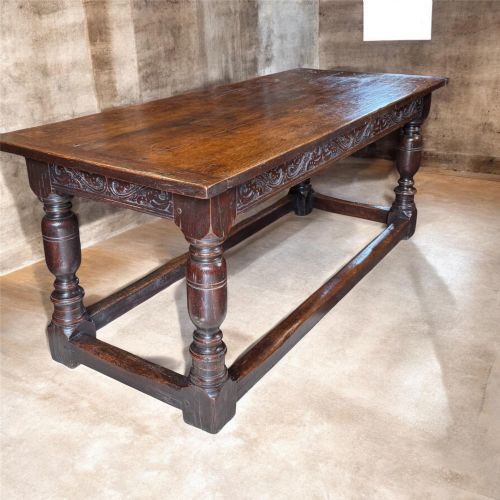
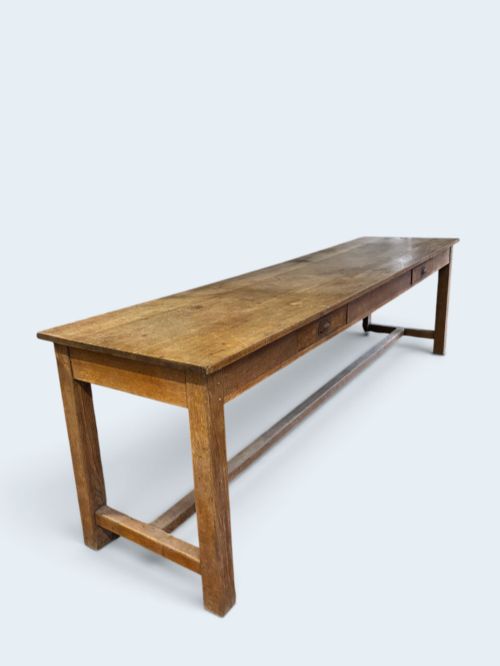
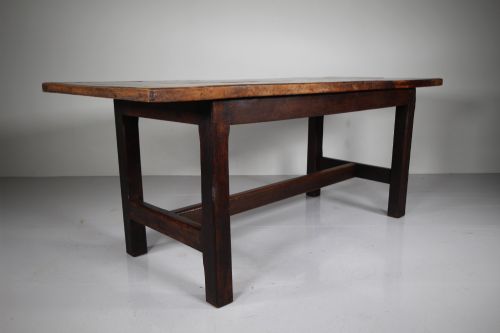
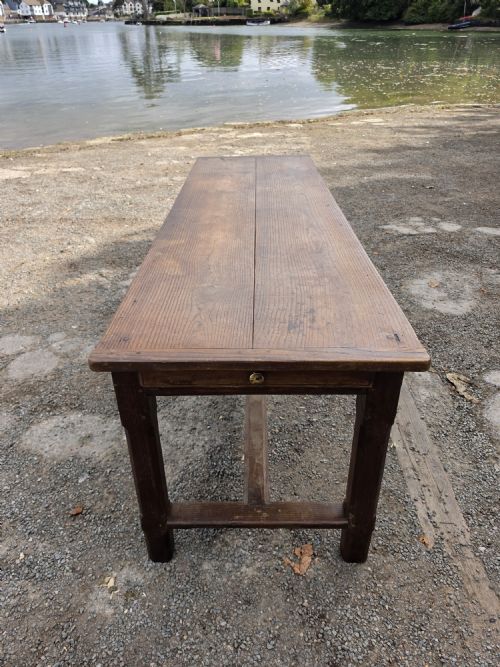
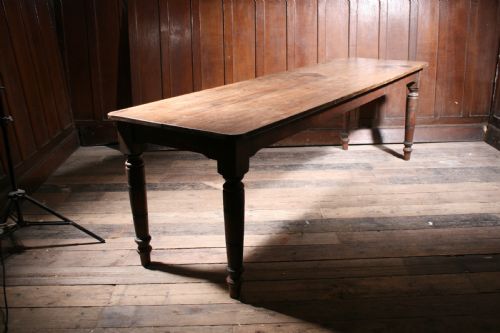
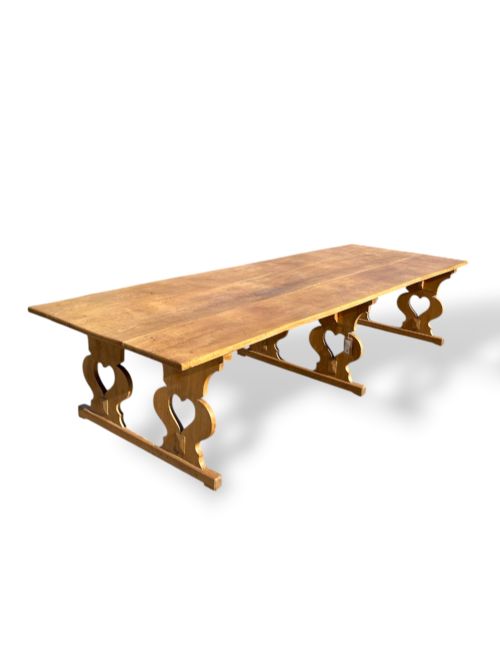
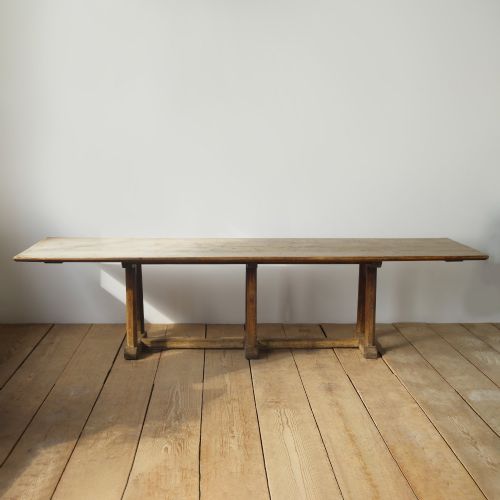
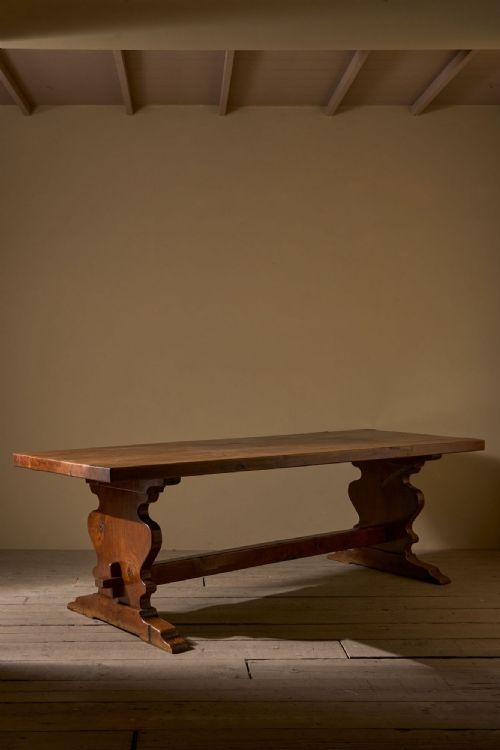
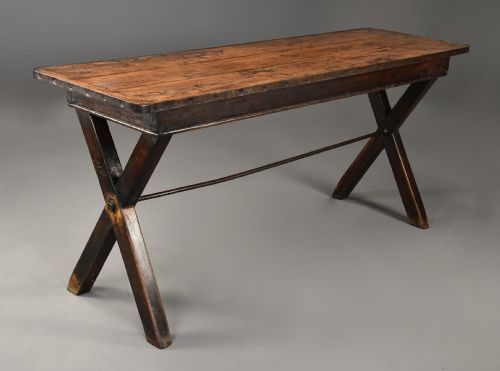
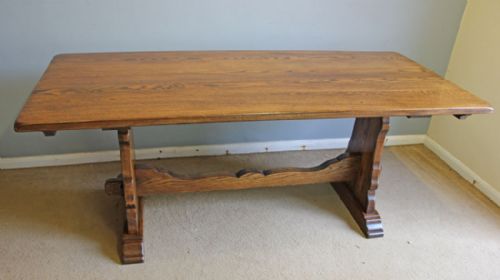
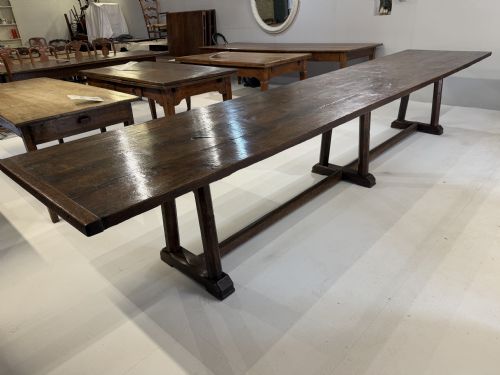
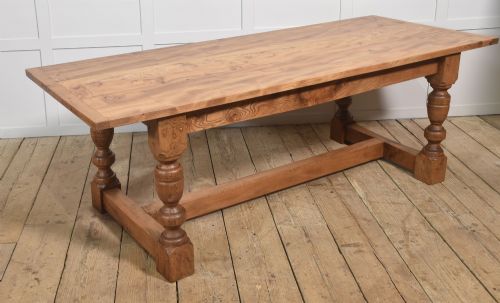
A country house trestle table represents a robust tradition of domestic furniture, appearing in formats ranging from extended refectory designs to X-frame tavern bases. These pieces emerge predominantly from the seventeenth, eighteenth, and nineteenth centuries, reflecting long periods of daily communal use in large domestic settings. Oak and pine dominate the selection, often taking the form of substantial dining boards supported by end trestles rather than conventional corner legs.
Buyers seeking a country house trestle table encounter examples shaped by both English farmhouse traditions and continental workshops, including French provincial and Swedish formats. The grouping includes related refectory and tavern forms that share the long, narrow proportions suited to communal dining. Surviving examples frequently show the marks of decades of service in kitchens, servants' halls, and great rooms.
Materials and Construction
Solid timber forms the core of these pieces, with oak, elm, and walnut providing the structural strength required for heavy tops and stable base assemblies. Joinery relies on traditional pegged mortise and tenon joints, allowing large boards to expand and contract with seasonal changes in humidity. Secondary timbers such as pine or poplar occasionally appear in underframes and internal framing.
Surface preparation varies from unpainted scrubbed timber showing the natural grain to historic painted finishes in red or neutral tones. Many boards display the warm surface development known as patina, achieved through generations of scrubbing, polishing, and natural wear.
Country House Trestle Table Retail Price Guide 2026
Typical asking prices for country house trestle table among the pieces listed under this phrase on Sellingantiques today, from the lower quarter to the upper quarter. They describe what is for sale here now, not the wider market.
Listings feature solid oak, pine, elm, walnut, and mahogany across centuries ranging from the 17th to the 20th.
Quality and Character
The distinction between standard examples and exceptional pieces rests on the integrity of the timber and the honesty of the surface wear. Tables retaining their original base construction and thick top boards command greater interest than those altered or substantially re-timbered over time. Evidence of period construction methods, such as hand-cut pegging and deep historical patination, elevates a piece beyond basic utility.
Proportion and scale also govern desirability, with longer, wider boards suitable for modern seating requiring careful assessment of structural stability. The presence of original paint finishes, where documented, adds a layer of historical survival that distinguishes regional vernacular pieces from standard commercial workshop production.
The Country House Trestle Table Glossary
- Trestle
- A support consisting of a horizontal beam fixed to two splayed legs, used in pairs to hold up a long table top.
- Refectory table
- A long, narrow dining table traditionally used in monastic dining halls and later adopted in large country houses.
- Patina
- The surface sheen and softening of wood colour developed through decades of handling, cleaning, and light exposure.
- X-frame
- A structural base formed by two intersecting diagonal timbers that create an X shape when viewed from the end.
- Peg joinery
- A method of securing timber joints using wooden dowels rather than metal fasteners.
Country House Trestle Table: Frequently Asked Questions
How do I seat people around a trestle base?
Trestle supports place the legs at either end of the board rather than the corners, which allows benches or chairs to slide fully underneath the long sides without obstruction.
This design maximises legroom along the length of the table, making it easier to accommodate larger groups for dining.
Are these tables suitable for everyday family use?
Solid timber construction and pegged joints provide the structural resilience needed for daily kitchen or dining room activities.
Existing marks and historical wear mean that modern use simply adds to the ongoing narrative of the timber.
How do I distinguish an 18th-century top from a later replacement?
Examining the underside reveals the grain direction, tool marks, and integration with the cleats or support battens that indicate period hand-working.
Consistency in timber shrinkage and matching wear patterns between the top boards and the base confirm original association.
Why do some tables have scrubbed tops while others are polished?
Scrubbed surfaces result from traditional kitchen maintenance where staff scoured the softwood or hardwood boards with sand and water to keep them clean.
Polished finishes reflect formal dining rooms where wax and cloth maintained a rich sheen over the oak or walnut grain.