
Vintage Trestle Table
A vintage trestle table provides sturdy, honest support for daily meals and gatherings, shaped by decades of reliable service in homes and institutions.
Vintage Trestle Table
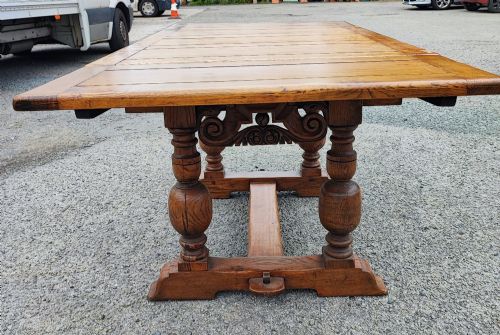
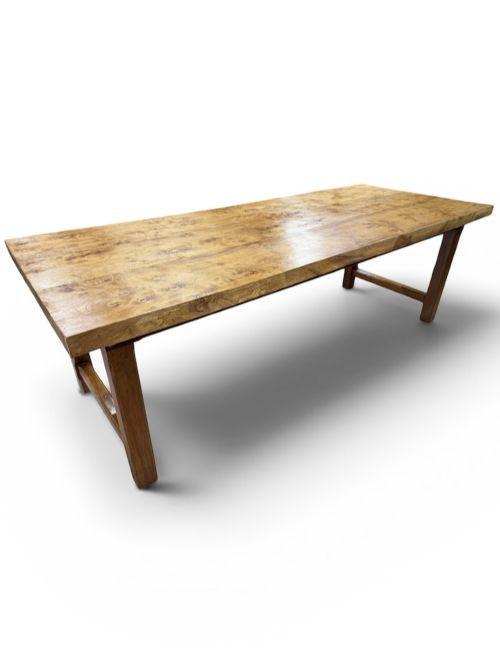
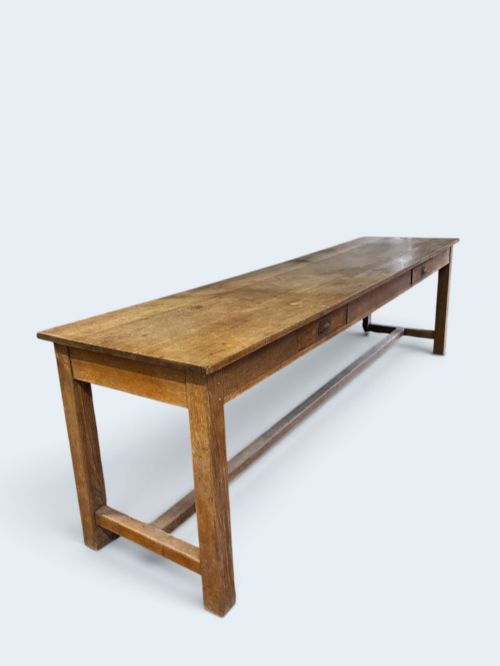
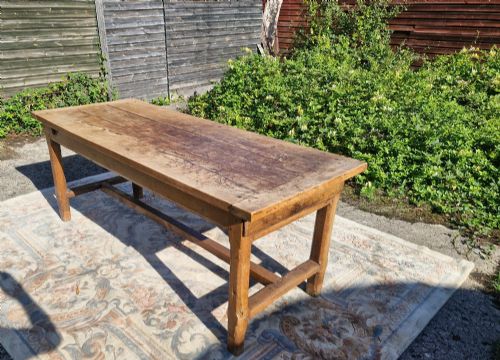
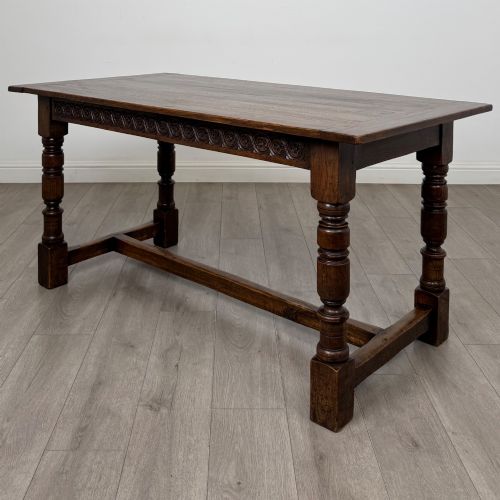
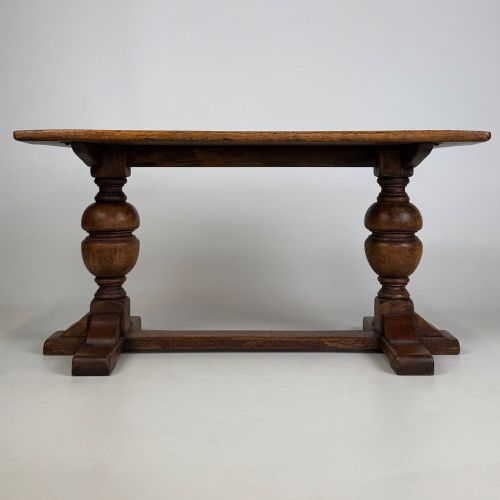
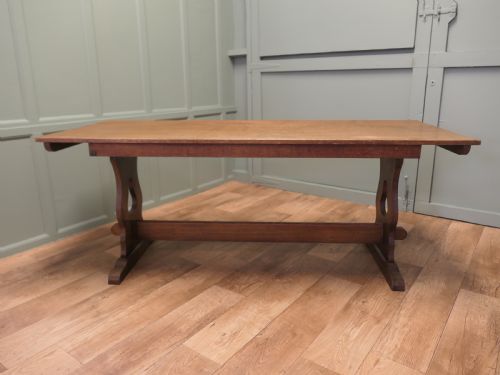
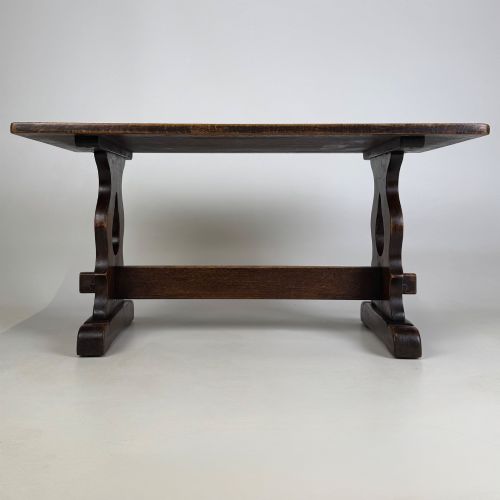
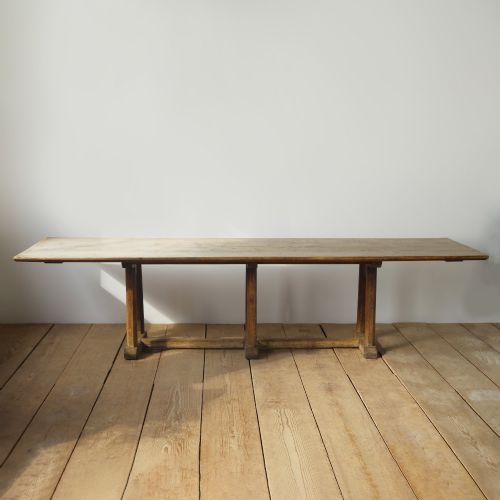
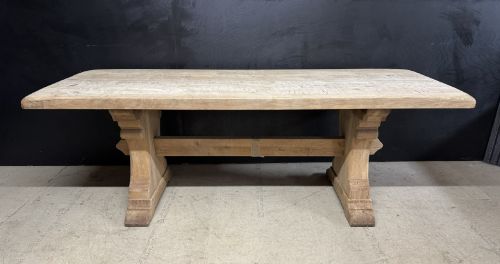
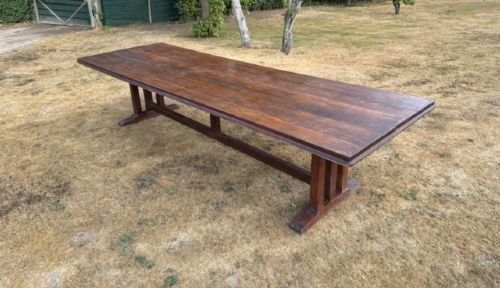
A vintage trestle table comprises a long horizontal top supported by vertical end assemblies rather than four corner legs. This category encompasses sturdy refectory pieces, farmhouse kitchen surfaces, and substantial library tables.
The most common examples on this page are constructed from oak, though pine, mahogany, and walnut also appear. These tables span several eras, from nineteenth-century tavern designs to twentieth-century refectory styles.
Functions extend from large dining surfaces to smaller coffee tables, benches, and side pieces. The form lends itself naturally to communal seating because the end supports leave ample legroom along the length.
Materials and construction
Construction relies heavily on solid timber, notably oak and pine, alongside mahogany and walnut for finer examples. Tops are frequently formed from heavy planks joined together, sometimes featuring draw leaf extension mechanisms.
Iron components provide structural reinforcement in certain pieces, particularly where trestle ends meet the main surface. Joinery utilises traditional methods appropriate to the period, ensuring rigidity across large spans.
Listings span periods from the eighteenth to the mid-twentieth century, incorporating Edwardian and Victorian examples alongside vernacular farmhouse forms.
Assessing quality in construction
Quality rests upon the selection of timber and the integrity of the joinery connecting the top to the trestle base. Heavy solid oak pieces with well-proportioned supports command greater presence than lighter or more modified examples.
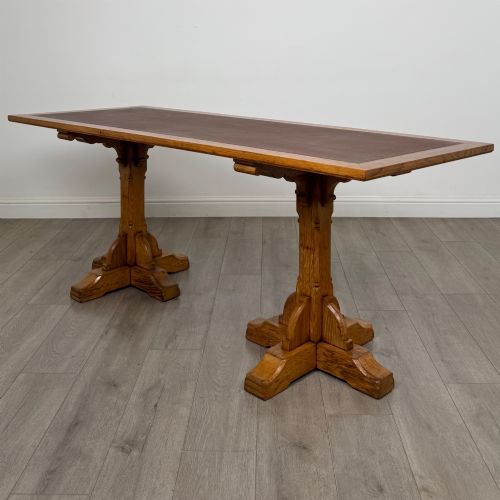
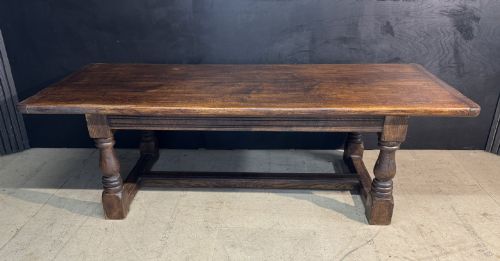
The degree of carving and the finish of the wood distinguish utilitarian tables from decorative pieces such as Arts and Crafts or Jacobean Revival commissions.
The Vintage Trestle Table Glossary
- Trestle
- A structural support consisting of a horizontal beam fixed to two vertical feet or frames. This design distributes weight evenly and eliminates corner legs.
- Draw leaf table
- A table with sliding leaves stored beneath the main top that pull out to extend the surface length. This mechanism appears on several oak dining examples.
- Jacobean Revival
- A nineteenth- or twentieth-century decorative style imitating seventeenth-century English furniture. Pieces in this style often display dark timber, heavy turnings, and carved detailing.
Vintage Trestle Table: Frequently Asked Questions
How do I choose the right size?
Measure your available floor space carefully while accounting for chairs or benches placed along the sides. Trestle designs allow diners to sit comfortably near the ends because there are no corner legs in the way.
Consider the daily use of the surface, whether for family meals, working, or display. Longer refectory versions require generous clearance around all sides to maintain balance in a room.
What woods were used for these tables?
Oak is the predominant timber found across these listings, appearing in solid form, golden tones, and darker revival finishes. Pine, mahogany, walnut, and teak also feature in specific regional or period pieces.
Each timber brings a distinct weight and grain pattern to the design. Oak provides exceptional rigidity for large dining surfaces, whereas pitch pine offers a lighter appearance.
Are benches usually included?
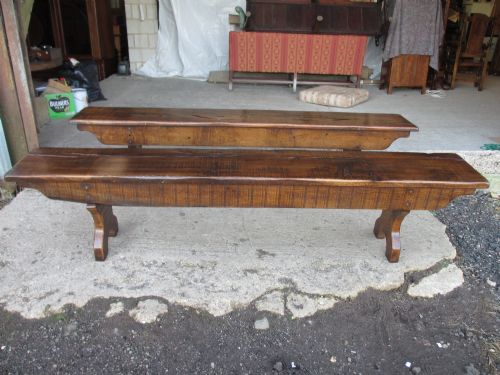
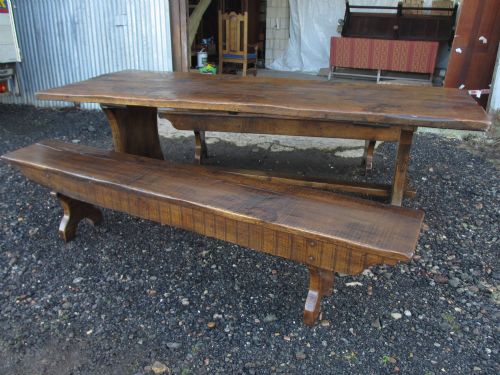
Some listings pair the table with matching benches featuring shaped trestle ends, while others offer the table alone. Benches provide a traditional communal seating arrangement that tucks neatly underneath.
Check the individual description to confirm whether seating is part of the package. Standalone benches also appear separately across the inventory.
How do I date a table?
Dating relies on stylistic clues, construction methods, and materials recorded by the dealer. Arts and Crafts examples often show simpler, honest joinery, whereas Jacobean Revival pieces display heavy geometric carving.
References to Edwardian periods or specific decades provide a baseline for age. Examining the timber preparation and fastener types helps confirm the era of manufacture.