
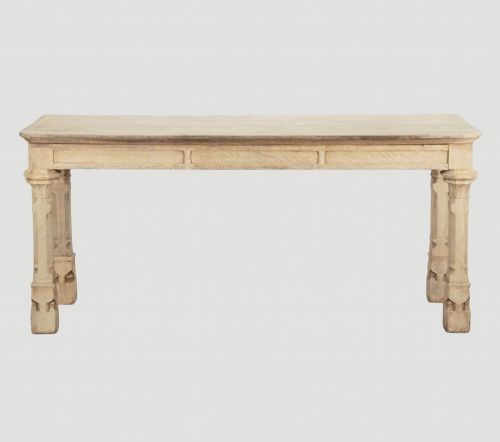


Bleached Wood Console
These bleached wood console tables bring pale, dry timber surfaces and clean historical lines to modern rooms.
Bleached Wood Console
A bleached wood console represents a practical form of antique table adapted through stripping or historical weathering to show pale, matte surfaces. When you search for this phrase, you encounter forms that began life as serving tables, drapers tables, potboard dressers, and dedicated hall consoles.
The selection on this page draws heavily from nineteenth-century examples alongside eighteenth-century origins and later country pieces. French provincial styles, English country pieces, and Spanish traditional designs dominate the forms, offering sturdy timber frames stripped of dark original finishes.
Most items you meet here rely on oak, bleached oak, and mahogany, supported by occasional uses of pine, walnut, and ash. Their structural forms include trestle bases, serving tables with potboards, and D-end configurations suited to narrow spaces.
What varies in quality
The distinction between ordinary and exceptional tables rests on timber selection and the integrity of the original construction. Dense grain patterns in oak and finely figured mahogany elevate certain examples above simpler pine or utility pieces.
Proportion and surface texture dictate visual success in these items. Tables retaining honest marks of past use alongside well-balanced structural proportions command stronger interest from collectors.
Several tables retain the honest scars of dairy work and fabric folding, ready for a much quieter retirement holding house plants and post.
The Bleached Wood Console Glossary
- Console table
- A table designed to stand against a wall, traditionally supported by brackets or legs. These pieces often feature shallow depths suited to hallways and reception rooms.
- Drapers table
- A long, utilitarian table originally used in textile shops for folding cloth. They typically feature sturdy trestle or four-leg bases with generous working surfaces.
- Potboard dresser
- A sideboard or dresser base featuring an open lower shelf used historically for storing pots and heavy kitchenware. This lower tier provides structural stability to the base.
- Trestle table
- A table construction where the top is supported by two or more upright frames connected by a horizontal beam. This design offers maximum legroom along the length of the table.
- Bleached wood
- Timber treated to remove dark historical polishes, stains, or varnishes, revealing a lighter natural tone. The process leaves the grain exposed with a dry, matte appearance.
Bleached Wood Console: Frequently Asked Questions
Where should I place a console table?
These tables fit naturally in narrow hallways, entrance spaces, and behind living room seating where a shallow profile is required. Their pale timber tones blend easily with neutral interiors.
They also function effectively as serving surfaces in dining rooms or as modest writing desks in home offices.
How do I clean bleached wood furniture?
Maintain the dry, matte appearance of bleached timber by dusting regularly with a soft, dry cloth. Avoid using silicone polishes or heavy waxes that might darken the grain.
Spills should be blotted immediately with a damp cloth to prevent marking the untreated surface of the wood.
Are these tables suitable for daily dining?
Many trestle and drapers tables in this category were built for heavy domestic or commercial work, making them robust enough for everyday use. Their solid timber construction handles daily activity well.
Protective mats help guard the scrubbed wooden surface against moisture and heat during meals.
How can I tell an older console from a later copy?
Examine the underside and joints for traditional hand-cut joinery, timber shrinkage, and signs of genuine historical wear. Eighteenth and nineteenth-century pieces display tool marks consistent with period workshop practices.
Screws, fixings, and timber patination also provide reliable clues to the actual age of the frame.