

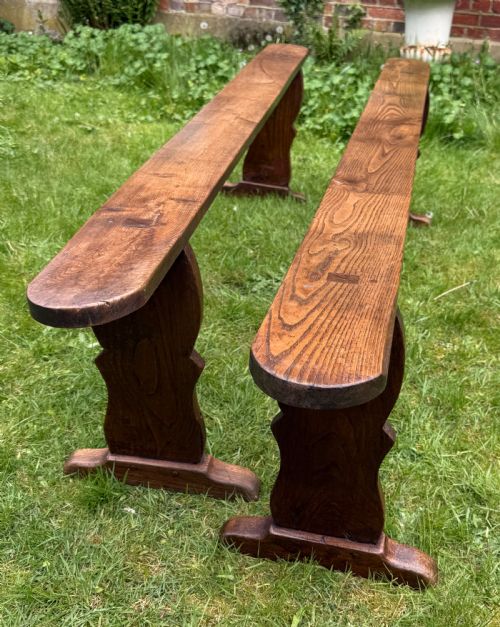
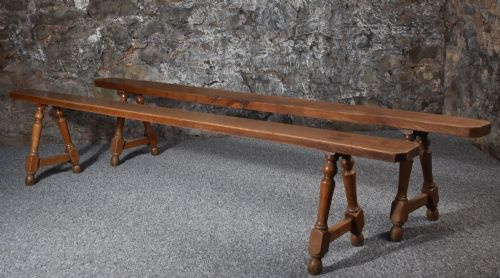
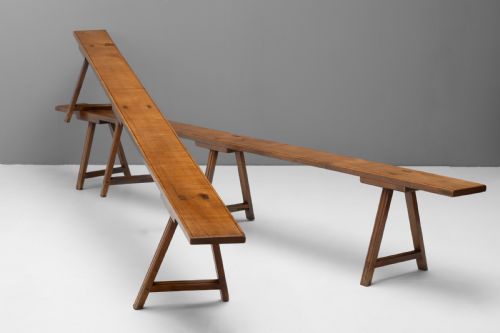
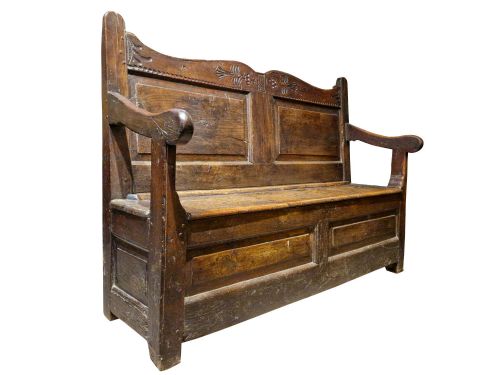


French Rustic Wooden Bench
A french rustic wooden bench brings honest provincial character to a room, offering practical seating shaped by daily domestic or workshop use.
French Rustic Wooden Bench
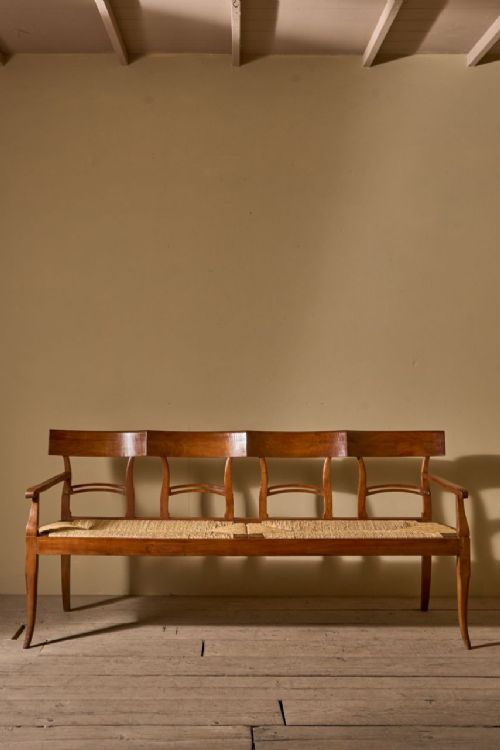
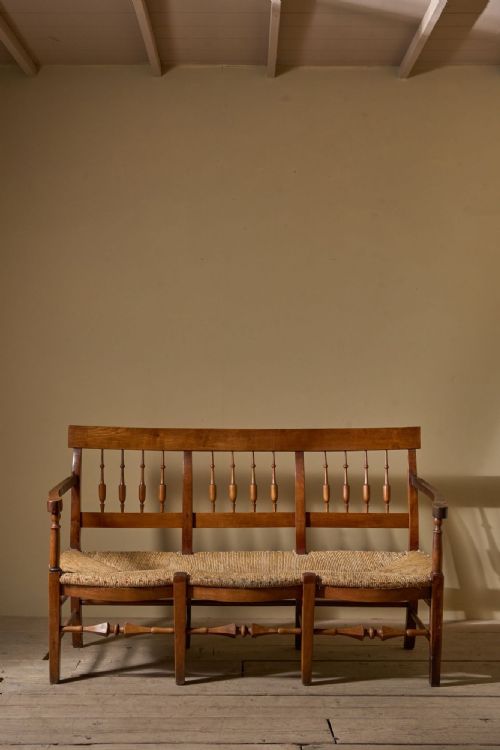
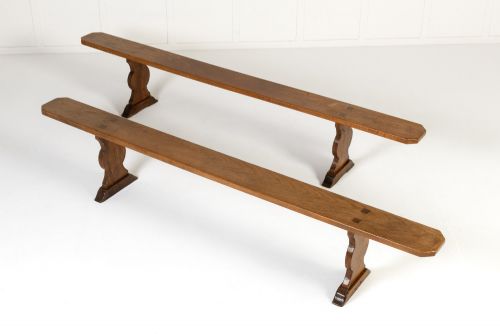
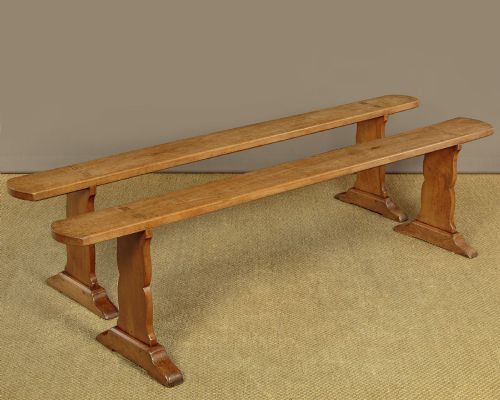
When you search for a french rustic wooden bench, you encounter sturdy utilitarian seating originating from provincial farmhouses, halls, and work spaces. These forms include long dining benches, narrow hall benches with rush seats, and heavy settles designed for warmth.
The selections span from the eighteenth century through the early twentieth century, capturing regional traditions across France. Oak, cherrywood, and elm dominate the available formats, often shaped by local carpenters who prioritized function over ornamentation.
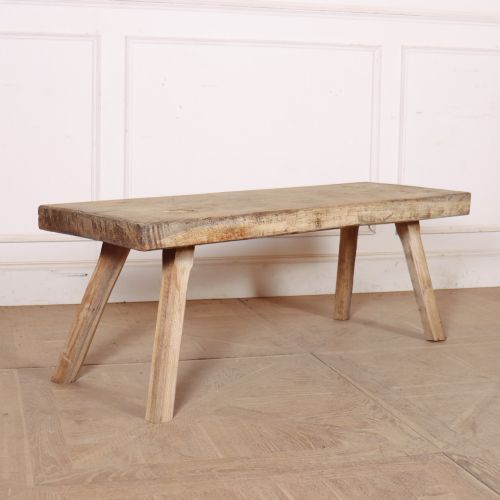
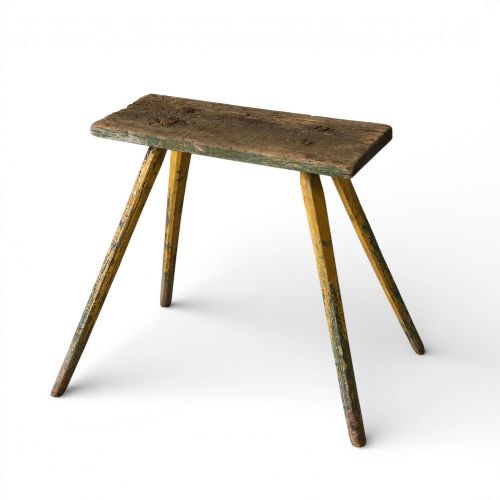
Shorter stool variants and cobblers' benches also appear within this category, representing the broader vernacular furniture tradition. Each piece reflects the specific demands of rural life, from milking to communal dining.
Materials and Construction
Construction relies heavily on native timbers such as cherrywood, sycamore, pine, and elm, selected for local availability and toughness. Carpenters joined heavy planks using traditional pegged mortise and tenon joints to withstand sustained physical strain.
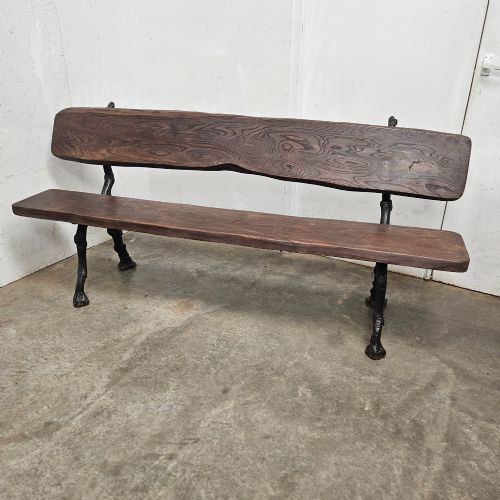
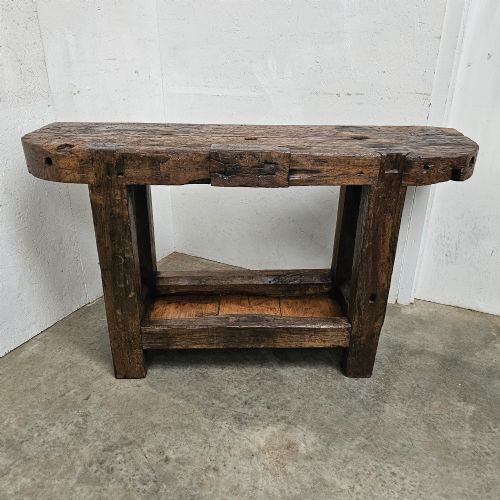
Surfaces frequently show the marks of hand tools, adzes, and scratch-built assembly methods rather than mass-produced uniformity. Some examples integrate iron components, like faux bois frames or vices, alongside original painted finishes.
Among the workbenches and dining seating, a charmingly utilitarian cobblers bench survives to remind us of provincial trades long vanished.
Assessing Quality and Character
Quality rests in the integrity of the timber, the depth of patination accumulated through decades of use, and the honesty of the construction. Pieces that retain original paint surfaces or untouched scrubbed grain command greater interest.
Proportion and scale distinguish standard utility items from exceptional provincial examples. A well-balanced frame with tight joints and minimal structural replacement represents the highest standard of these regional pieces.
The French Rustic Wooden Bench Glossary
- Rush
- A marsh plant used for traditional woven seating bottoms. It provides a flexible, textured surface common on provincial hall benches.
- Settle
- A wooden bench with a high back and solid arms designed to block drafts. Box-seated variants incorporate storage beneath the hinged lid.
- Faux Bois
- A decorative technique imitating wood grain, executed here in iron for garden seating. It mimics organic forms through durable metalwork.
- Trestle
- A structural support consisting of a horizontal beam fixed to two splayed legs. This design maximises legroom for long dining benches and tables.
- Scrubbed
- A surface finish resulting from vigorous cleaning with water and sand to remove grime. This process reveals the pale, clean grain of sycamore, pine, or oak.
French Rustic Wooden Bench: Frequently Asked Questions
Where should I place a long wooden bench?
These benches fit naturally along a dining table, in a wide hallway, or against a plain wall as a display surface. Their narrow depth allows them to occupy circulation spaces without blocking movement.
In living areas, they provide linear seating that contrasts with upholstered armchairs. Pair a long cherrywood example with a refectory table for a balanced dining arrangement.
How do I clean an antique wooden bench?
Dust the timber regularly with a dry, soft cloth to prevent particulate buildup in the grain. Avoid modern chemical polishes that can degrade historical wax layers and alter the natural sheen.
If the surface requires deeper cleaning, apply a minimal amount of beeswax using fine wire wool only where necessary. Preserving the dry, scrubbed texture maintains the authentic provincial character of the piece.
Are these benches comfortable for daily dining?
Most provincial benches feature rigid timber or woven rush seats designed for utility rather than lounging. Adding loose linen cushions improves comfort during prolonged seating periods around a dining table.
Height matters significantly when pairing a bench with existing tables. Measure both the floor-to-table clearance and the bench height to ensure proper ergonomic alignment.
How can I tell an older bench from a later copy?
Examine the underside and joints for hand-cut tool marks, pegged joinery, and natural wear patterns consistent with age. Hand-planed boards display subtle undulations and variations in thickness that mechanical saws do not replicate.
Check for consistent patination where hands and clothing made frequent contact over generations. Authentic examples carry honest dents, stains, and minor structural repairs that reflect a working past.