


Rust Wool Tribal Rug
A rust wool tribal rug brings deep earthy warmth and centuries of nomadic artistry directly onto a wooden floor.
Rust Wool Tribal Rug
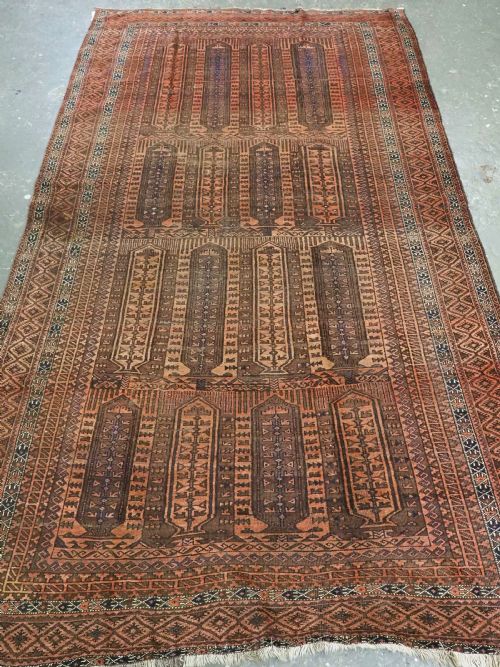
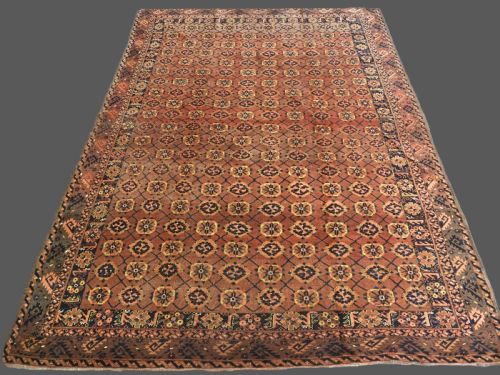
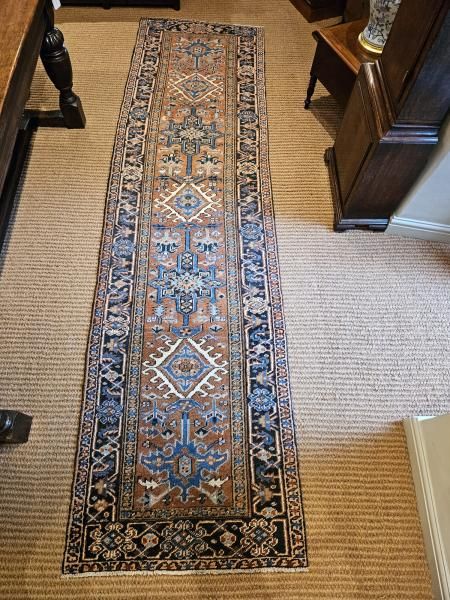
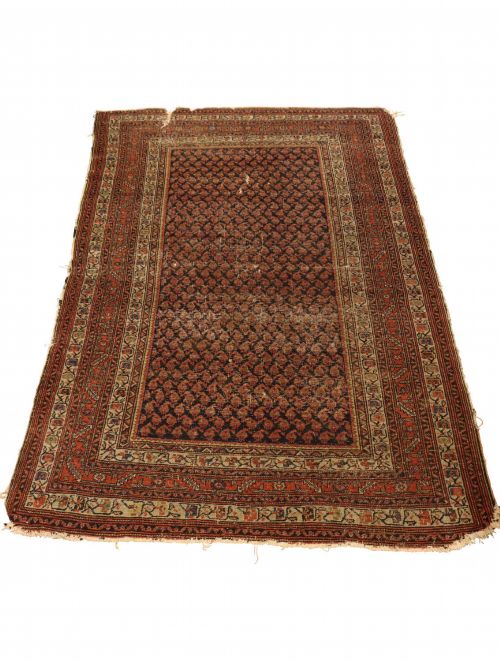
When you search for a rust wool tribal rug, you are looking at hand-knotted and flat-woven floor coverings made by village and nomadic weavers across Persia, Central Asia, and Anatolia. These pieces typically date from the nineteenth century through the early twentieth century, carrying traditional geometric motifs, tribal guls, and vernacular symbols. The version you are most likely to meet on this page is a room-sized carpet or smaller scatter rug produced by groups such as the Baluch, Ersari Turkmen, or Heriz weavers.
The palette relies heavily on rich red, terracotta, and rust tones derived from natural dyestuffs, contrasting with indigo, cream, and madder ground colours. Formats range from narrow runner rugs and square torbas to large country house carpets designed for utilitarian domestic use or ceremonial dowry purposes. Each piece reflects the specific weaving vocabulary of its region, combining functional floor covering with storytelling iconography.
How they were made
The foundation and pile rely primarily on hand-spun wool, often supported by cotton warps and occasional goat hair selvages for structural resilience. Weavers utilised natural dyes extracted from madder roots, walnut shells, and insect sources to achieve the characteristic deep rust and terracotta shades that mature gracefully over decades.
Construction methods involve traditional hand-knotting or flat-weaving techniques on vertical and horizontal looms, producing dense pile surfaces or tightly interlaced kilims. The tension of the weave and the quality of the wool determine the handle, drape, and long-term durability of each textile.
Some nomadic weavers deliberately included tiny wool colour errors, believing perfection belonged solely to the divine.
What varies in quality
Quality in these textiles rests upon the integrity of the natural dyes and the consistency of the wool spinning. Superior examples exhibit depth of colour and subtle abrash where dye batches shift naturally across the surface.
Knot density and the precision of the tribal motifs also distinguish standard village production from finer workshop or dowry pieces. A well-balanced composition with crisp drawing indicates a master weaver working within established tribal traditions.
The Rust Wool Tribal Rug Glossary
- Gul
- A repeating medallion or octagonal motif frequently found in Turkmen and Baluch tribal rugs. Each pattern often identifies the specific clan or tribe that wove the textile.
- Abrash
- Variation in colour shading within a single field of a rug, caused by distinct dye batches or changes in wool supplies over the weaving period.
- Torba
- A small storage bag or wall hanging traditionally produced by Turkmen nomads for domestic use inside a yurt. These pieces often feature highly intricate borders and medallion designs.
- Kilim
- A flat-woven carpet or rug made without a pile by tightly interweaving warp and weft strands. This technique creates a lightweight, reversible textile with sharp geometric patterns.
- Boteh
- An ancient almond-shaped motif with a curved upper tip, symbolising life and eternity. It appears frequently in Persian and regional tribal weaving variations.
Rust Wool Tribal Rug: Frequently Asked Questions
How do I care for an antique wool rug?
Vacuum gently using suction only without a rotating brush roll to protect the delicate wool pile and aged foundation fibres.
Keep the textile out of direct sunlight to prevent natural dyes from fading over time and rotate the rug periodically for even wear.
Where were these tribal rugs originally made?
Weavers produced these textiles across rural villages and nomadic encampments throughout Persia, the Caucasus, and Central Asia. Specific groups such as the Baluch, Ersari Turkmen, and Kurdish tribes created distinct regional designs.
Each weaving region utilised locally available materials and passed down specific geometric vocabularies through generations of families.
How can I tell the age of a tribal rug?
Age is determined by examining the natural dye palette, wool consistency, structural wear patterns, and traditional tribal design elements. Nineteenth-century pieces often display organic irregularities and softer handle characteristics.
Machine-spun wool, synthetic aniline dyes, and rigid cotton foundations generally point towards later mid-twentieth-century or modern production.