
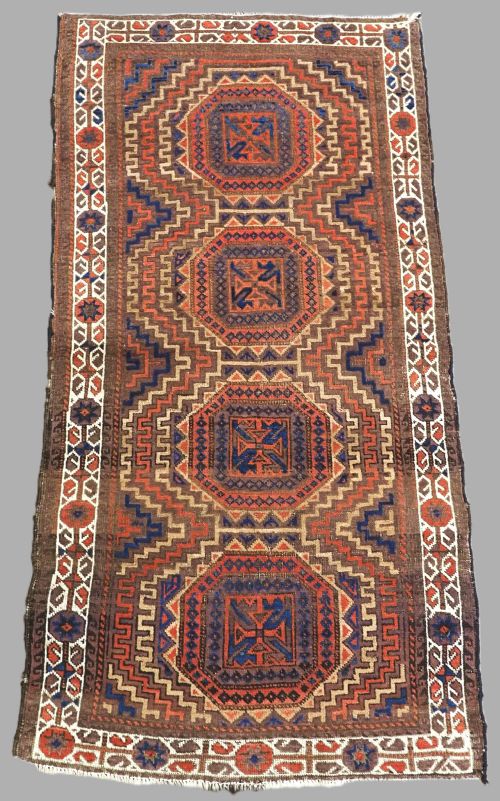
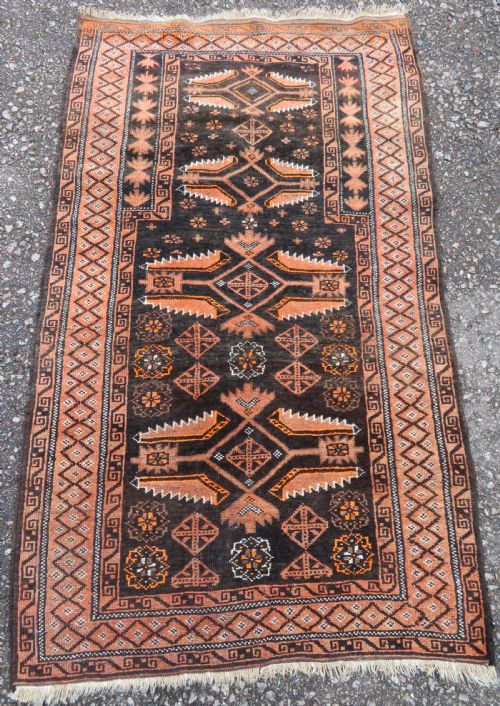


Dark Brown Persian Runner
A dark brown persian runner brings deep, earthy tones and tribal artistry into a hallway.
Dark Brown Persian Runner
A dark brown persian runner is a narrow, elongated carpet originating from the tribal and nomadic weaving traditions of the region. These pieces provide functional floor coverings designed for corridors, hallways, and narrow spaces.
The selections available span from the late nineteenth century into the early decades of the twentieth century. They encompass tribal works attributed to Kurdish, Baluch, Luri, and Shashavan makers.
Buyers encounter long formats featuring repeat geometric motifs, lattice patterns, and deep natural colour palettes dominated by dark brown, indigo, and madder red. These carpets reflect the practical needs and visual vocabulary of nomadic weavers.
Evaluating Quality and Execution
The fineness of the knotting and the tightness of the weave determine structural integrity in longer formats. Denser packing of the wool pile creates greater resilience against heavy foot traffic.
The depth and clarity of the natural dyes distinguish superior examples. Subtle variations in shade across the wool field demonstrate the organic dyeing process.
Nomadic weavers occasionally included tiny bird motifs perched on trees within narrow runner borders, bringing local wildlife directly onto the floor.
The Dark Brown Persian Runner Glossary
- Gul
- A medallion or repeating octagonal motif commonly found in tribal weaving traditions. These designs often identify specific regional groups.
- Pushti
- A small mat or rug designed for sitting or kneeling rather than heavy floor placement. These items display compact tribal patterns.
- Selvedge
- The reinforced outer edge of a carpet that prevents the side cords from fraying. Goat hair is frequently utilised here for extra strength.
- Warp
- The vertical foundation threads stretched tightly on the loom before knotting begins. Cotton or wool serves this structural purpose.
Dark Brown Persian Runner: Frequently Asked Questions
Where should I place a long runner?
These narrow formats suit hallways, corridors, and bedside areas where floor space is restricted. Their elongated proportions guide movement through a home while protecting timber or stone flooring.
Positioning them away from direct continuous heavy traffic preserves the wool pile. Regular rotation ensures even wear over time.
How do I identify a tribal rug?
Tribal carpets display geometric patterns, stylised animals, and repeating medallions rather than formal court designs. The wool often has a slightly rustic texture due to hand-spinning methods.
Irregularities in symmetry and spontaneous shifts in dye colours indicate nomadic production. These characteristics reflect the weaver working from memory rather than a strict cartoon.
Are natural dyes easy to spot?
Natural dyes produce soft, nuanced tones that mellow pleasingly with age rather than fading harshly. Dark brown hues derived from walnut or iron mordants show subtle tonal variations across the pile.
Synthetic aniline dyes introduced later can appear flat or bleed when wet. Organic colourants retain a harmonious relationship with surrounding shades.
How should I clean my antique rug?
Gentle surface vacuuming without a rotating brush removes embedded grit from the wool pile. Professional textile conservators should handle deep washing to protect natural dyes and fragile cotton foundations.
Avoiding excess moisture and direct sunlight prevents fibre degradation. Prompt attention to spills stops staining on unwashed wool.