
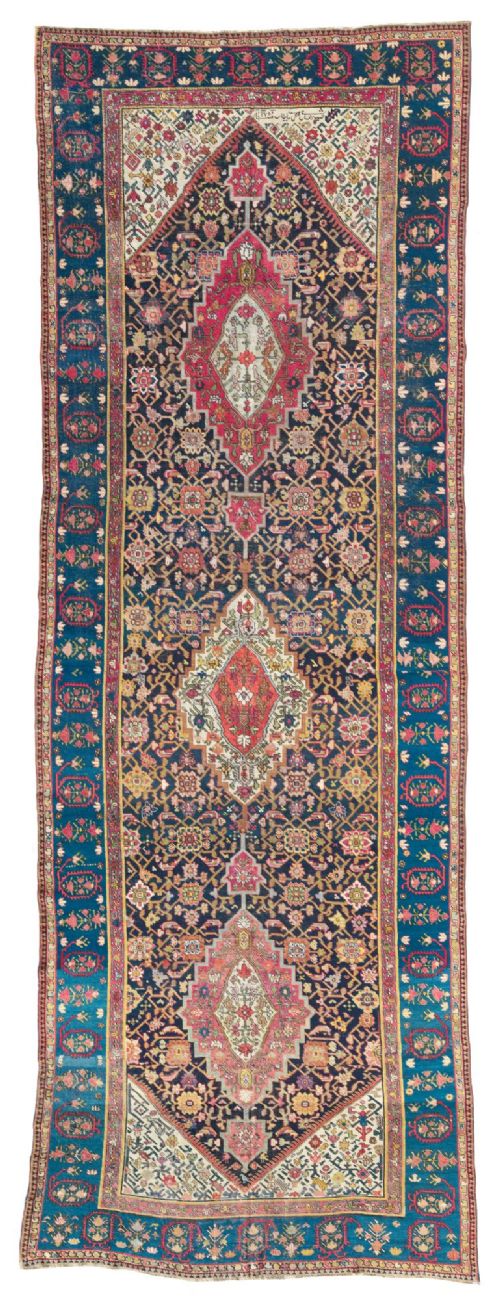
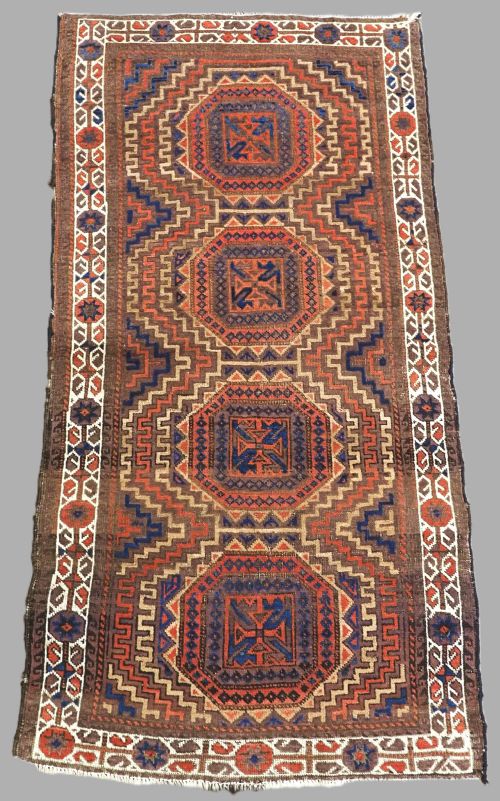
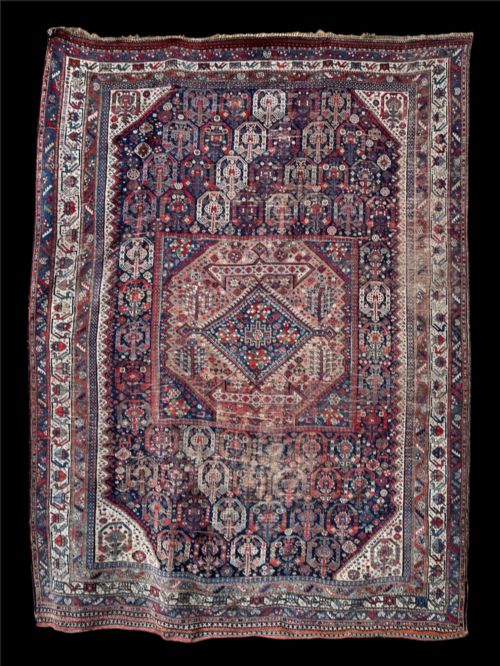
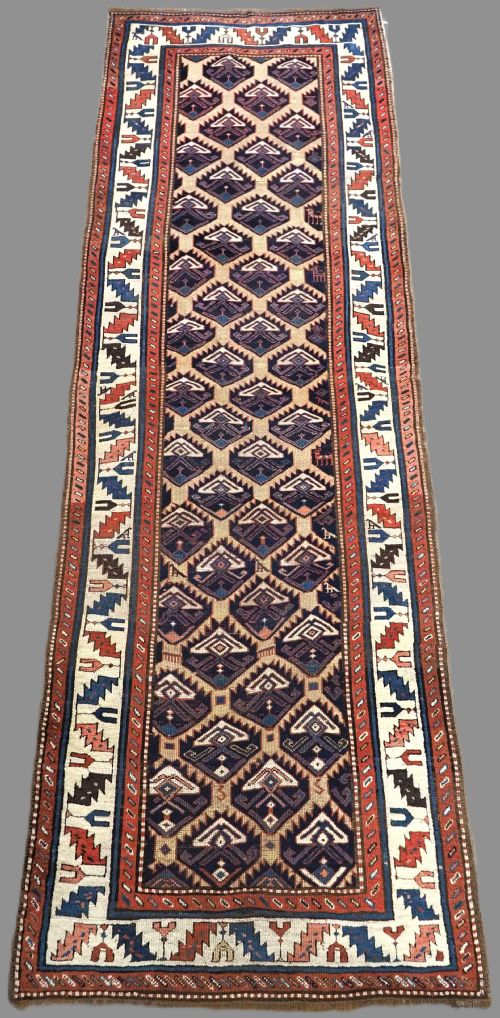

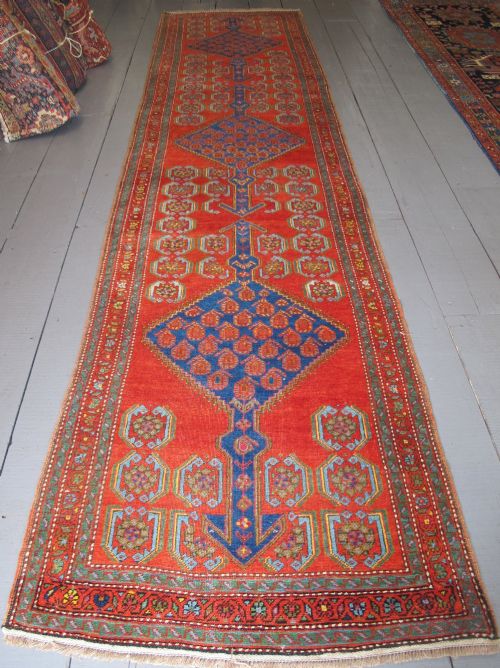


19th Century Persian Runner
When choosing a 19th century persian runner, you are selecting a hand-woven carpet designed to line a hallway or narrow space.
19th Century Persian Runner
A 19th century persian runner represents a specific format of floor covering produced across various regions of Persia during the eighteen hundreds. Buyers search for these pieces to add historical character and durability to corridors, halls and galleries.
The selections on this page encompass narrow formats originating from weaving centres such as Feraghan, Senneh, Hamadan and various tribal confederacies. Village workshops and nomadic weavers contributed these elongated formats to accommodate domestic architecture.
Materials and Construction
Weavers utilised natural wool and cotton foundations, frequently incorporating camel hair and goat hair for structural resilience or distinct colour variations. These organic materials provided the tensile strength required for heavy foot traffic in domestic settings.
Natural dyes sourced from plants and minerals created the characteristic palettes seen across these floor coverings. Skilled dyers achieved deep reds, blues and earthy tones that developed a rich patina over decades of use.
19th Century Persian Runner Retail Price Guide 2026
Typical asking prices for 19th century persian runner among the pieces listed under this phrase on Sellingantiques today, from the lower quarter to the upper quarter. They describe what is for sale here now, not the wider market.
Some weavers smuggled tiny stray animal hairs into the wool pile as a humble signature of nomadic life.
Assessing Craftsmanship
Knot density and structural tightness dictate the refinement of the weave, distinguishing finely detailed city workshops from coarser village or tribal productions. Precision in executing geometric or floral motifs reflects the weaver's level of expertise.
The stability of the wool and the depth of the natural dyes influence the longevity and visual harmony of the piece. Superior examples maintain balanced proportions and crisp pattern definitions along the entire length of the runner.
The 19th Century Persian Runner Glossary
- Kelleh
- A format descriptor for a carpet that is longer than a standard rug but wider than a gallery runner. These proportions suit specific reception rooms and grand hallways.
- Medallion
- A central decorative motif placed in the field of the carpet. Weavers often surrounded this focal point with intricate floral or geometric fills.
- Natural Dyes
- Colourants derived from botanical and mineral sources prior to the widespread introduction of synthetic alternatives. They yield subtle tonal variations known as abrage.
- Seneh
- A town in western Persia renowned for producing finely knotted rugs and runners with delicate boteh or Herati patterns. These pieces demonstrate exceptional technical precision.
19th Century Persian Runner: Frequently Asked Questions
Where should I place a runner?
These narrow formats work best in hallways, corridors, and long entryways where floorboards need protection and warmth. Their elongated proportions also suit gallery spaces and narrow landings.
Positioning them away from direct, harsh sunlight preserves the natural dyes used in the wool. Allowing adequate space around the edges lets the surrounding floor remain visible.
How do I clean a wool runner?
Routine maintenance involves gentle vacuuming without a rotating brush bar to protect the wool pile and foundational warps. Professional cleaning tailored for antique textiles is essential for deeper maintenance.
Spills require immediate blotting with a clean, dry cloth rather than rubbing. Avoiding excessive water and harsh chemical detergents prevents fibre degradation.
Are these runners durable?
The combination of hand-spun wool, cotton foundations, and tight knotting yields a remarkably tough floor covering. Nomadic and village weavers constructed these items to endure generations of daily domestic use.
Placing an appropriate underlay beneath the runner reduces friction against hard floors. This simple step minimises wear and prevents slipping in high-traffic corridors.
How do I distinguish regional styles?
Regional attribution relies on examining the specific knotting technique, palette, and repeat motifs characteristic of different Persian tribes and towns. Village pieces often display bolder geometric designs, while urban workshops favour refined curvilinear patterns.
Comparing border structures and secondary motifs provides further clues to geographic origin. Each weaving centre maintained distinct traditions that persisted throughout the nineteenth century.