


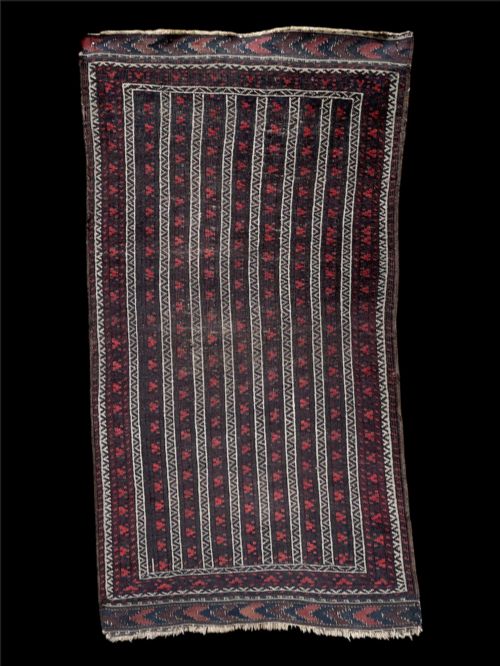
Dark Blue Wool Rug
A dark blue wool rug brings deep indigo tones and nomadic craft into a room, offering durability and historical character.
Dark Blue Wool Rug
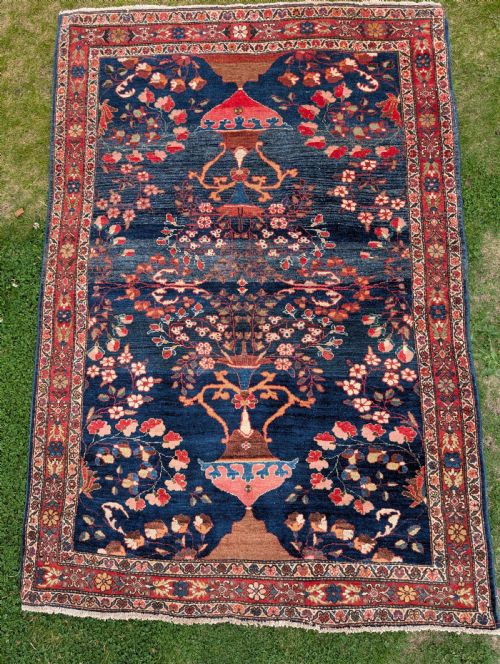
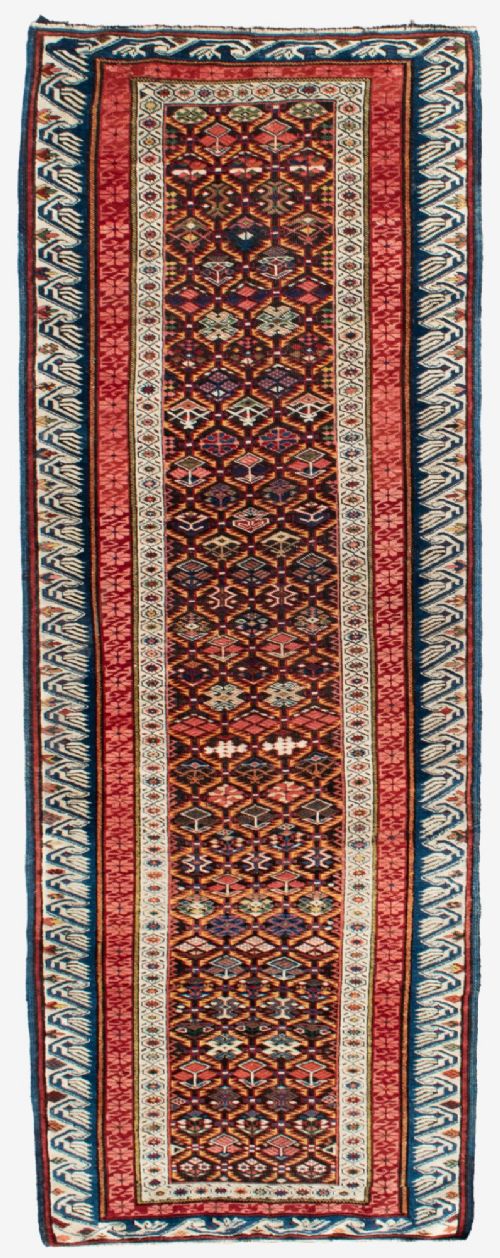
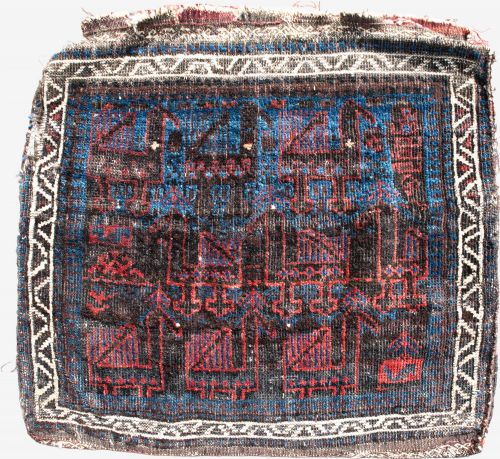
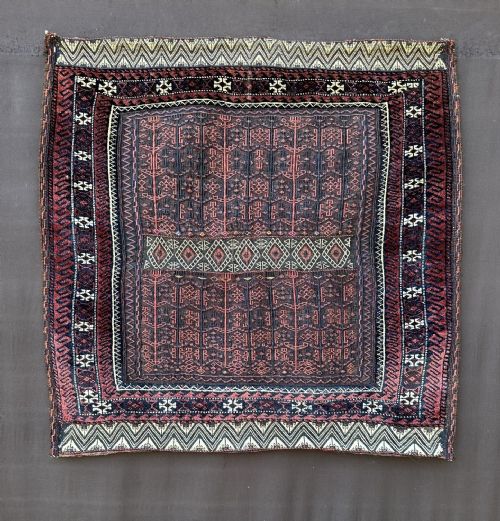
A dark blue wool rug represents woven textiles produced across Persia, the Caucasus, and Afghanistan, spanning the late nineteenth century into the early twentieth century. These items appear as small scatter rugs, long runners, bag faces, and larger carpets originating from tribal or village workshops.
The selection on this page consists predominantly of antique pieces from nineteenth-century and early twentieth-century periods, including specific Baluch, Qashqai, and Turkish nomadic works. Buyers encounter formats ranging from square formats to narrow runners utilising rich indigo and deep blue palettes.
How they were made
Weavers constructed these textiles using hand-spun wool and occasionally goat hair, knotted by hand onto wool or cotton foundations. Natural dyes provided the colour palette, yielding deep dark blue tones that varied subtly across the surface of each piece.
Nomadic and village weavers utilised traditional upright looms, incorporating materials gathered locally. The combination of hand-spun wool and natural colourants created durable pile surfaces capable of withstanding generations of use.
Several Baluch bag faces retain traces of nomadic life, having once travelled across Afghanistan as personal storage on pack animals.
What varies in quality
The quality of these textiles depends on the tightness of the knotting and the fineness of the wool used in the pile. Tighter structures and well-executed hand-spun wool create greater resilience and sharper pattern definition.
Design clarity and the depth of the natural dye work distinguish finer examples from simpler village pieces. Harmonious colour saturation and intact original borders elevate the overall character of the weaving.
The Dark Blue Wool Rug Glossary
- Sofreh
- A flatwoven spread or dining cloth used by nomadic groups for sharing meals. These textiles often feature geometric motifs and durable flatweave construction.
- Torba
- A small storage bag or wall hanging produced by Turkmen and other tribal groups. They typically display characteristic gul motifs and detailed face designs.
- Mina Khani
- A repeating pattern of stylised flowers connected by delicate lattice lines. This traditional design frequently appears across Persian and Baluch carpets.
- Prayer rug
- A small rug featuring a mihrab or arch design indicating the direction of prayer. These pieces were utilised for personal devotion in domestic spaces.
- Kalam Donneh
- A traditional boteh or paisley variant motif found in textile designs. The pattern resembles a curved seed or sprout shape.
Dark Blue Wool Rug: Frequently Asked Questions
How do I clean an old wool rug?
Maintenance requires gentle vacuuming without a rotating brush to protect the delicate hand-spun pile. Professional specialist cleaning remains essential for addressing deeper soil without damaging natural dyes.
Water exposure should stay minimal to prevent dye migration across the wool and cotton foundation. Regular rotation ensures even wear patterns develop across the surface over time.
Where were these rugs made?
The pieces originate from regions across Persia, the Caucasus, and Afghanistan. Nomadic tribes and village communities produced them using local materials and traditional methods.
Specific areas include Khorassan, Fars, and Western Afghanistan. Each region developed distinct stylistic traits tied to the heritage of the weaving group.
Can I place a runner in a hallway?
Narrow formats function well in hallways and corridors when paired with an appropriate underlay. The heavy wool construction withstands standard foot traffic while protecting underlying flooring.
Placing a quality rug pad underneath prevents slipping and reduces friction against the floorboards. This support preserves the foundation structure during daily use.
What materials make up the pile?
The pile consists primarily of hand-spun wool, occasionally supplemented with goat hair in tribal pieces. Natural dyes provide the deep indigo and dark blue shades characteristic of these textiles.
Foundations typically utilise wool or cotton warp and weft threads. The combination of these natural elements contributes to the longevity of the weave.