
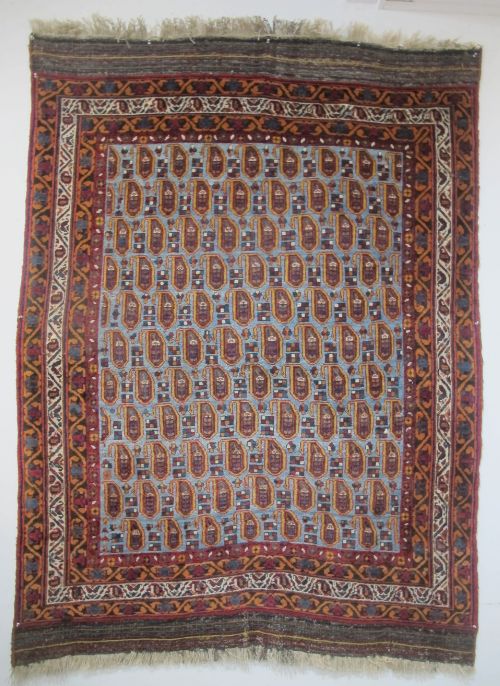
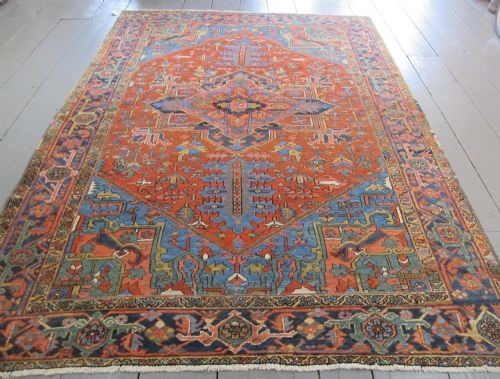


Victorian Persian Carpet
When choosing a victorian persian carpet, you examine woven floor coverings that bridge nineteenth-century British taste with traditional regional workshops across Persia.
Victorian Persian Carpet
A victorian persian carpet encompasses floor coverings woven during the nineteenth century, frequently arriving in British homes via trade routes and international exhibitions during the Victorian era. These pieces span from large room-sized carpets originating in major weaving centres like Heriz, Sultanabad, and Fereghan to smaller tribal rugs produced by groups such as the Baluch and Afshar.
Buyers encounter distinct regional styles on this page, ranging from geometric village carpets with bold medallions to curvilinear city pieces and long narrow runners suited for hallways. The dates cluster predominantly around the late nineteenth century, specifically between eighteen-eighty and nineteen-hundred, matching the period styles recorded in the inventory.
Factors influencing quality
Quality in these woven works rests on knot density, the clarity of the design drawing, and the vibrancy of the natural palette. Finer examples display precise execution in complex floral or geometric motifs, whereas simpler village or tribal pieces exhibit charming rustic asymmetry.
The integrity of the wool pile and the retention of original border guards also determine the standing of an individual carpet, alongside the scale and balance of the overall composition.
Several nomadic weavers tucked tiny animal figures and hidden tribal symbols into the corners of otherwise strict geometric carpets.
The Victorian Persian Carpet Glossary
- Medallion
- A central ornamental motif set into the middle of the carpet field. This design element dominates the composition of many Heriz and Serapi carpets.
- Warp
- The vertical threads stretched across the loom before weaving begins. Cotton is frequently utilised for this structural foundation in nineteenth-century Persian carpets.
- Weft
- The horizontal threads passed alternately over and under the warp threads to hold the knots in place. They determine the firmness of the rug's body.
- Pile
- The cut ends of the yarn that form the usable surface of the carpet. Wool forms this soft upper layer across the listed pieces.
- Natural Dyes
- Colouring agents sourced from organic materials such as plants and insects rather than synthetic compounds. These dyes produce the muted, harmonious hues seen in antique Persian weaves.
Victorian Persian Carpet: Frequently Asked Questions
How do I clean a victorian persian carpet?
Professional dusting and specialist immersion washing are the only safe methods for antique wool textiles. Household detergents and excessive water will damage natural dyes and weaken the cotton foundation.
Regular gentle vacuuming without a rotating power brush helps remove grit from the pile between specialist cleans. Keeping the carpet out of direct sunlight prevents premature fading of the natural colours.
Can I place these carpets in high traffic areas?
Sturdy village and tribal carpets handle moderate foot traffic well due to their dense wool construction. Placing a quality underlay beneath the piece prevents slipping and reduces fibre abrasion against hard floors.
Runners and large format carpets suit hallways and living spaces if rotated periodically to ensure even wear across the surface. Delicate city carpets benefit from slightly more sheltered placement.
How do I distinguish between regional styles?
Heriz and Serapi carpets typically feature large geometric corner spandrels and bold central medallions woven with sturdy wool. Fereghan and Sultanabad pieces lean towards finer, all-over floral repeats and sophisticated curvilinear drawing.
Tribal Baluch and Afshar rugs present smaller formats, geometric patterns, and rich dark colour palettes. Examining the knotting style and secondary colours helps confirm the specific regional origin.
What is the difference between a rug and a carpet?
Size and intended placement generally separate the two terms in historical contexts. Carpets usually refer to large floor coverings designed to anchor a principal room.
Rugs and runners cover smaller floor spaces or corridors. Both categories share identical wool materials and traditional nineteenth-century weaving techniques.